

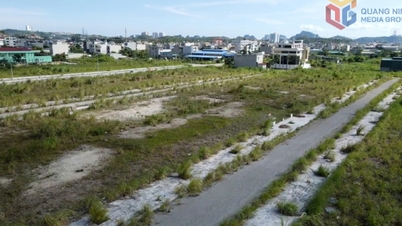
During the period 2021-2030, Quang Ninh province will focus its resources on investing in the development of its urban system to become a modern, ecological, civilized, and advanced city. The approval of the province's urban development program until 2030 is a prerequisite for concentrating all investment resources and promptly building and planning Quang Ninh to become a centrally-governed city before 2030, while also contributing to raising the income level of its people.
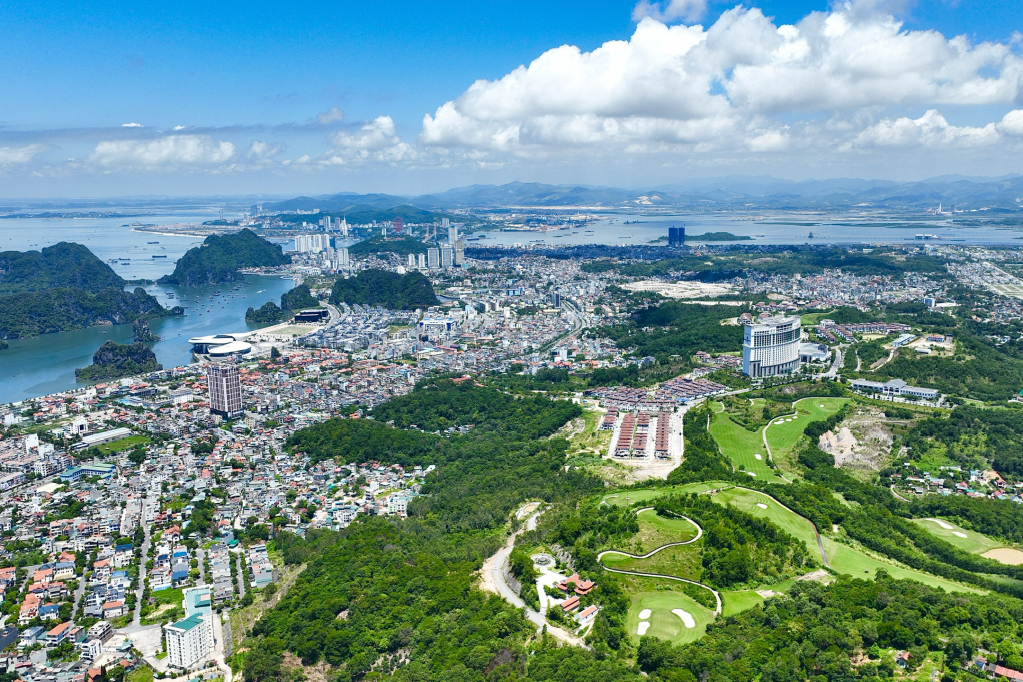
According to the Quang Ninh Provincial Urban Development Program until 2030, Quang Ninh will strive to become a centrally-governed city under its own model. Instead of forming districts, it will create an inner-city area comprising cities within cities, interconnected by advanced technical infrastructure systems such as urban public transport and information and communication technology infrastructure.
Accordingly, the cities in this inner-city area, including Ha Long, Quang Yen, Uong Bi, Dong Trieu, Cam Pha, Van Don, and Mong Cai (Hai Ha district merged with Mong Cai city), will receive investment to build and complete socio -economic and technical infrastructure standards according to Type I urban criteria by 2030; with 152 commune-level administrative units, including 77 wards (accounting for 51% of the total number of wards). Other urban areas in the districts of Tien Yen, Dam Ha, Binh Lieu, Ba Che, and Co To will continue to receive investment for completion according to Decision 241/QD-TTg of the Prime Minister.
According to the plan, by 2025, Quang Ninh province will have 13 administrative units with 13 urban areas. By 2030, Quang Ninh province will have 12 administrative units, a total provincial population of approximately 2.64 million people (with approximately 1.63 million permanent residents), and an urbanization rate of over 75%; Quang Ninh will become a centrally-governed city based on the formation of an inner-city area comprising 7 cities (Ha Long, Cam Pha, Uong Bi, Mong Cai - Hai Ha, Dong Trieu, Quang Yen, Van Don) and the re-establishment of Tien Yen town.
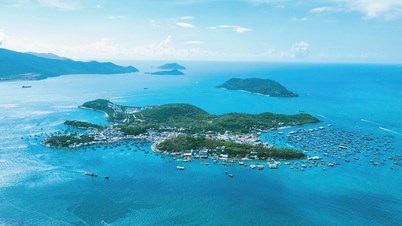
Simultaneously, three inter-district regions were formed, including: the Van Don inter-district region, comprising Van Don District, Co To District, Tien Yen District, and Ba Che District. Within this region, the central urban area of Van Don District is the regional center, with a population of approximately 323,500 people and an area of approximately 4,145 km² . This region is characterized by tourism , clean and high-tech industries, logistics, agriculture, forestry, and fisheries. Van Don, as a coastal economic zone, serves as a breakthrough point, a center for development, and strengthens connections to the northern mountainous regions and southern islands, acting as a new gateway to the sea for the northeastern mountainous region.
The Mong Cai inter-district region includes Mong Cai City, Hai Ha District, Dam Ha District, and Binh Lieu District. Mong Cai City, linked with the Mong Cai Border Economic Zone, is the key breakthrough area and regional center, with a population of approximately 418,900 people and an area of about 2,671 km² . This is a key area for the development of border trade, border tourism, and serves as a gateway between ASEAN and Northeast Asian countries, boasting infrastructure such as expressways and large-scale seaports like Hai Ha and Van Ninh.
To implement the proposed plan, Quang Ninh province has developed a list and plan for upgrading urban areas throughout the province by 2030; development orientations and proposed development options; priority projects for investment in the development of the core infrastructure system; and solutions regarding policy mechanisms and implementation organization. To ensure resources for implementation, the province has calculated and structured capital sources according to three specific areas in two phases from 2021-2025 and 2026-2030, with a total projected social investment capital of 2.8 trillion VND. Priority is given to attracting investment in sectors such as seaports, inland waterways, logistics infrastructure; industrial park and cluster infrastructure; high-tech processing and manufacturing; high-tech agricultural, forestry, and fisheries zones; power generation; clean water supply; and infrastructure for education, health, culture, sports, environment, trade, and services.
Currently, the province has set forth a number of key programs and projects, focusing on three breakthrough areas: developing high-quality human resources in conjunction with rapidly increasing the size and improving the quality of the population; Accelerate the development and completion of a comprehensive and modern strategic infrastructure system, ensuring overall connectivity; build a rich and distinctive Quang Ninh culture while rapidly narrowing the gap between rich and poor and regional disparities within the province. In addition, Quang Ninh province is finalizing its medium-term public investment plan for the 2021-2025 period, prioritizing the allocation of state budget funds for development, maximizing the exploitation of resources, especially from the private sector, developing public-private partnerships, and focusing on completing a comprehensive and modern infrastructure system.
Currently, the province is focusing on prioritizing investment and implementation of 16 projects and tasks, including: the Quang Ninh Provincial Digital Government Project for the period 2020-2025 and orientation to 2030; the development of science and technology in the province until 2020; the project to build a technology incubation center and science and technology enterprise center in the province; support for innovative startups in the province; implementation of the Vietnam Smart City Index until 2025; a database and software system serving resource and environmental management and online disaster warning in the province; and the project to replicate the smart city model in Uong Bi (2018-2022), Cam Pha (2018-2025), and Mong Cai (2020-2025). In addition, there are plans to train and develop human resources for smart cities in the province's state agencies, organizations, and citizens; and a public Wi-Fi system throughout the province...
With a specific and clear roadmap, along with active and coordinated efforts, Quang Ninh will certainly achieve its set goals in the coming time, building a complete infrastructure system, developing sustainable urban areas, and successfully building a smart city worthy of being a developed locality in the key economic region of Northern Vietnam and the whole country.
Source



















![[Photo] Reception to welcome General Secretary and President To Lam and his wife on their State visit to the Philippines](https://vphoto.vietnam.vn/thumb/1200x675/vietnam/resource/IMAGE/2026/06/01/1780295488620_vna-potal-chieu-dai-chao-mung-tong-bi-thu-chu-tich-nuoc-to-lam-va-phu-nhan-tham-cap-nha-nuoc-toi-philippines-8798060-7855-jpg.webp)






















































Comment (0)