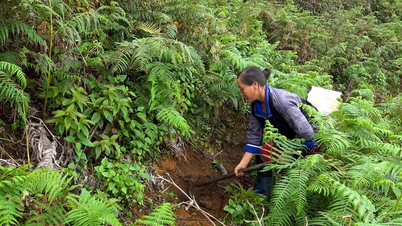
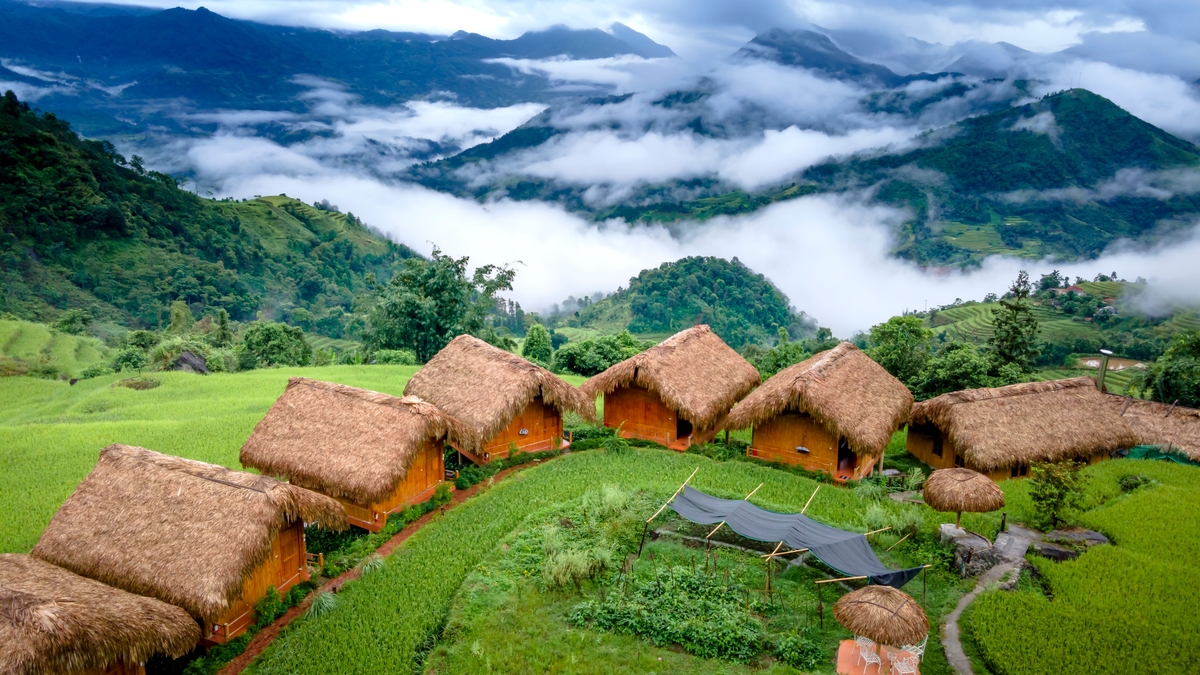
Ms. My has been married into the Giang Pang family for almost 20 years. That's roughly the same age she was when she got married. "Back in An Luong, we knew about tea plants, but it was my husband who taught me how to grow tea in Giang Pang," she recounted. It was only after coming here that she realized how big the tea plants were. They grew right along the paths, their branches spreading out beside the rooftops. Their trunks were covered in moss, yet their tender buds were a vibrant green.
She remembers many dates because she can't forget important things. There are also many things she can't remember anymore because she can't count them. Like the countless times she and her husband took fresh tea leaves to sell in the Van Chan and Nghia Lo areas. Like the countless times they spent the night at the tea factory to learn how to make tea. Like the countless times they struggled on the bumpy, rocky dirt road to and from Giang Pang.
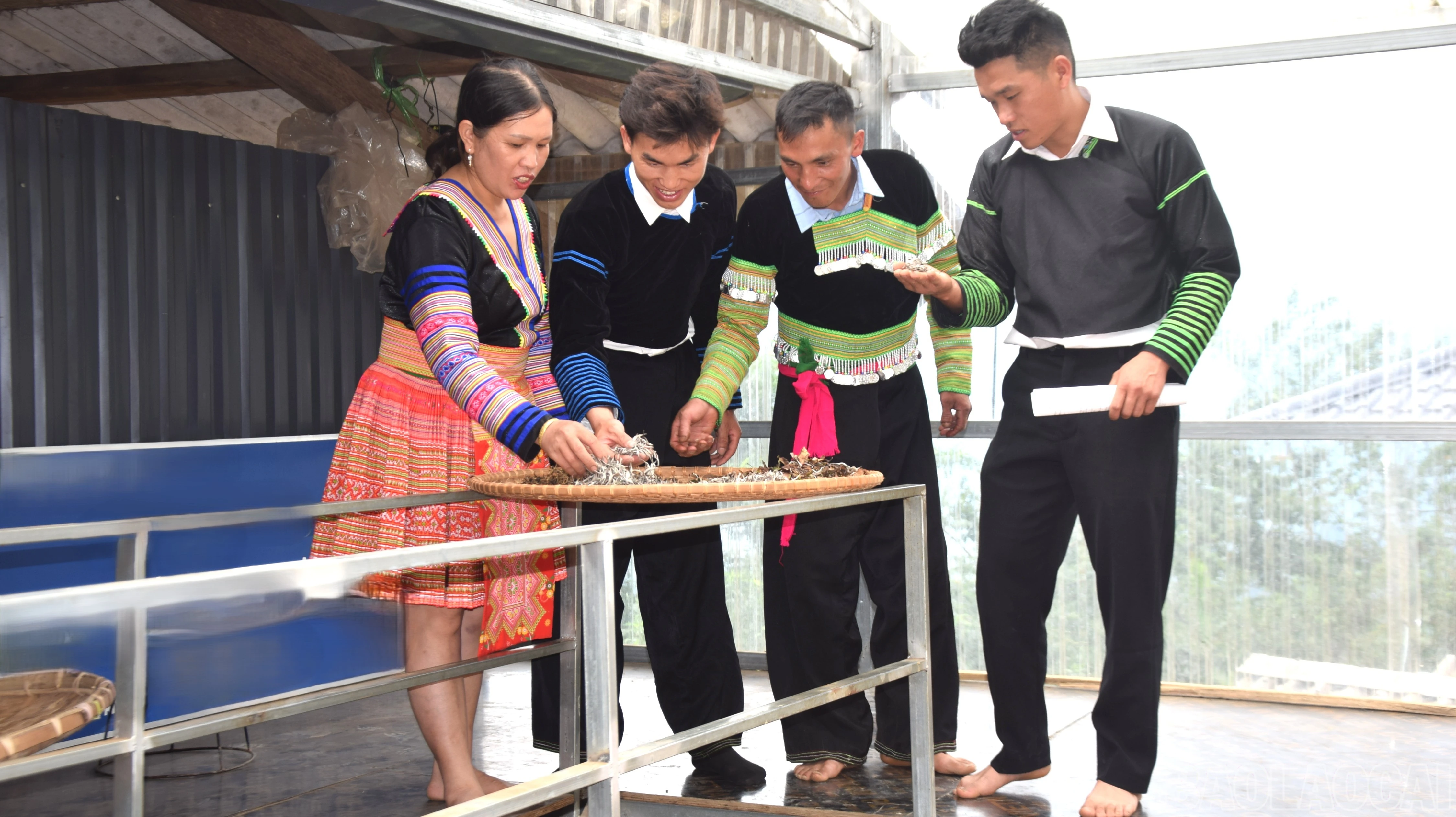
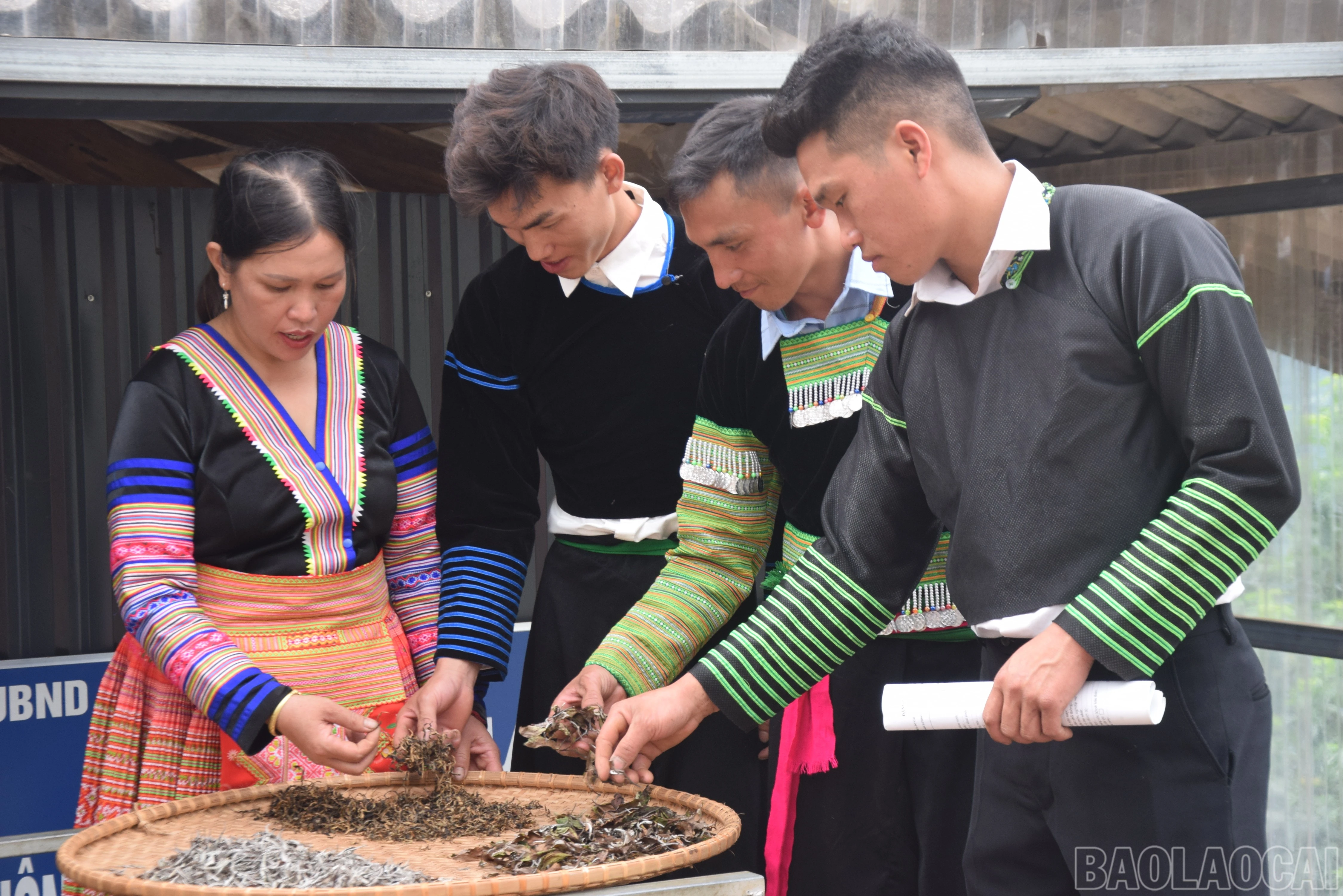
Exchanging experiences in tea processing with Party members of the Giàng Pằng village Party branch.
To reach Giàng Pằng, one must traverse a steep, bumpy road nearly ten kilometers long. Importantly, the weather must be sunny and the road dry; even a decent motorbike needs more than half an hour to travel that distance. This illustrates that each kilogram of tea that Ms. Mỵ brings to her customers represents not only the labor of picking and processing the tea, transportation, and fuel costs, but also her determination and will to overcome poverty.
The challenge for Ms. My is measured in the number of tea seasons she has endured, through countless seasons of clouds, wind, sun, and rain. The challenge is like being in the "nine layers of clouds," at an altitude of nearly 1,700 meters, nurturing the exceptionally special Shan Snow tea plants to create a unique tea flavor. The challenge is a reward for those who are not afraid of hardship, who dare to innovate, and who persevere with effort.
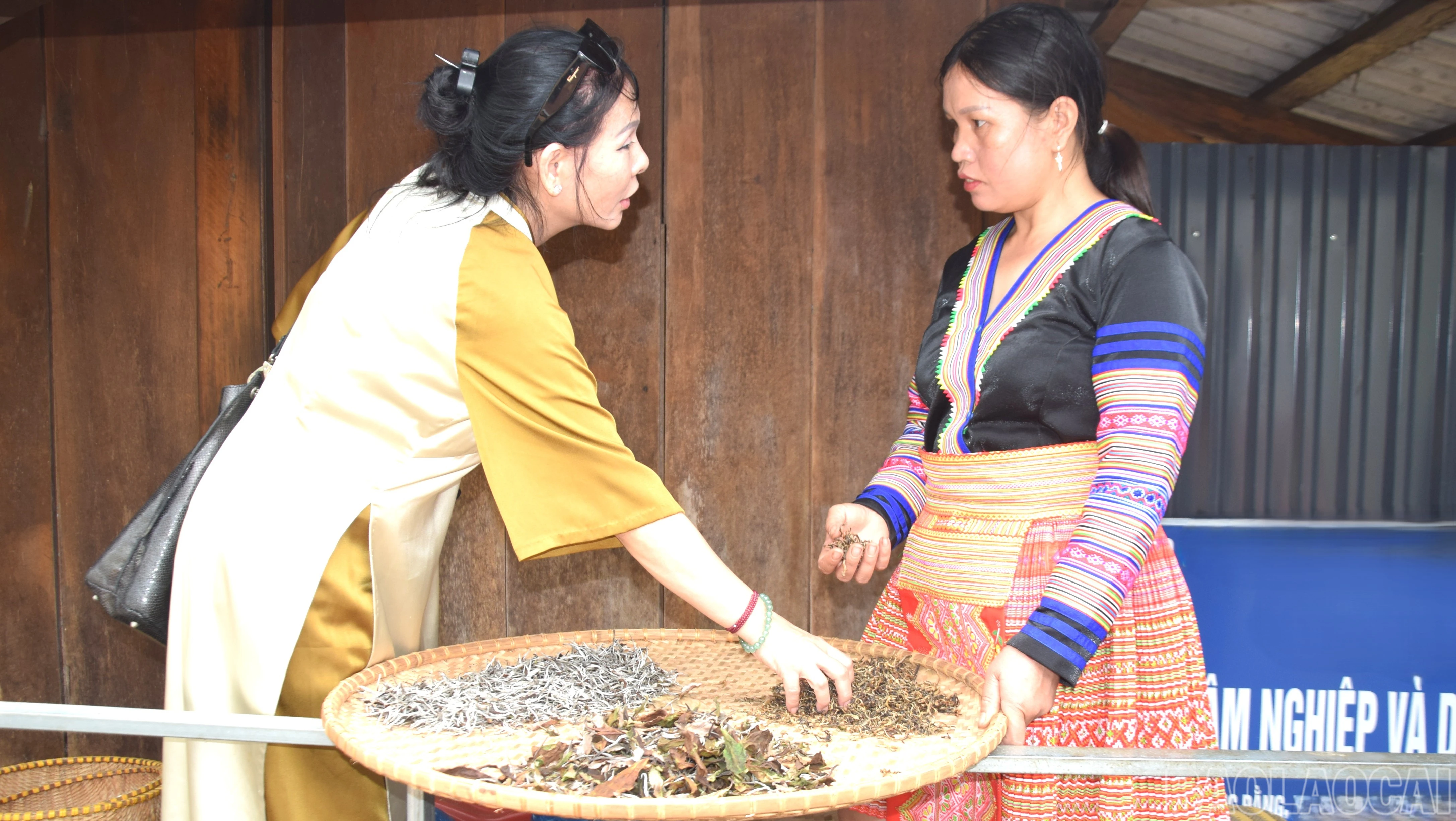
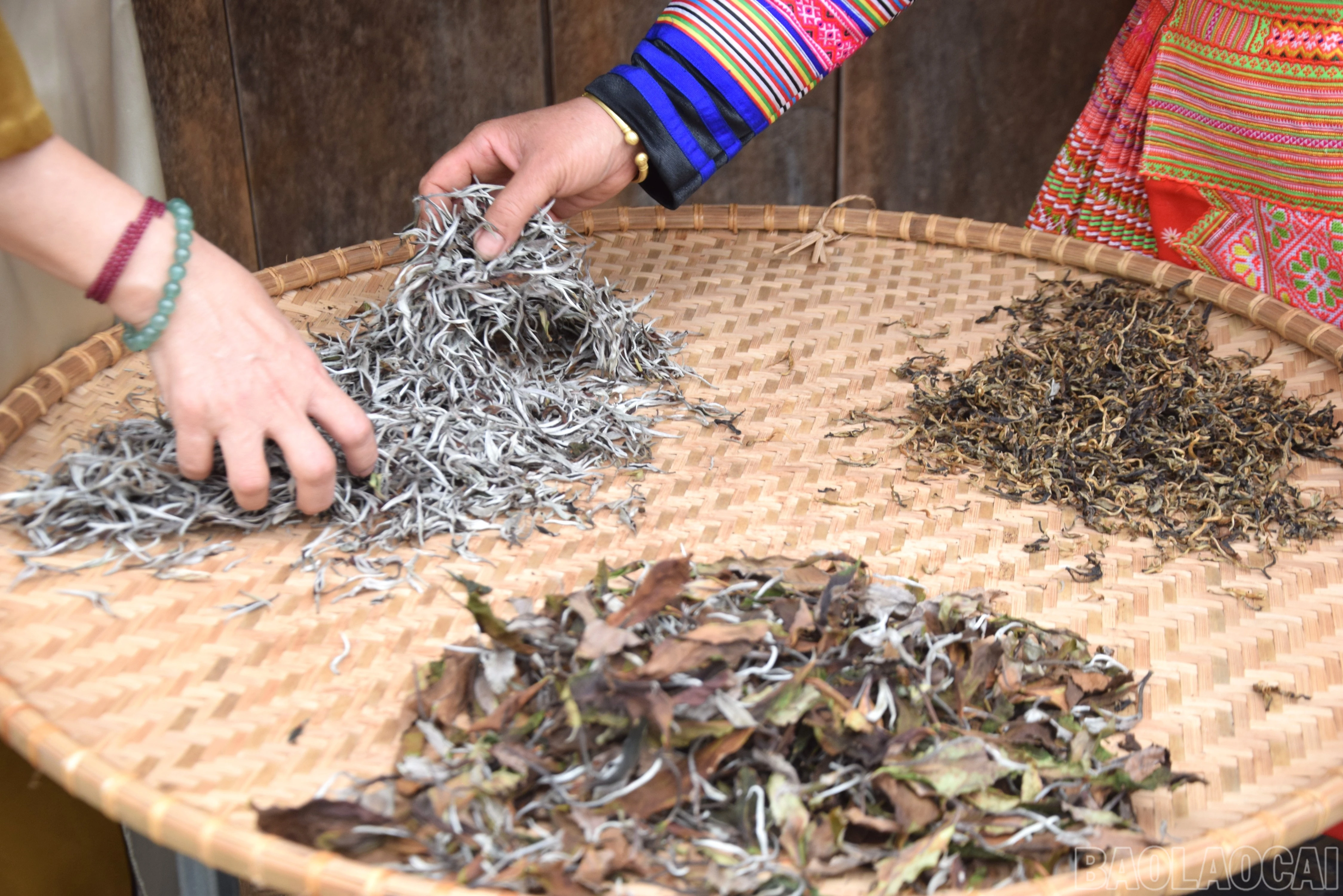
The hope for a better life for her family and all the villagers was the driving force that helped her overcome difficulties. With each tea harvest season, the money, effort, and sweat invested brought joy when she and her husband successfully cultivated several new types of tea, fostering their belief in enhancing the value of the tea plant and the Giàng Pằng tea product.

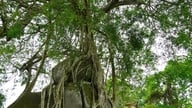
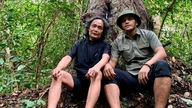
June 26, 2024, marks the founding date of the Giang Pang Chu My Shan Tuyet Tea Cooperative. The name encompasses the most important aspects of her life since returning to Giang Pang: it's the name of the village, the name of the tea plant, and the names of her and her husband. "To establish this cooperative, I had to do a lot of difficult work. Not only did I have to convince my husband, but I also convinced the husbands and wives of the 10 members," she recounted.
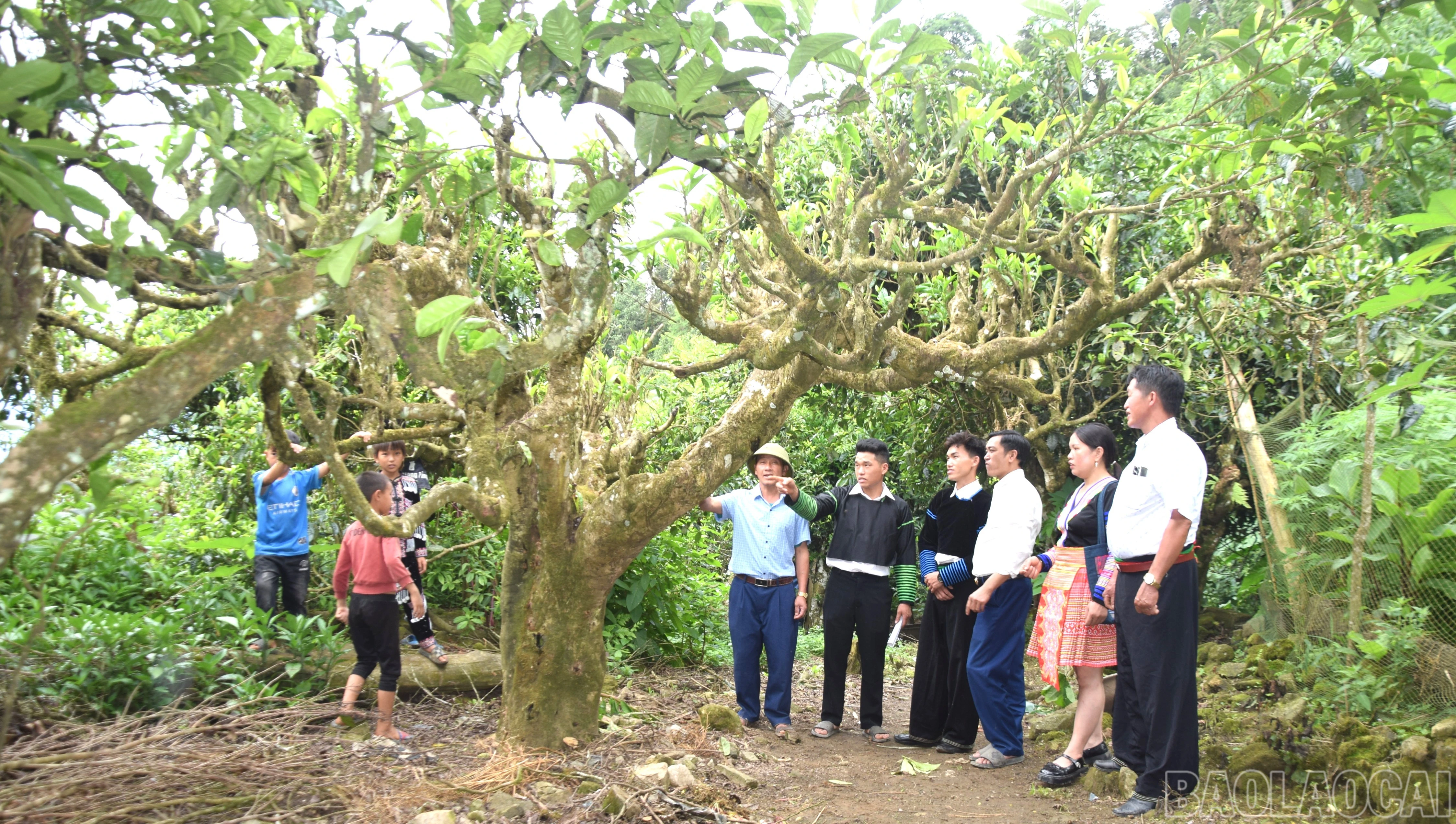
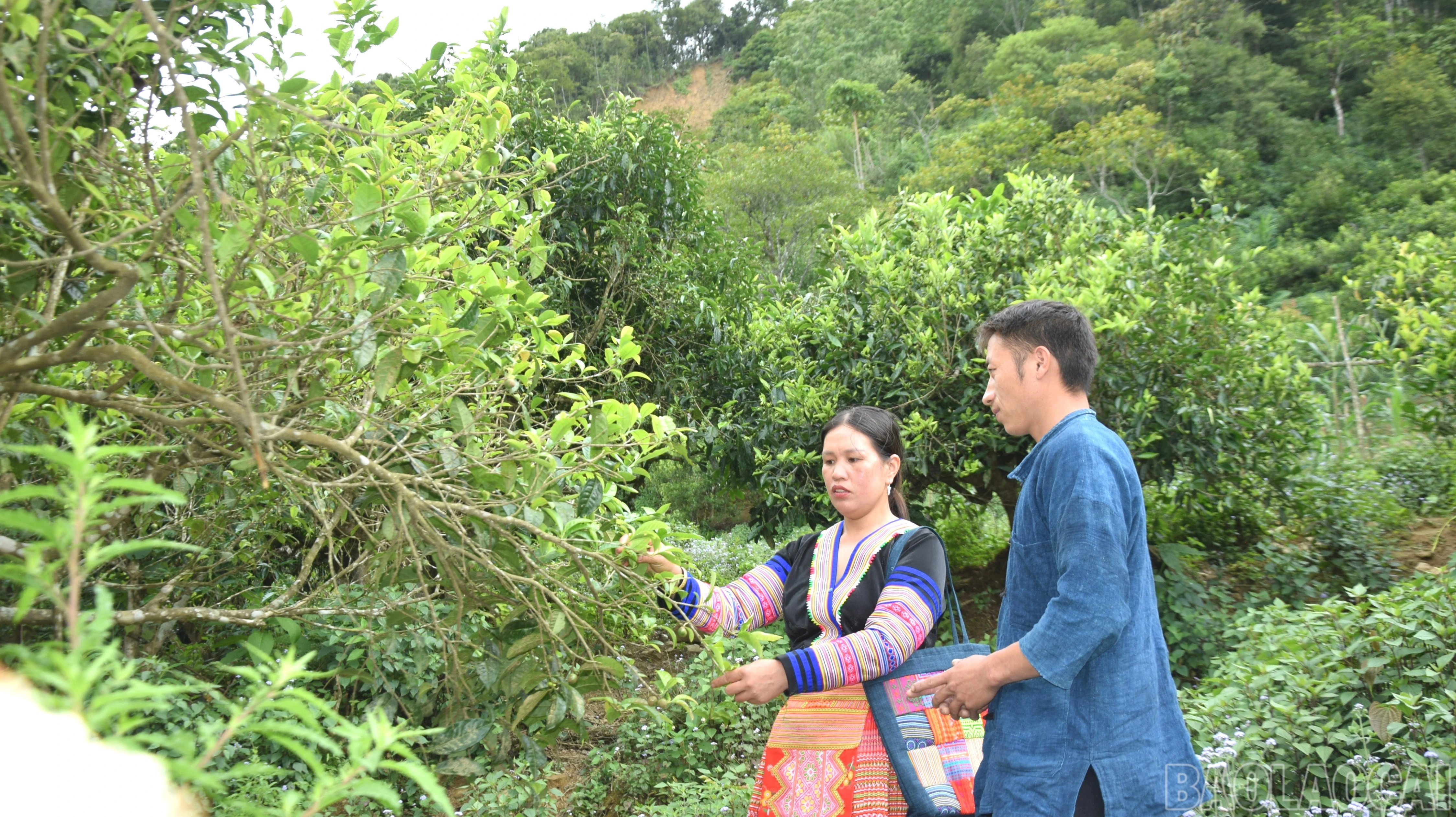
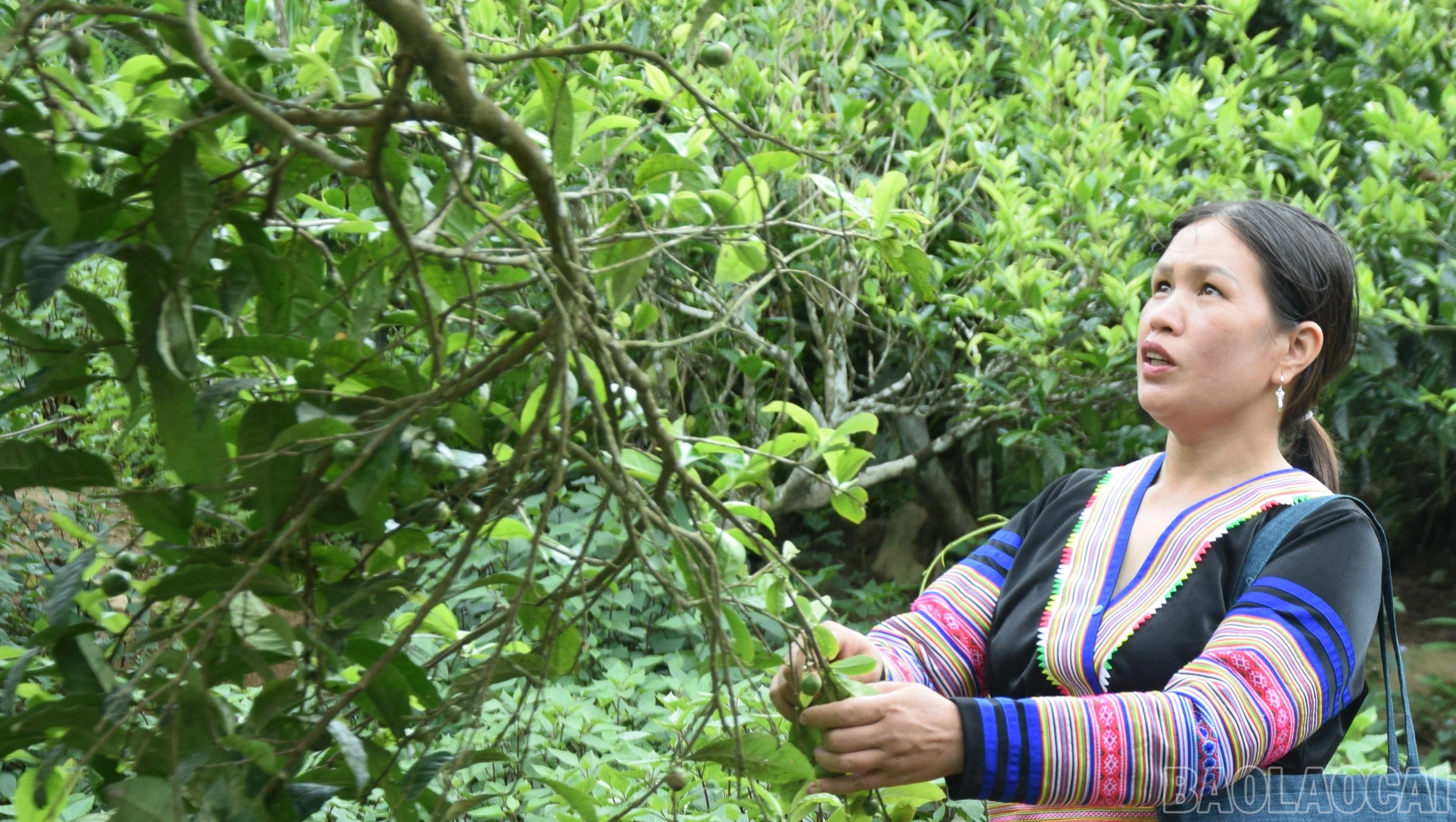
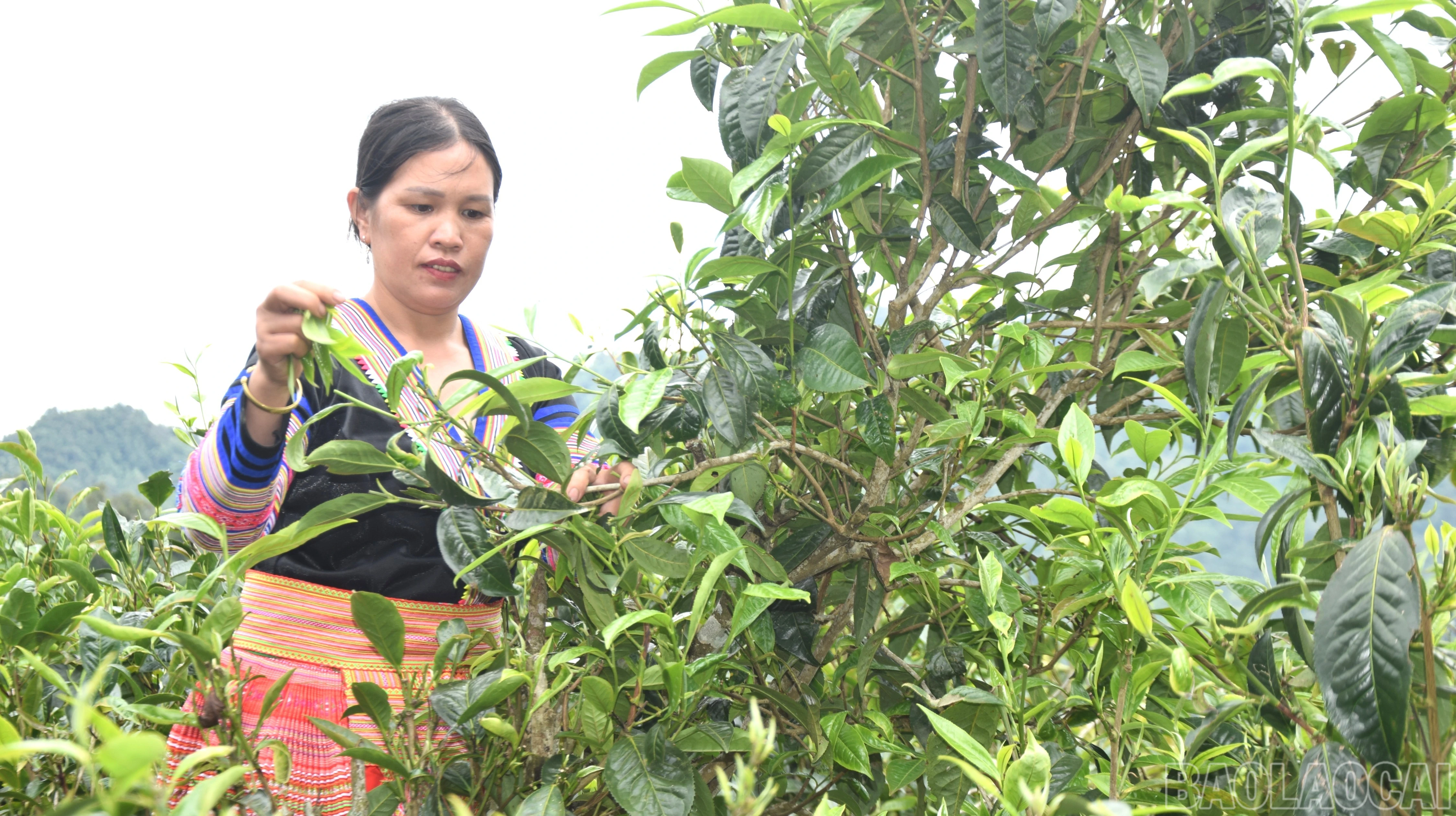
Sharing experiences in caring for Shan Tuyet tea plants.
Having a cooperative has brought her more joy. Each year, the cooperative sells 4-5 tons of finished tea products, including black tea, white tea, and green tea, equivalent to about 20 tons of fresh tea leaves. Of that amount, she buys about 15 tons of fresh tea leaves from the villagers. The villagers have an additional source of income, and the members also earn an average income of 4-5 million VND per person per month.
Annual revenue is several hundred million dong, but profits need to be reinvested in production. Her difficulties are also shared by the entire village. The lack of paved roads leads to high transportation costs. There's no electricity grid, so they have to use generators. The lack of phone signal makes communication inconvenient. All of these factors have resulted in missed opportunities and reduced profits.
She once wanted to give up when natural disasters swept away everything. She cried silently because she didn't have the strength to operate the generator when her husband was away. She said, "I did feel discouraged, but I thought that at worst, I'd just go back to square zero, so I tried even harder." "Better" means she will get food safety certification, design packaging for tea products, and eventually upgrade to the OCOP program.
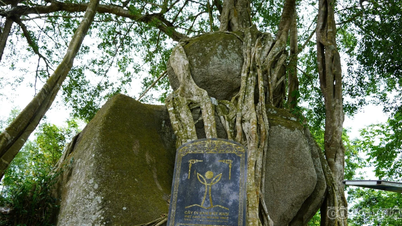
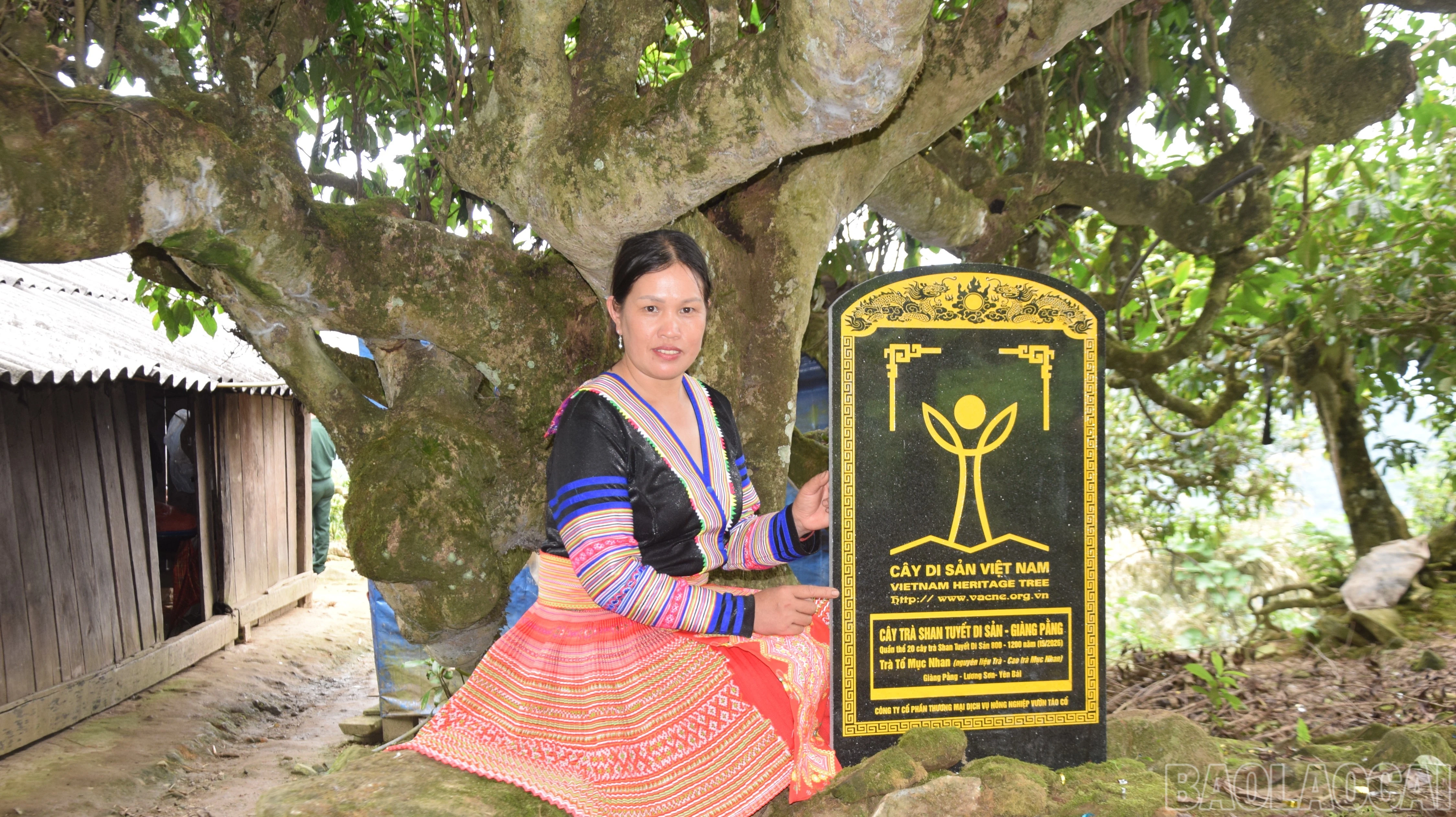
Another important task, Ms. My emphasized, is to encourage villagers and members to actively plant new tea trees, replant existing ones, and take good care of the tea plantation. The recognition of 20 tea trees as "Vietnamese Heritage Trees" is a source of pride for Giang Pang. The vibrant life of this ancient tea plantation reflects the belief, hard work, and commitment to preserving the heritage of Ms. My and all 96 households in Giang Pang.



For my family and the people of Giàng Pằng.
With a deep love and gratitude for the tea plant, Ms. My will continue to improve the quality and bring Giang Pang Shan Tuyet tea products to more markets and customers. Thanks to the tea plant, her family has a better life, her children have better educational opportunities, and Ms. My hopes for the same for the people of Giang Pang. That is what Ms. My is striving to do every day.
Ms. Mua Thi My, Director of the Giang Pang Chu My Shan Tuyet Tea Cooperative in Son Luong commune, is honored to be one of three exemplary individuals from Lao Cai province and 73 exemplary individuals nationwide selected to participate in the "Ordinary but Noble Examples" exhibition in Hanoi in 2026, organized by the Ho Chi Minh Museum. These individuals have achieved outstanding results in studying and following the ideology, ethics, and style of Ho Chi Minh.
Source: https://baolaocai.vn/loi-cho-minh-loi-cho-ba-con-post902724.html