

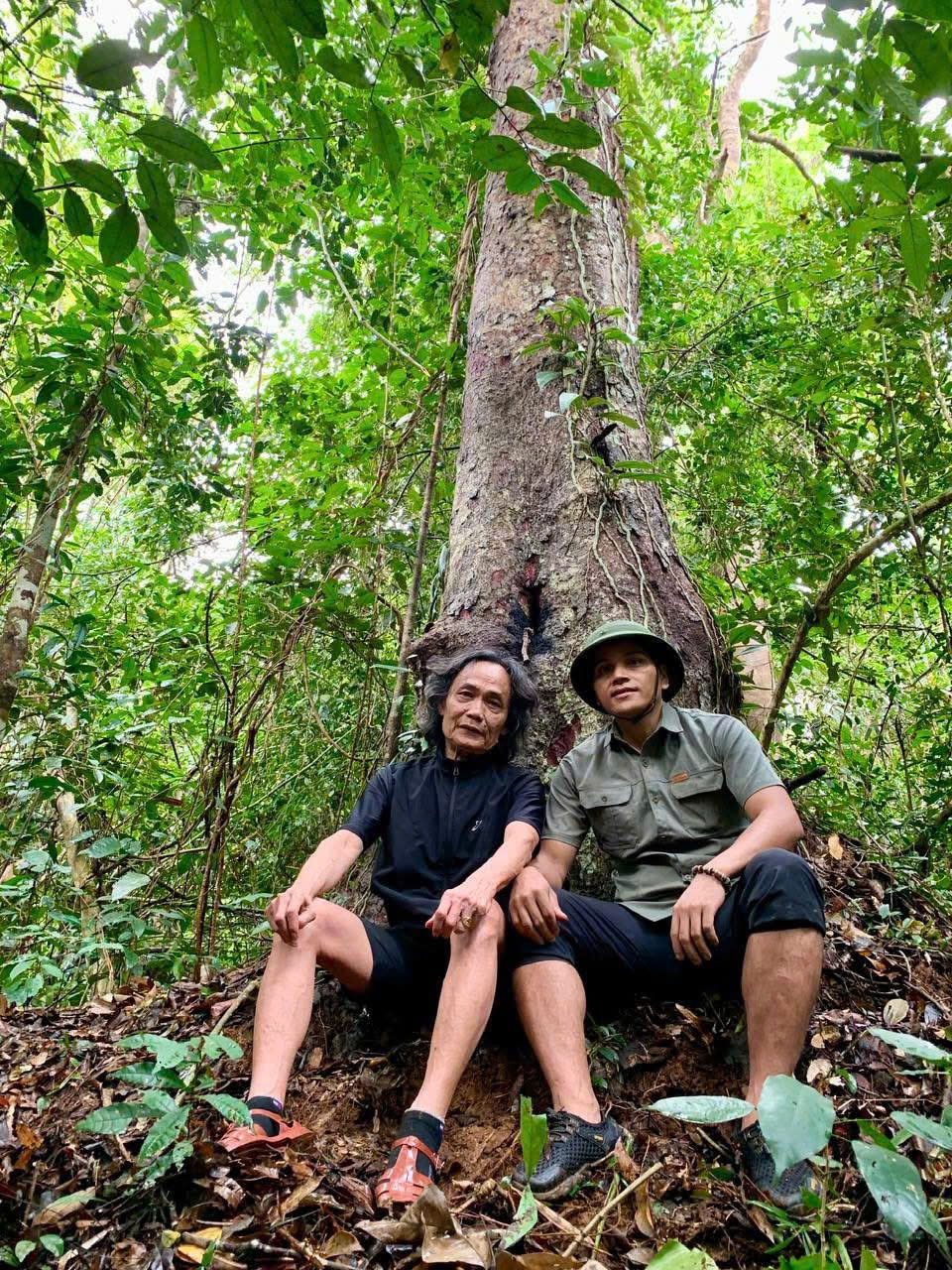
At that time, I was a freshman, carrying with me the scent of sunshine and wind, the salty taste of the heroic Quang Nam province, a land steeped in loyalty and affection, and the genuine spirit of the Truong Son mountains, into the heart of the bustling, prosperous city.
A connection forged through old newspaper pages.
Among thousands of books, I stumbled upon an old newspaper article about the value of the cypress tree in Lam Dong province. Each line awakened memories of the sacred forests of my homeland. I remembered the misty mountain peaks of Lang, Tor-hy, and A-xan communes (formerly Tay Giang district), where giant ebony, green lim, and cypress trees stood majestically for generations. We Co Tu people cherish and worship the forest as deities (Yang), the dwelling place of our ancestors' souls. I wondered: "Why does the world know about the cypress of Lam Dong, yet this treasure of my homeland remains dormant in the darkness of the ancient forest?"
I diligently searched for information on the value of the cypress tree and began writing an article titled "The Historical and Scientific Value of the Tay Giang Cypress," which I submitted to the Vietnam Association for the Protection of Nature and Environment (VACNE). The article was selected for publication in June 2013, by which time I had graduated and started working at the Tay Giang District Cultural and Sports Center (formerly). This was not just the joy of a student learning to write, but a predestined "fateful encounter." The article was the thread that connected me with the scientists who would later directly prepare the dossiers for the recognition of the cypress, rhododendron, banyan, and green lim tree communities as Vietnamese Heritage Trees.
"The diary" of heaven and earth
Primeval forests are not just green lungs; they are a "giant library" storing the planet's memories. After graduating in 2012, I turned down opportunities in the city to return to my hometown of Tay Giang. I believe that my homeland needs me, and the ancient forest is waiting for me to tell the story of the sacred mountains.
During my 2012 expedition to the cypress forest, I paid particular attention to the research of scientist Brendan Buckley (Tree Ring Laboratory, USA). He demonstrated that cypress trees are the most accurate "climate diaries." Through analyzing the interior of cypress trees in Bidoup-Nui Ba National Park, he reconstructed the Asian monsoon weather patterns of the 14th century, deciphering the collapse of the glorious Angkor civilization due to droughts.
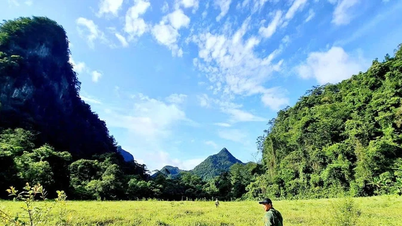
The forest ecosystem in the former Tay Giang district (now the three communes of A-vuong, Tay Giang, and Hung Son) also carries that mission. Each ring of bark on the thousand-year-old trees at the summit of Zi-lieng is a coded message about the history of the Truong Son Mountains.
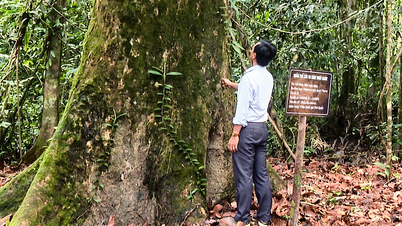
As I placed my hand on the rough, moss-covered bark of the thousand-year-old cypress tree, deeply marked by the passage of time, I felt as if I could sense the very pulse of history. The rustling of leaves outside was like the wind from hundreds of years ago, echoing into the present.
The process of creating Heritage Tree dossiers for 1,146 cypress trees (2017-2018), 435 ancient rhododendron trees (2018), 11 banyan trees (2020), and most recently (in 2024, with me as the team leader) 959 green lim trees along the Lang River in my hometown, is not simply about honoring names. I hope to contribute my small effort to the mission of protecting humanity's invaluable "information heritage."
Each grain of wood, each annual ring of these "forest spirits," is a chronicle storing data on climate, rainfall, and planetary changes over centuries. If the forests are lost, we will forever lose the precious key to understanding the past and predicting the future climate of Southeast Asia. Ultimately, preserving the forests means preserving life for the future. Preserving the essence and soul of the Co Tu culture.
The process of documenting these species has never been easy. There have been field surveys where the line between life and death was just a hair's breadth away. After the cypress trees, the next step was identifying over 435 ancient rhododendron trees with their vibrant blossoms on the summit of A-rung A-choóh, over 2,000 meters high (in 2018). To reach these "Queens of the Forest Flowers," we had to trek through the forest, walking for more than 8 hours in frost and fog.
I remember most vividly the year 2020, the year of devastating floods that caused severe damage to Tay Giang district. At that time, besides supporting charitable organizations, I dedicated my weekends to visiting the sacred forest. When I heard from Ríad Dung, a Youth Union official, that on the summit of Mount A-leo, in the former Ga-ry commune (now Hung Son commune), there still existed a cluster of ancient banyan trees that few dared to reach, my heart urged me to go immediately. The roads were severely damaged by landslides, the mountain passes like gaping wounds in the forest.
Mr. Ríad Nhoóp, the Party Secretary of Ga-ry commune, personally guided me and the local people to the area with the cluster of banyan trees. We hiked through the forest for a whole day to reach the largest banyan tree. Under the giant banyan canopies of Aleo, I felt as small as a sesame seed. More than 20 ancient banyan trees here are the "guardians" protecting the land and water. Their roots intertwine like giant blood vessels, tightly embracing the mountainside and preventing sections of the hills from collapsing.
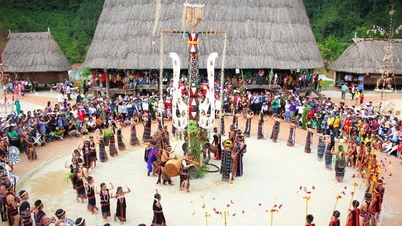
Eleven banyan trees, over a thousand years old, were recognized as Vietnamese Heritage Trees amidst overwhelming joy. I called the largest banyan tree, with its three large branches—one pointing towards neighboring Laos, one towards Cho-chun commune (formerly Nam Giang district, now La-ee commune), and one towards Ga-ry commune (formerly Tay Giang district, now Hung Son commune)—"Bha-lang Hi-re Kree Teer" (the Banyan Tree of Unity). The whole village burst into laughter, their joy as radiant as the "Buffalo Feast" celebrating the new Gươl (village communal house).
When these precious tree species were recognized as Vietnamese Heritage, the way the Co Tu people, and ethnic minorities in general, preserve their forests was elevated to the pinnacle of harmony between humans and nature.
Source: https://baodanang.vn/tim-lai-linh-hon-cua-ngan-xanh-3338773.html


![[Image] A brilliant symphony and explosive power in the skies of Da Nang.](https://vphoto.vietnam.vn/thumb/1200x675/vietnam/resource/IMAGE/2026/05/31/1780196945787_anh-man-hinh-2026-05-31-luc-10-08-51.png)












![[Video] Sunset at Lap An Lagoon – Where the sun sets over the fishing nets](https://vphoto.vietnam.vn/thumb/340x192/vietnam/resource/IMAGE/2026/05/31/1780192137701_beach-landscape-sea-water-nature-grass-745871-pxhere-com.jpeg)

































































Comment (0)