

From the center of Púng Luông commune, we began our journey into the Tà Cây Đằng area. Our guide was Giàng A Lù, a man who has spent many years working in the highland forests. “The road isn’t far, but it’s very hard work. It takes almost half a day to get to the heart of the forest,” A Lù said, then quickened his pace up the steep slope ahead.
Although it's only about 5 km of forest trail, it takes almost half a day to reach the core of Ta Cay Dang. Some sections of the path are narrow, barely wide enough for one person, with a cliff on one side and a deep ravine covered in forest trees on the other. After the first rains of the season, the forest soil becomes muddy and slippery, requiring every step to cling to tree roots or bushes along the path for balance.
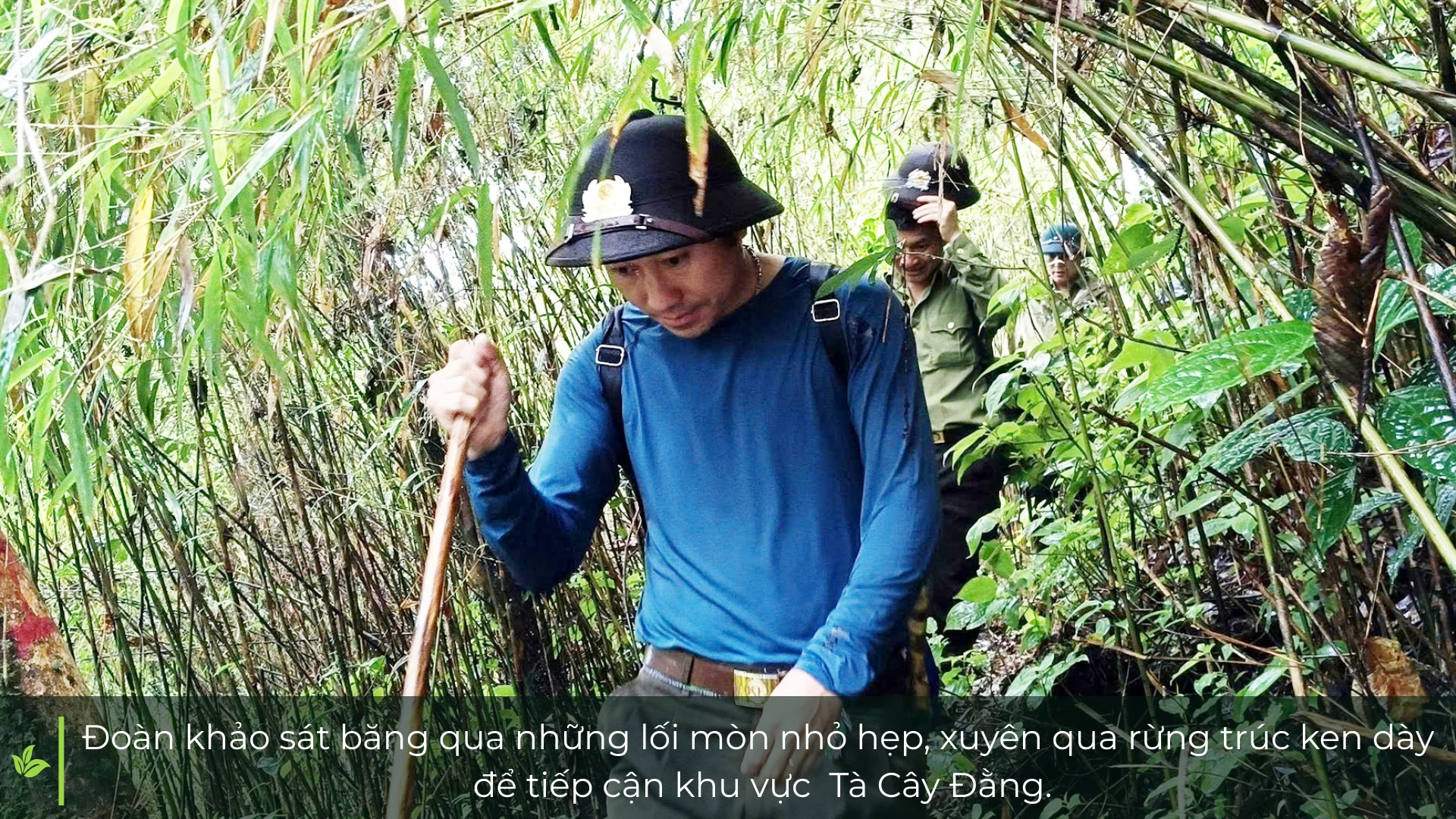
The deeper we went, the denser the forest became. Thick clumps of bamboo grew together, forming a vast, green canopy. The wind rustled through the bamboo forest, creating a soft, whispering sound in the stillness of the wilderness. Occasionally, small streams appeared, winding through rocky crevices, their water crystal clear and cool.
After hours of climbing the slopes, the heart of the forest gradually came into view. Amidst the deep green were ancient trees, hundreds of years old, standing majestically. Some tree trunks were so large that it would take four or five people to encircle them, their rough bark covered in green moss, ferns, and lichens.
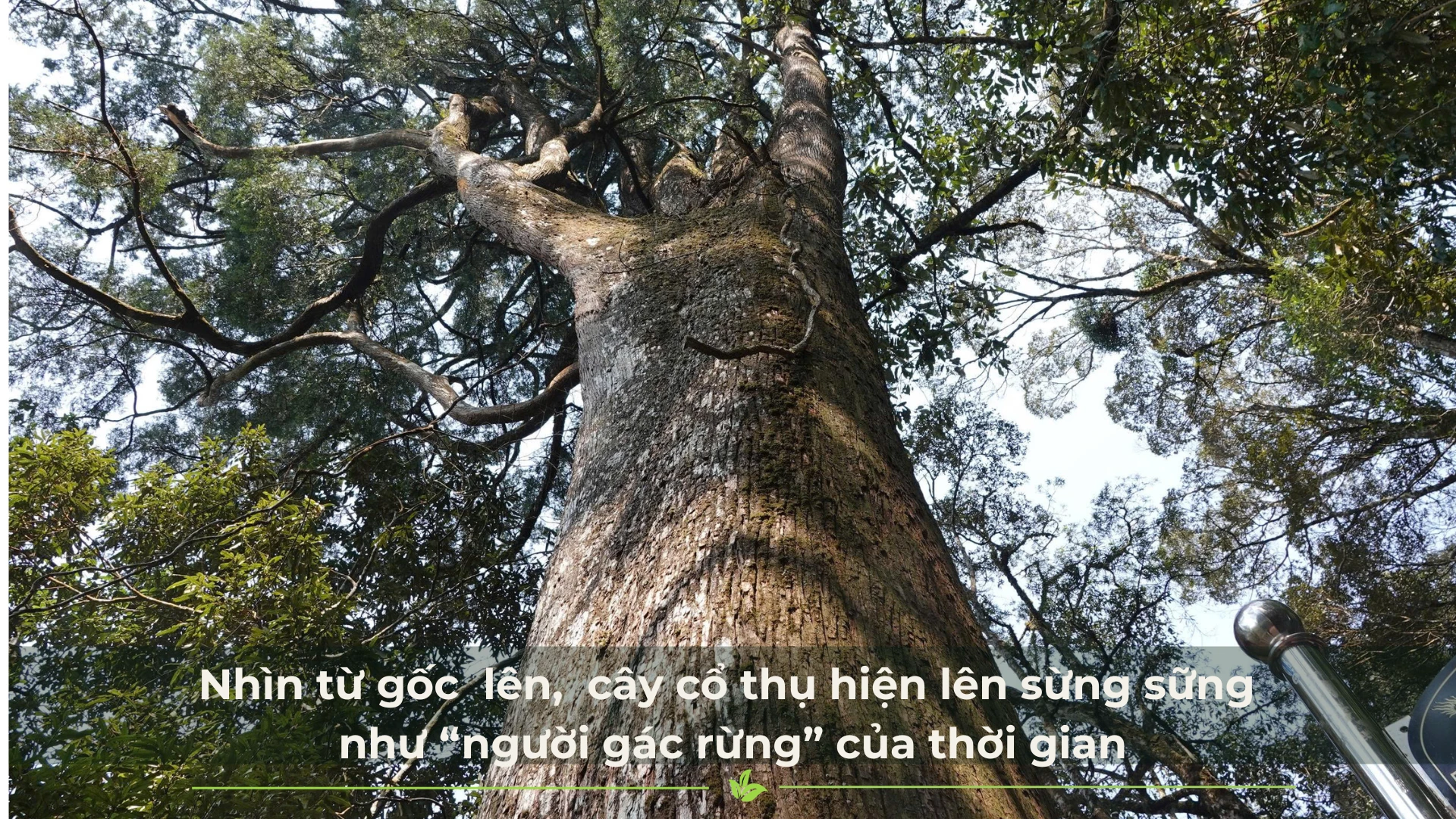
Gigantic root systems emerge from the ground like the "arms" of the forest. Towering canopies obscure the sky, allowing only streaks of sunlight to filter through the dense foliage, spreading across the moss-covered forest floor. This space makes one feel utterly insignificant before nature that has existed for hundreds of years.
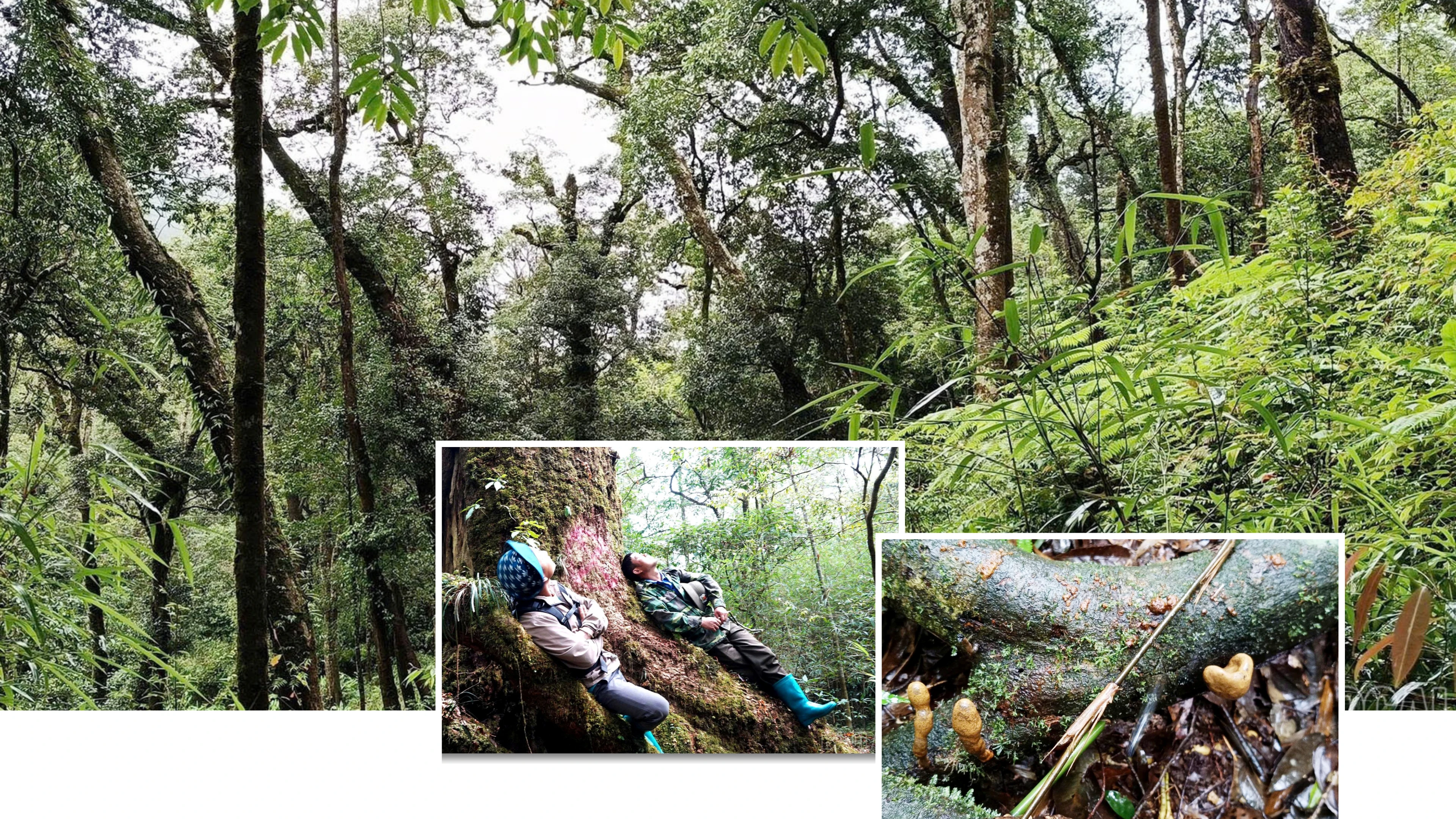
Stopping beneath an ancient tree covered in green moss, Giàng A Lù slowly said, “For the Hmong people here, every patch of forest is a reservoir of water and soil for the terraced fields at the foot of the mountain. Therefore, they consider preserving the forest as preserving their livelihood.” Perhaps it is because of this mindset that, at a time when many natural forests are shrinking, Tà Cây Đằng has retained its almost completely pristine and rare beauty.
Ta Cay Dang is located within the Mu Cang Chai Species and Habitat Conservation Area – one of the rare forest regions of Northwest Vietnam. The entire conservation area covers more than 20,100 hectares, preserving a rich diversity of flora and fauna, along with thousands of natural cypress trees aged from 100 to 700 years. Notably, the Northeast fir and cypress tree populations here have been recognized as Vietnamese Heritage Trees.
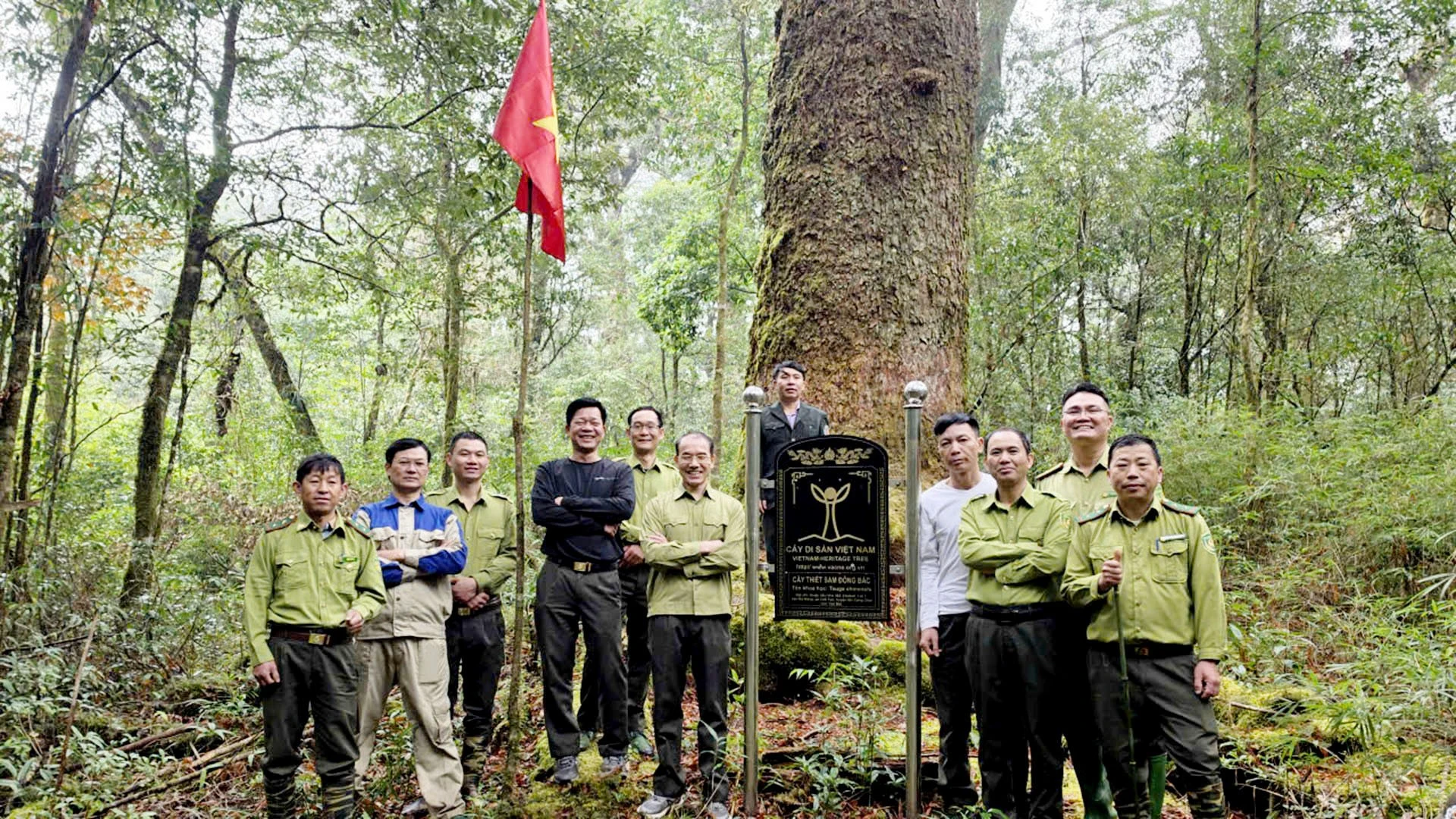
It is a Vietnamese Heritage Tree.
The Ta Cay Dang area alone, covering approximately 240 hectares, is home to many valuable tree species such as cypress and fir, along with endemic flora and fauna of the Northwest mountains. According to local people, the forest is also home to many rare animals such as gibbons, bears, mountain goats, rufous-necked hornbills, and hornbills. Beneath the canopy of the old-growth forest, many valuable medicinal plants are preserved, such as golden orchid, seven-leaved one-branched flower, wild ginseng, and natural reishi mushrooms.
The rugged terrain and the dedicated efforts of the local community over the years have contributed to the almost complete preservation of the rare forest ecosystem in Ta Cay Dang. However, behind this pristine beauty, Ta Cay Dang is also facing a major question: how to develop tourism without sacrificing the lush greenery of the ancient forest.
Mr. Pham Tien Lam, Chairman of the People's Committee of Pung Luong commune, said: The locality is surveying and calculating experiential routes to gradually build a plan for exploiting ecotourism associated with forest conservation. However, development must be carried out systematically because most of the area is within the protected forest area.
Currently, the Management Board of the Mu Cang Chai Species and Habitat Conservation Area is developing an ecotourism, resort, and entertainment project for the period 2026-2030, with a vision to 2050. The project is expected to create a foundation for developing ecotourism linked to the conservation of forest ecosystems and heritage tree clusters at Ta Cay Dang.
According to the Management Board of the Mu Cang Chai Species and Habitat Conservation Area, Ta Cay Dang is an area of exceptional biodiversity value with a population of ancient cypress and fir trees hundreds of years old. Therefore, all future tourism development plans must prioritize the conservation of the forest ecosystem. The overarching principle is to develop tourism without degrading the forest ecosystem. If experiential activities are organized, the number of visitors, tour routes, and the level of impact on the forest habitat will be carefully considered.
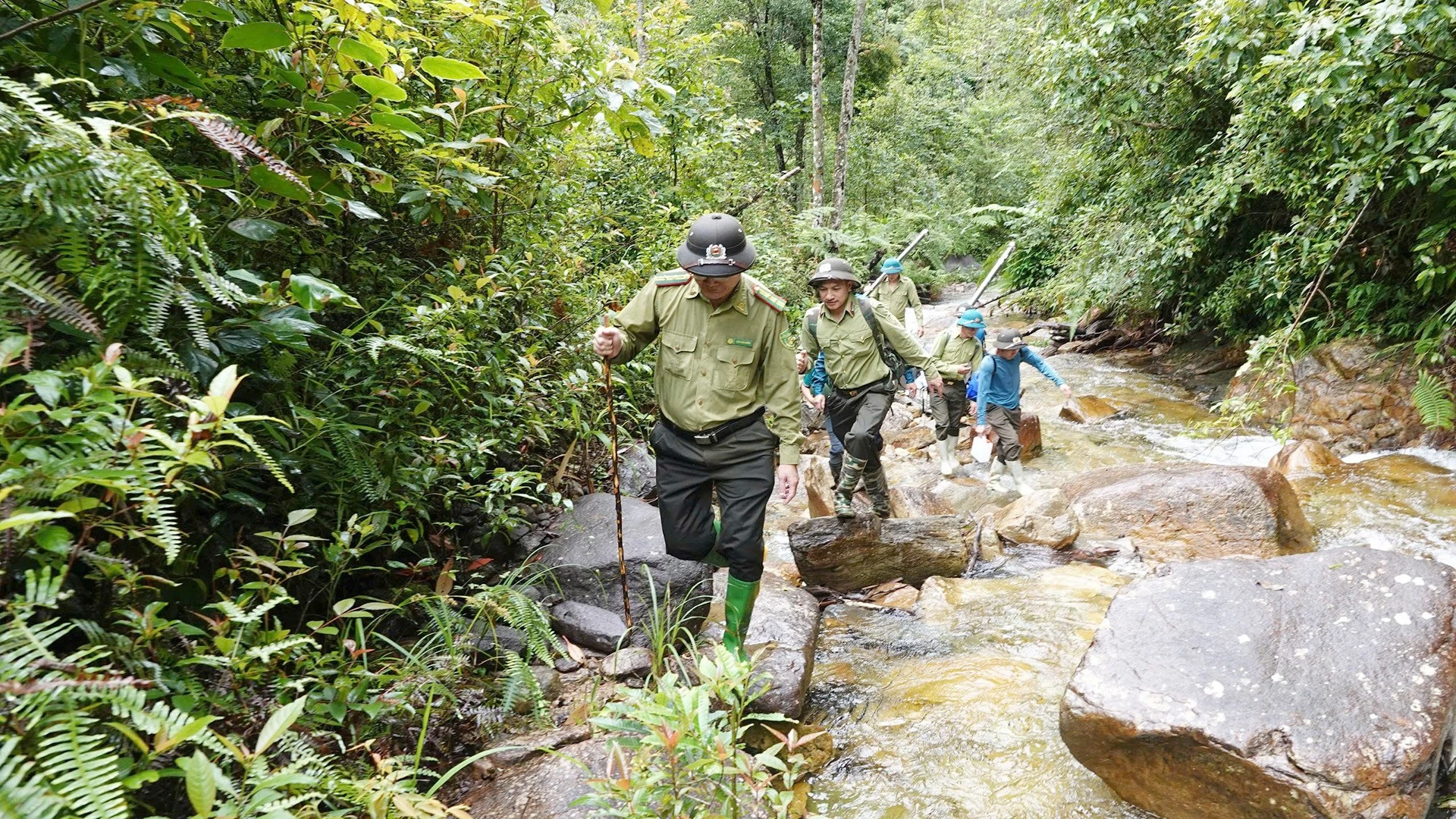
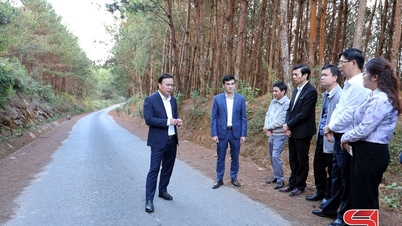
Officials from the Mu Cang Chai Species and Habitat Conservation Area Management Board inspect the forest in the Ta Cay Dang area.
In addition, the Conservation Area Management Board will continue to coordinate with local authorities and communities in forest protection; and at the same time, research and develop ecotourism models focused on experiential tourism, nature education , and raising conservation awareness.
According to experts, exploiting the potential of heritage tree populations must go hand in hand with conservation efforts and close coordination among specialized sectors, avoiding spontaneous tourism that leads to waste, habitat damage, or excessive commercialization. In a "sensitive" forest like Ta Cay Dang, even a small impact can affect an ecosystem that has existed for centuries.
Leaving Ta Cay Dang as the evening twilight began to fall over the mountain slopes, we looked back at the forest gradually sinking into a deep green. In that space, centuries-old trees still stood silently, like guardians of time. Perhaps, this "green gem" will only truly shine when people approach it with respect and preservation, instead of exploiting it at all costs.
Source: https://baolaocai.vn/vien-ngoc-xanh-cho-duoc-danh-thuc-post899728.html
![[Photo] National Assembly Chairman Tran Thanh Man attends the groundbreaking ceremony for the National Highway 1A spatial axis project.](https://vphoto.vietnam.vn/thumb/1200x675/vietnam/resource/IMAGE/2026/05/19/1779161360398_ndo_br_bnd-1412-jpg.webp)
![[Photo] Capturing the moment the tide recedes at Yen Binh Son rapids - a million-year-old scenic spot in Quang Ngai.](https://vphoto.vietnam.vn/thumb/1200x675/vietnam/resource/IMAGE/2026/05/19/1779175463885_yen9-1199-jpg.webp)
![[Photo] General Secretary and President To Lam presides over a meeting on the implementation of Directive No. 34-CT/TW of the Party Central Committee.](https://vphoto.vietnam.vn/thumb/1200x675/vietnam/resource/IMAGE/2026/05/19/1779192417177_anh-man-hinh-2026-05-19-luc-19-06-45.png)






















































![[Photo] General Secretary and President To Lam receives Indian Defense Minister Rajnath Singh](https://vphoto.vietnam.vn/thumb/402x226/vietnam/resource/IMAGE/2026/05/19/1779184046302_anh-man-hinh-2026-05-19-luc-16-46-58.png)






























Comment (0)