Use biological products
Dai Dong 1 village in Hiep Hoa commune has 60 hectares of cultivated land, of which 50 hectares are used for rice cultivation. In previous years, after each harvest, people often chose to collect the straw, dry it, and burn it right in the fields, causing smoke, dust, and air pollution.
 |
Farmers in Dao Xa residential area, Tram Lo ward, are collecting rice straw to prepare for composting using biological products to create organic fertilizer. |
However, in the last two years, many households in the village have become aware of the harmful effects of burning straw and have switched to using biological products to process the straw after the previous harvest into organic fertilizer for the next crop. This not only reduces the effort of collecting, drying, and burning straw, but also helps protect the air from pollution and reduces the cost of buying inorganic fertilizers for rice because the organic fertilizer compensates for the loss.
According to Ms. Dang Thi Nga , Head of the Farmers' Association in Dai Dong 1 village, approximately 50% of the village's farming households have switched to using various products, primarily Trichoderma, to treat rice straw after harvest. The treatment process is very simple: farmers only need to mix Trichoderma with water and molasses according to the recommended ratio, then spray it evenly onto the straw, cover it with a thin layer of soil, and maintain continuous moisture for 15-20 days. This allows the straw to decompose directly, adding nutrients to the soil. This method saves labor and is suitable for large fields. After treatment, the soil becomes loose, rich in humus, and creates favorable conditions for the next crop.
With the support of the Bac Ninh Agricultural Extension Center, starting from the spring crop of 2025, the family of Ms. Nguyen Thi Mien, residing in Dao Xa residential area, Tram Lo ward, participated in a model using biological products to treat rice straw in a circular farming system on an area of 8 sao (approximately 0.8 hectares). Participating in the model, her family received partial financial support for purchasing fertilizers and pesticides, as well as training on the application process and partial financial support for purchasing biological products to treat rice straw after harvest.
Accordingly, after each rice harvest, instead of burning the straw, which causes smoke, dust, and environmental pollution affecting health, her family collects the straw from the fields to make organic fertilizer. The straw is piled up, mixed evenly with urea, superphosphate, potassium chloride, and supplemented with diluted Bio-green biological product.
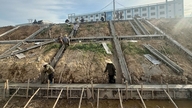
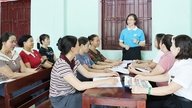
The compost pile is aerated and covered with a tarp to heat it to 50-70 degrees Celsius to completely kill pathogens. It is turned periodically every 14 days to create an anaerobic environment, and water is added to maintain a moisture level of 40-50%.
In a conversation with us, Ms. Mien stated that after 17-30 days of composting, 80% of the straw becomes soft and mushy, decomposes, turns dark brown, and is free of foul odors, with beneficial microorganisms thriving. This not only completely solves the problem of agricultural waste and prevents the burning of straw, which causes environmental pollution, but also helps her family improve soil fertility, increase porosity, and sustainably restore the structure of agricultural land. This results in a saving of approximately 30% on fertilizer costs and 50% on pesticide costs.
In fact, the spring crop of 2026 with the DH12 rice variety in many localities in the province showed that circular production, using organic fertilizers from the process of treating rice straw with biological preparations combined with the use of microbial organic fertilizers, NPK, and timely pest and disease control, resulted in an average yield of 76 quintals/ha, 1.7 quintals/ha higher than the same rice variety grown conventionally.
Building a green, circular agriculture.
Each year, Bac Ninh province cultivates approximately 151,000 hectares of rice, yielding an estimated 600,000-700,000 tons of dry rice straw after harvest. A large portion of this straw is either burned directly in the fields or buried naturally. It is estimated that burning one ton of rice straw releases over 36 kg of CO2, nearly 5 kg of hydrocarbons, over 3 kg of ash dust, and 56 kg of CO2 into the environment. These are all components that contribute to the greenhouse effect, air pollution, and significantly impact people's health.
| Gradually reducing the burning of rice straw in the fields through the use of chemical preparations to process it into fertilizer is a solution that creates a "double" effect: it increases income by reducing input costs and creating high-value by-products, while protecting the agricultural ecosystem, reducing greenhouse gas emissions, and contributing to the development of green, circular agriculture. |
To reduce air pollution caused by burning rice straw after harvest and improve production efficiency, starting from the spring crop of 2025, the Bac Ninh Agricultural Extension Center will develop a model using biological products to treat rice straw in a circular manner in two wards: Tram Lo and Thuan Thanh, with a scale of 40 hectares/crop.
According to Mr. Tran Xuan Dan, Deputy Director of the Bac Ninh Agricultural Extension Center, practical production shows that the model of utilizing and developing agricultural by-products and organisms in rice fields that cause disease transforms them into valuable resources in a closed cycle.
Following the model implemented by the Bac Ninh Agricultural Extension Center in two localities, in recent years, many farmers in the province have developed an awareness of using biological products to treat rice straw in the fields after each harvest instead of burning it, in order to reduce air pollution and improve rice cultivation efficiency.



Currently, about 5% of the straw generated after harvest is collected by people in the province and processed into organic fertilizer using various biological preparations for the next crop. In addition, about 15-25% is collected to serve the production of some winter crops and as animal feed.
Gradually reducing the burning of rice straw in the fields through the use of chemical preparations to process it into fertilizer is a solution that creates a "double" effect: it increases income by reducing input costs and creating high-value by-products, while protecting the agricultural ecosystem, reducing greenhouse gas emissions, and contributing to the development of green, circular agriculture.
Source: https://baobacninhtv.vn/loi-ich-kep-tu-xu-ly-rom-ra-postid448627.bbg

![[Photo] "Hanoi Lotus Festival" honors the lotus flower that has been associated with Vietnam for thousands of years.](https://vphoto.vietnam.vn/thumb/1200x675/vietnam/resource/IMAGE/2026/06/27/1782516943048_sen-ha-noi-2026-minh-duy-1-jpg.webp)