

Many practical benefits for farmers.
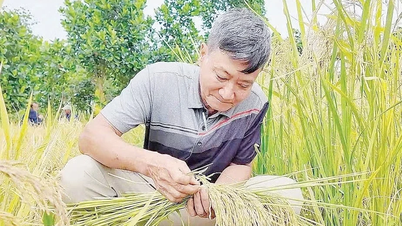
Mr. Nguyen Cao Khai, Director of Tien Thuan Cooperative in Can Tho – which is cultivating 132 hectares of rice under the 1 million hectares low-emission project – stated that the most obvious benefit of participating in the project is "reduced costs and increased profits." Especially noteworthy is the stable market demand, as consumers both domestically and internationally prefer organic rice. Sharing more specific details about the benefits, Mr. Khai said that the emission reduction model of the Ministry of Agriculture and Environment is very practical and brings many benefits, helping farmers completely change their mindset and farming methods compared to traditional rice cultivation. This new farming method reduces the amount of seeds used by two-thirds while increasing productivity. Specifically, instead of using 180 kg of rice seeds per hectare as in the traditional method, this model only requires 60 kg of rice seeds per hectare. In addition, the technology combining sowing and fertilizing simultaneously reduces fertilizer loss, saving 15%-30%. The number of pesticide applications also decreased from 7 to 4 times per crop. As a result, input costs decreased, yields increased by 200-300 tons/ha, and the selling price was 500 VND/kg higher, leading to an additional profit of 2-6 million VND/ha compared to traditional farming methods.
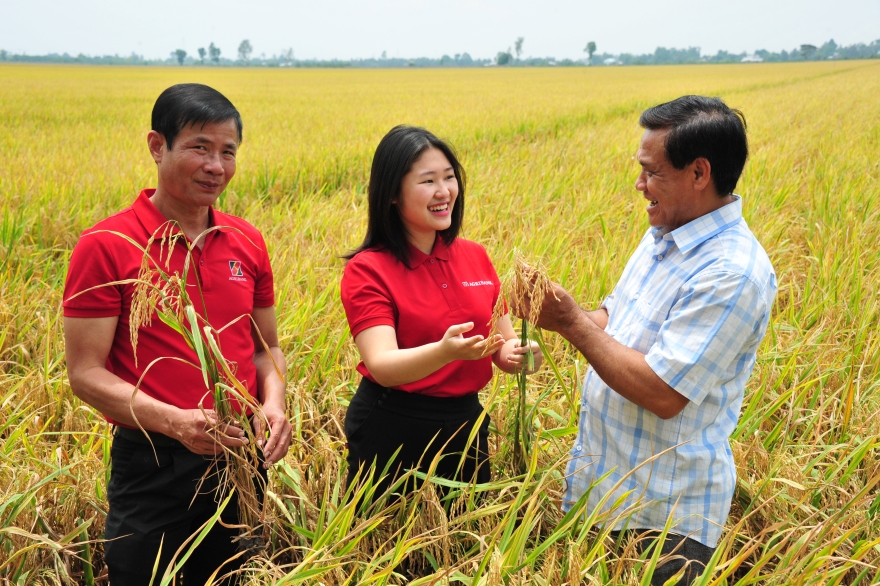
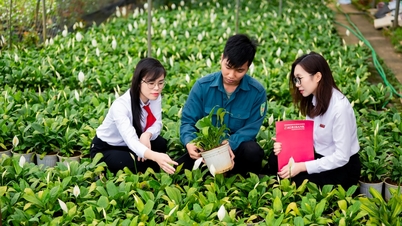
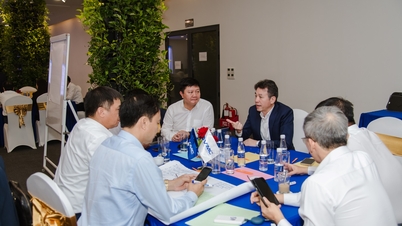
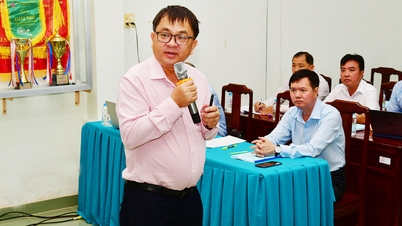
Mr. Nguyen Cao Khai, Director of Tien Thuan Cooperative, introduced the advantages of growing high-quality, low-emission rice to Agribank officials.
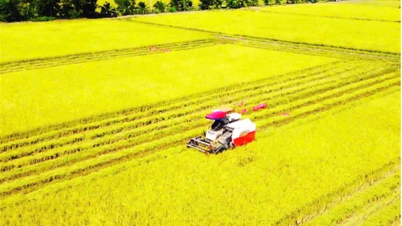
Furthermore, the new farming method creates a closed-loop system. When harvesting rice using traditional methods, the straw is often burned, causing environmental pollution. However, with the 1 million hectare project, the straw is collected for mushroom cultivation and sold on the market, while the by-products are used as organic fertilizer for the rice crop. As a result, no waste is released into the environment, creating a closed-loop system. This method offers many benefits: optimizing profits, reducing pollution, protecting people's health (avoiding smoke and dust from burning straw), and helping to restore the soil.
The biggest obstacle currently is the capital needed to invest in straw baling machines and combined seeding and fertilizing machines, but Agribank has already resolved that. The entire cooperative, with over 10 members, has borrowed more than 6 billion VND from the bank at an interest rate 1% lower than the market rate. “ The government 's policies and Agribank's policies have given us many preferential terms regarding capital, helping us to confidently accelerate investment and implement the project,” Mr. Khai affirmed.
Implementing the project will not cause disruptions to the supply chain.
At the milling factory of Vo Ngoc Tran Food Processing Company Limited in Vinh Binh commune, Vinh Thanh district, Can Tho city, nearly 100 workers are bustling about. Some are transferring freshly harvested rice from boats onto conveyor belts into the drying plant, others are putting it into milling tanks, and still others are bagging and sorting the finished product. Mr. Vo Thanh Phuoc, the company manager, said that although the rice market has been sluggish this year, the company is still purchasing from customers at a higher price than for regular rice. Many rice processing companies are facing difficulties in finding buyers, but Vo Ngoc Tran Company's output remains stable. Currently, the company has increased its purchase of high-quality rice in general, and low-emission rice in particular, to 50% of its total inventory and will continue to increase it in the future. “Since we started purchasing low-emission rice for processing and export, customers have been very satisfied, and our company has been able to export to demanding markets. However, conventional rice cannot enter major markets and only sells at low prices. Because of the high selling price, we buy rice from farmers at a higher price, averaging 500-700 VND/kg,” shared Mr. Vo Thanh Phuoc.
According to Mr. Vo Thanh Phuoc, implementing the 1 million hectare low-emission rice project has strengthened the link between farmers and purchasing businesses, preventing contract breaches as before. Farmers and factories enter into product purchase contracts, with prices flexible according to market conditions, fluctuating up and down at the time of purchase. This allows farmers to produce with peace of mind; when market rice prices rise, the factories buy at higher prices, avoiding losses, and when market prices fall and they cannot sell their produce, the factories still buy as usual, preventing farmers from worrying about unsold inventory and price manipulation. Factories, with this linkage, can confidently expand their processing plants, not worrying about supply shortages when prices fluctuate.
Agribank – a driving force promoting the application of science and technology, contributing to the successful implementation of the Project.
In this collaborative effort, the role of Agribank – the institution tasked by the State Bank of Vietnam with providing preferential funding to businesses and individuals implementing the Project – is indispensable. As the leading bank in piloting this Project, immediately after the Prime Minister approved the Project in November 2023, Agribank signed a cooperation agreement with the Ministry of Agriculture and Rural Development to act as the focal point for implementation.
On November 4, 2024, the General Director of Agribank signed and issued Document No. 16088 on the Program for lending to support the production, processing, and consumption of high-quality, low-emission rice products in the Mekong Delta. Agribank provides loans to meet the short-term, medium-term, and long-term capital needs of all stages (production, procurement, processing, and consumption) in the rice production linkage to support the 1 million hectare rice project, with preferential interest rates at least 1% lower per year than the normal interest rate.
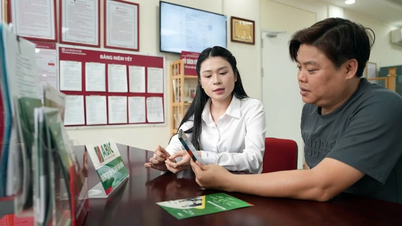
Agribank branches in the 12 provinces and cities implementing the Project have proactively approached, advised, and provided information to participants on policies, procedures, credit processes, and banking products and services, while also understanding their borrowing needs and refining suitable credit products.
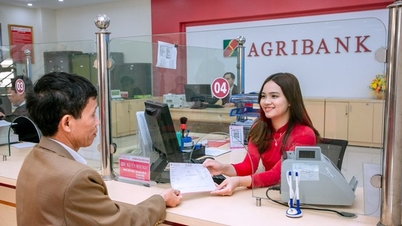
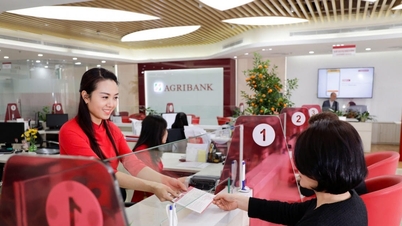
Mr. Luong Tan Phat, Deputy Director in charge of Operations at Agribank's Vinh Thanh District Branch, Can Tho 2, said that the branch has currently disbursed loans to two cooperatives participating in the project with a total outstanding balance of over 12.5 billion VND. Currently, for the implementation of the 1 million hectare rice project, Agribank offers preferential credit packages, reducing interest rates by 1% per year compared to normal rates. Cooperative members borrow capital to purchase combine harvesters and other machinery for mechanization. The disbursement procedures through Agribank are very simple; everything is done digitally, online. Farmers and businesses do not have to go to the branch office to complete procedures or receive cash; the bank transfers the funds directly to their accounts, saving them waiting time and travel costs.
In recent years, Agribank has expanded its investments in projects related to environmental protection, improving the quality and safety of agricultural products, developing coastal resources for sustainable development; managing natural disaster risks; supporting low-carbon agriculture; providing clean water and combating drought and saltwater intrusion...
Source: https://www.agribank.com.vn/vn/ve-agribank/tin-tuc-su-kien/dong-hanh-cung-tam-nong/loi-kep-tu-de-an-1-trieu-ha-lua-phat-thai-thap
![[Photo] General Secretary and President To Lam meets with National Assembly delegates from ethnic minorities.](https://vphoto.vietnam.vn/thumb/1200x675/vietnam/resource/IMAGE/2026/04/20/1776696701056_a1-bnd-8331-3342-jpg.webp)




![[Image] National Assembly discusses the implementation of the socio-economic development plan.](https://vphoto.vietnam.vn/thumb/1200x675/vietnam/resource/IMAGE/2026/04/20/1776696707422_ndo_br_img-20260420-185419-jpg.webp)




































































Comment (0)