Overcoming difficulties
In recent years, many localities in the province have turned the winter crop into an advantage by focusing on suitable crops with high economic value such as vegetables and short-term industrial crops; focusing on transforming the crop structure, diversifying products, utilizing land after the rice harvest, creating jobs, increasing farmers' income, overcoming the situation of abandoned fields or monoculture, and creating a more effective agricultural value chain in the context of climate change.
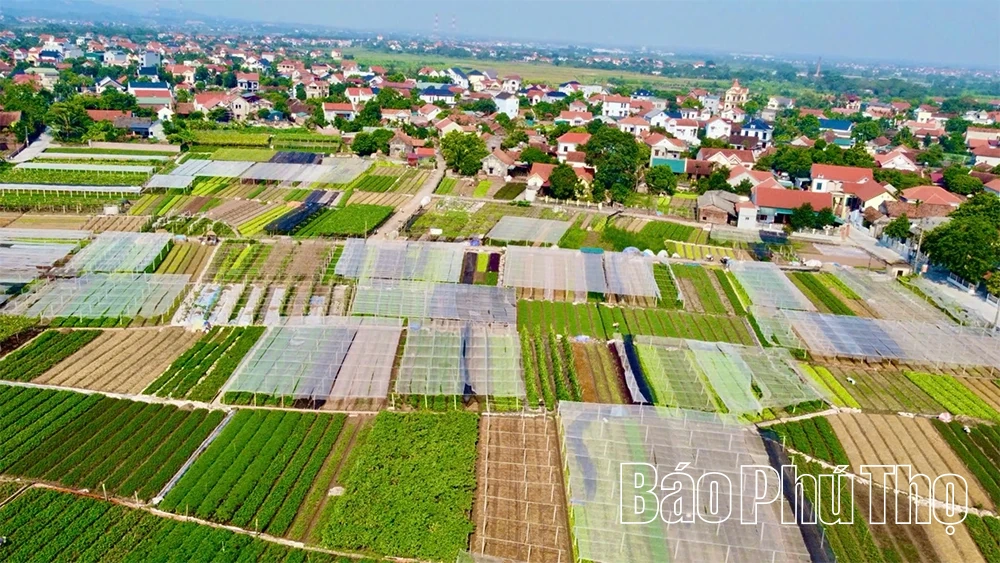
Winter crop production is planned and concentrated in Phung Nguyen commune.
Leading us on a tour of the tomato plants beginning to bear fruit, Mr. Vu Xuan Phuong, Director of Truong Thinh Safe Vegetable Cooperative in Phong Chau Ward, shared: "This winter season, we mainly planted crops such as tomatoes, cabbage, onions, and cauliflower... according to VietGAP standards. All stages, from fertilizing and watering to using pesticides, are strictly followed by cooperative members, ensuring that consumers receive safe and high-quality products. Currently, the cooperative's vegetable products have supply contracts with several schools, businesses, and supermarkets in the province."
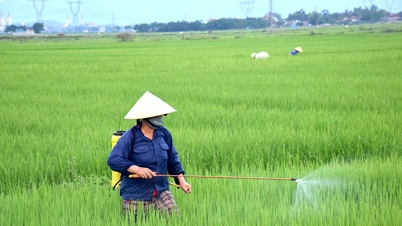
This year, cloudy weather and heavy rains have slowed crop growth. In addition, high prices of agricultural supplies, especially fertilizers, have reduced profits from agricultural production, discouraging farmers from investing in intensive farming. In response, the agricultural sector has implemented several measures to guide farmers, such as: raising ridges and creating deep drainage ditches for corn and vegetables; covering newly planted crops with tarpaulins and plastic sheeting to prevent damage and rot; and proactively producing organic fertilizer from straw, leaves, and livestock by-products to reduce costs. Simultaneously, irrigation enterprises have been directed to closely coordinate with local authorities to monitor weather conditions and improve irrigation systems in winter crop production areas; and to inspect, repair, and dredge canals to ensure good drainage and prevent flooding of winter crops during heavy rains.
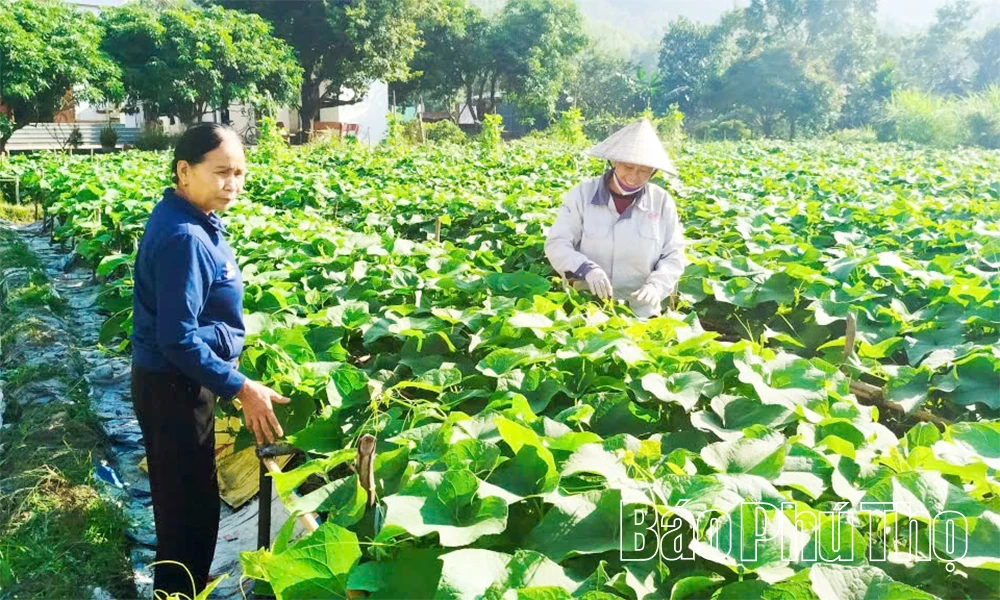

Chayote is a staple crop that provides high income for farmers in Tam Dao and Tam Duong Bac communes.
Mr. Nguyen Truong Giang, Deputy Head of the Department of Crop Production and Plant Protection, stated: "The winter crop is a unique production season and an advantage for the northern provinces, including Phu Tho . The 3-4 months of transition between early and late season temperatures allow for the diverse planting of various crops: warm-loving vegetables, cold-loving vegetables, and neutral vegetables. In many areas, farmers with a tradition and high level of intensive farming expertise can earn 3-5 times more from just one winter crop than from rice cultivation. Therefore, the winter crop in our province is considered the main production season, and its value continues to increase year after year."
Focus on in-depth development
To ensure the winter crop season is truly effective, localities need to focus on directing production, ensuring the completion of the plan and avoiding any wasted land. They should concentrate on developing high-value crops such as biomass corn and vegetables using staggered planting and intercropping methods to avoid mass harvesting that leads to price drops. Simultaneously, they should strengthen linkages with businesses to find and expand markets for their products. The agricultural sector needs to innovate its guidance methods, shifting from production management to economic development during the winter season, closely following market demand and local seasonal conditions and land realities; and applying advanced planting and cultivation techniques to improve productivity and product quality.
Currently, many areas in the province are producing high-economic-value winter crops in localities such as: Tam Dao, Dao Tru, Tam Duong, Hoi Thinh, Hoang An, Vinh Tuong, Tho Tang, Vinh Hung, Yen Lac, Lien Chau, Tam Hong, Binh Xuyen, Phuc Yen ward, Muong Dong, Nat Son, Kim Boi, Hop Kim, An Nghia, An Binh, Lac Luong, Yen Tri, Dai Dong, Quyet Thang, Van Son, Toan Thang, Mai Ha, Hoang Cuong, Chi Tien, Lien Minh, Hien Luong, Van Lang, Dan Thuong, Vinh Chan, Phung Nguyen, Phong Chau ward... Mr. Nguyen Van Ha - Director of Dai Ha Co., Ltd., Phung Nguyen commune, affirmed: "We are currently signing contracts to purchase biomass corn from farmers, initially covering about 400 hectares, at an average price of 950 VND/kg. We plan to continue collaborating with farmers to expand this to about 1,000 hectares in the future." Initially, the company will support farmers with seeds, fertilizers, and technical assistance. With proper care, biomass corn can yield over 50 tons per year, allowing for 3-4 harvests per year. On average, this will generate over 120 million VND/ha/year, significantly higher than growing corn for grain.
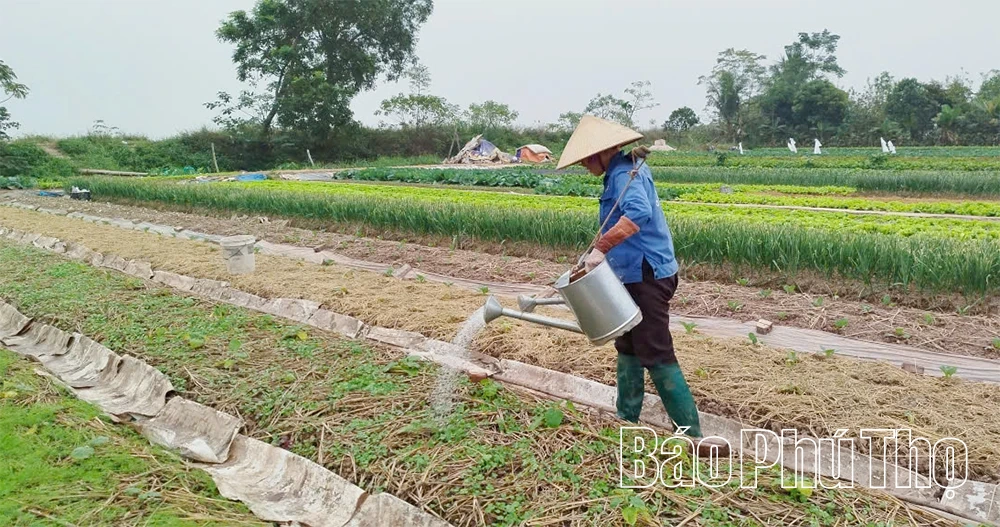
Members of Truong Thinh Safe Vegetable Cooperative in Phong Chau ward are tending to their winter vegetable crops.
The unfavorable weather in recent days has significantly affected the progress of rice harvesting, winter crop planting, and the growth and development of newly planted vegetables. To achieve the set goals and plans, the Department of Agriculture requests that localities advise farmers to replant and compensate for areas of newly planted winter crops that have been broken, fallen, or damaged by storms when the weather clears. They should continue to review and adjust winter crop production plans to suit weather developments; prepare sufficient seed supplies to meet production requirements and have reserves in case replanting is necessary. In addition, farmers should utilize advanced farming techniques, implement safe vegetable and fruit production processes according to Good Agricultural Practices (VietGAP), and increase the use of organic and biological fertilizers and pesticides. For vegetables, staggered planting is recommended to avoid oversupply during the peak season, which can lead to price drops and reduced economic efficiency.


The winter crop season is a short-duration production period with a diverse range of crops and high income potential, and is less affected by natural disasters. Success in winter crop production is crucial for the growth of the agricultural sector and rural development. Therefore, in addition to striving to achieve acreage targets, the agricultural sector and localities are also focusing on enhancing the economic value of winter crop production, making it a primary production season that contributes to increasing people's income.
Quan Lam
Source: https://baophutho.vn/loi-the-nbsp-vu-dong-244107.htm






































































![[Photo Gallery] Exciting Cosplay Festival at Vincom Plaza Bien Hoa](https://vphoto.vietnam.vn/thumb/402x226/vietnam/resource/IMAGE/2026/07/05/1783255268158_img_1441_20260705161627_20260705193040.jpeg)