

 |
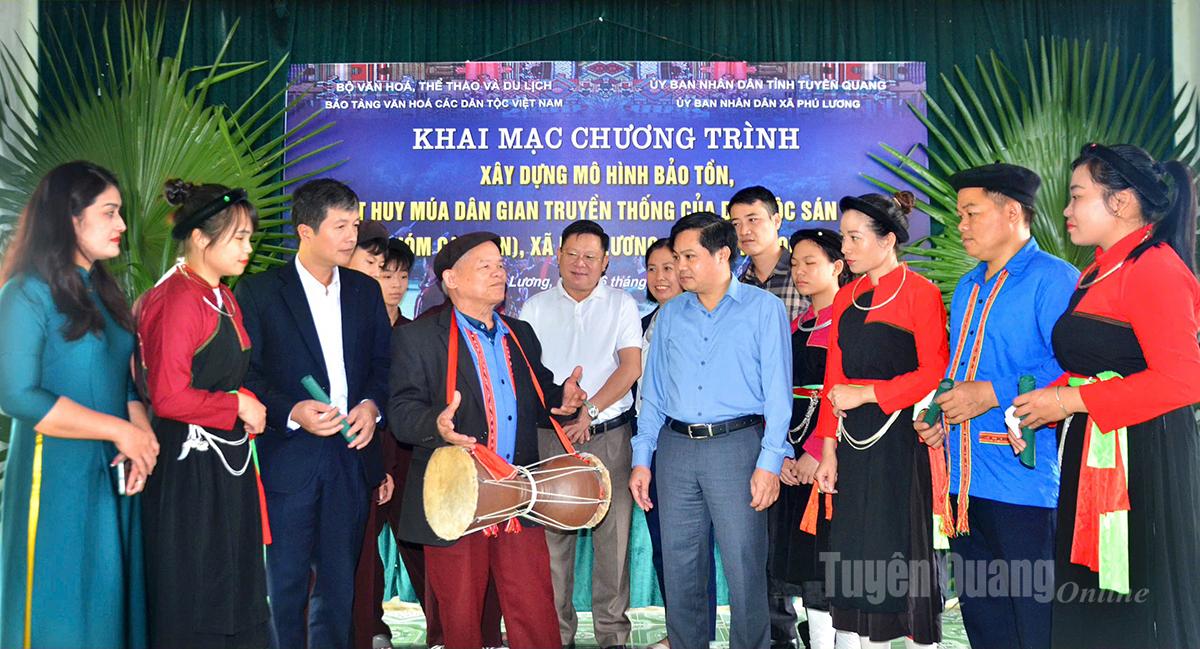
| Mr. Sam Van Dun converses with delegates and the people about the sound of the Sanh drum. |
Preserving our native language
Today, Tan Phu 1 village is bustling with activity, like a festival, as crowds flock to the village's cultural center. People are chatting in the Cao Lan language: "Ngền ấy hắn lợ, mấy pây sư tích hâng pây!", which means: "Today is so much fun, you'll regret it all year if you don't come!"
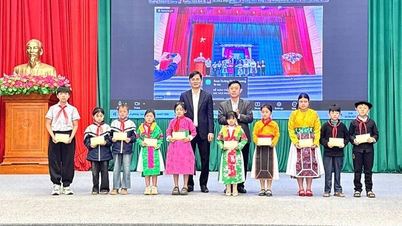
The Cao Lan people of Phu Luong gathered here to attend the opening ceremony of the program "Building a model for preserving and promoting the traditional folk dance of the Cao Lan ethnic group." In that vibrant atmosphere, the voices of the Cao Lan people spread like the morning sun, murmuring like the birdsong of the forest on the lips of the elderly and the young. For them, their language is a source of roots, pure, gentle, and enduring, flowing through generations, keeping the soul of the mountains and forests alive.
In the presence of this culturally rich space, many delegates expressed their appreciation for the Cao Lan people's efforts in preserving their traditional culture. Mr. Nguyen Canh Phuong, Deputy Director of the Museum of Vietnamese Ethnic Cultures, emotionally shared: “I have traveled through many lands, met many communities, and realized that wherever people still preserve their original language, their culture shines brightly.”
Amidst the mountains and forests of Phu Luong, the Cao Lan people, from elderly people with gray hair to young children who have just learned to speak, still speak the Cao Lan language in their daily conversations. They preserve their language as if it were a precious treasure of their ancestors, as if it were the heartbeat of their ethnic group through generations.
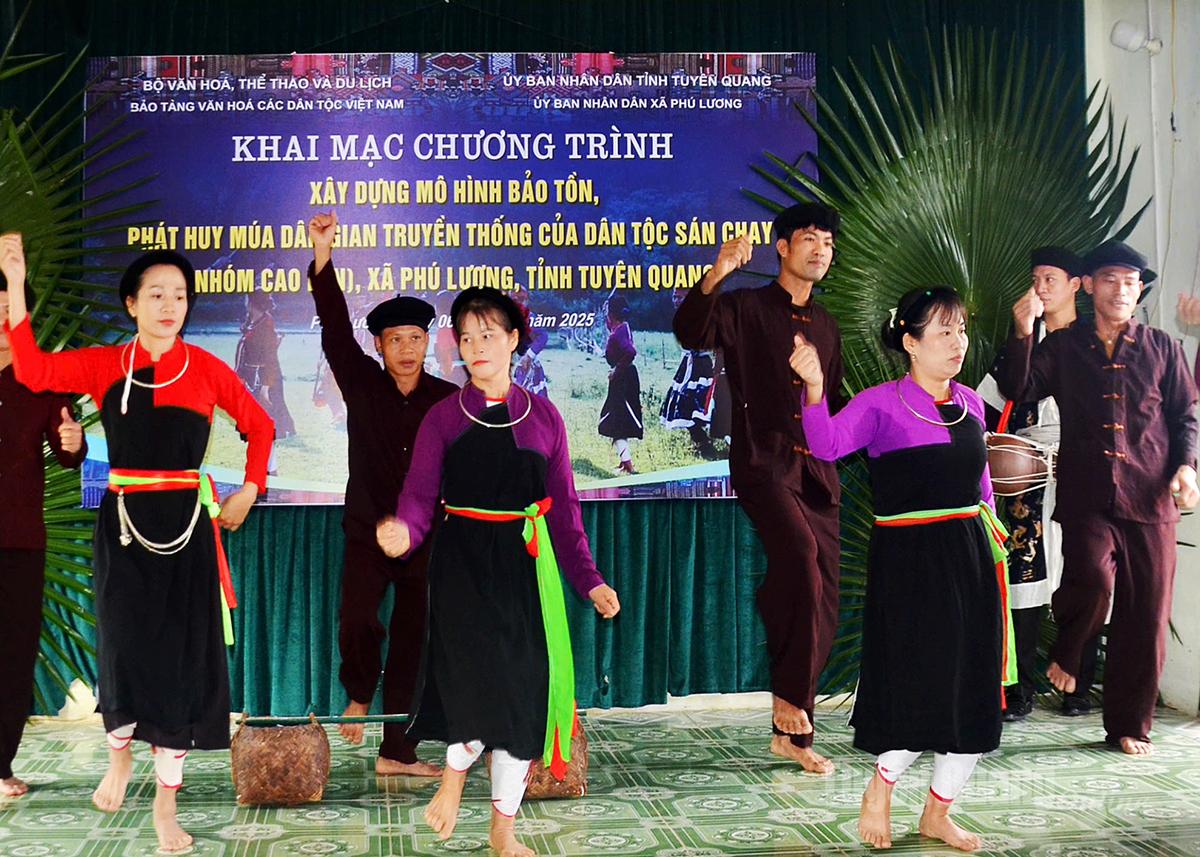 |
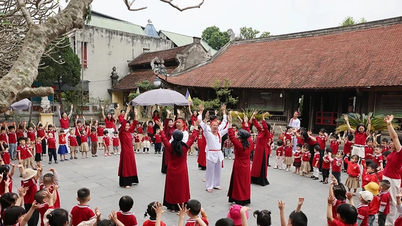
| The dance performance at the opening ceremony of the program to build a model for preserving and promoting traditional folk dances of the Cao Lan ethnic group. |
Only when they can speak their mother tongue can the Cao Lan people truly understand the profound meaning of each lyric and melody in the Sinh Ca, and sing with all their hearts, so that each movement and dance becomes sacred and proud, reflecting the very source of their culture. From these dances, the ancient cultural space is revived, appearing in the form, in the eyes, and in the footsteps of today's young people.
In the midst of the hustle and bustle of modern life, preserving one's identity is like lighting a lamp in the wind. Yet, the Cao Lan people persistently keep the flame alive, preserving their ancestral language as a way of "preserving precious treasures," so that their songs and voices will forever resonate in the vast forests, never fading away.
Ms. Hoang Ngoc Huong, from Dong Xay village, Phu Luong commune, has been speaking the Cao Lan language since she was a toddler learning to speak. Her voice is warm and simple, just like the land that nurtured her. She smiled and shared: "I really enjoy participating in cultural exchange activities with Cao Lan clubs. Each time I attend, I get to meet and chat with people and learn many interesting things."
For her, the language of her homeland is not just a means of communication, but its very essence, the lifeblood that nourishes the soul of the nation. That language flows in her mother's lullabies, in the melodious Sinh Ca songs sung at festivals, and in the stories told by the warm fire each evening.
Ms. Huong confided: “Once, I went to a festival and happened to hear someone next to me speaking the Cao Lan language. I immediately turned to greet them in my own language: ‘Nung chào báo,’ which means ‘hello, sir.’ They responded in the same warm voice. Suddenly, from strangers, we felt close, like siblings. Wherever I am, just hearing the Cao Lan accent warms my heart, making me feel like I’ve met a relative.”
For Ms. Huong and many other Cao Lan people in Phu Luong, preserving their mother tongue is not just about preserving a language, but about preserving the soul of their people. Because only when the language resonates will the culture live on. Only when the language is passed down will the roots not fade amidst the relentless march of time.
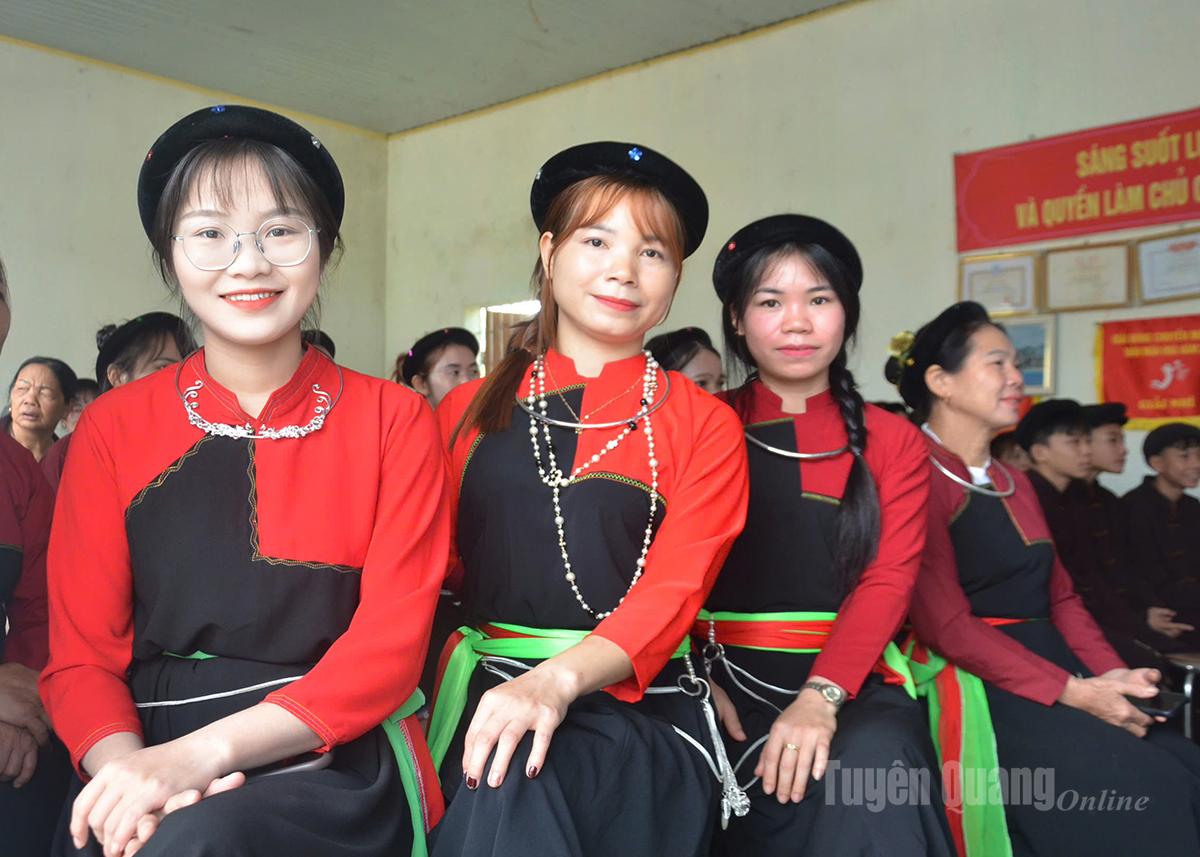 |
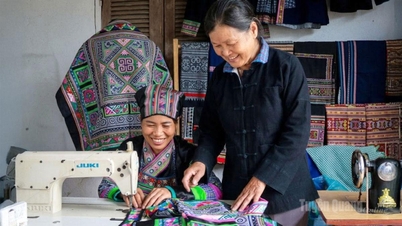
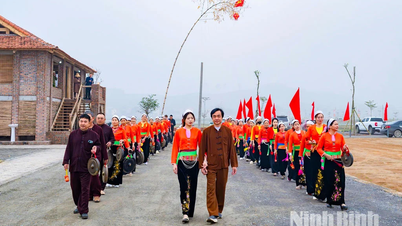
| People in Phu Luong commune wearing the traditional costumes of the Cao Lan ethnic group. |
Not "losing" culture
To preserve their ethnic culture like a pure stream flowing endlessly through the mountains and forests, in Phu Luong there are artisans who have dedicated their entire lives to keeping the flame of traditional language, songs, and dances alive. They work silently but persistently, like guardians of an inexhaustible source of culture. Among them, People's Artisan Sam Van Dun is one of the "living treasures" of Cao Lan culture. Although he is over eighty years old, whenever he talks about his ethnic culture, about the familiar Sinh Ca dance, his eyes light up, his voice becomes vibrant and enthusiastic as if youth is rushing back. For decades, he has been a steadfast "bridge" between the past and the present, between the soul of Cao Lan culture and generations of young people. Whenever the festival drums sound, Mr. Dun seems to awaken with memories. His hands tremble but remain steady with each drum beat, each movement awakening an entire cultural realm. That sound is the rhythm of the village festival, the call of our ancestors echoing through generations. He said emotionally, "In the old days, the Cao Lan people only needed to hear the drum to know it was time for the festival. Now that I'm teaching it to the younger generation, I only hope they will remember this drum sound. Remember it so they know who they are, so they don't lose sight of the call of their homeland."
Sam Van Dao, the youngest son of artisan Sam Dun, has become one of the outstanding young figures in the journey of preserving and spreading Cao Lan culture. Following in his father's footsteps, he brings the drums and dances of his ethnic group to villages inhabited by Cao Lan people both within and outside the province. Whether it's the Chim Gau dance, the Khai Den dance, or the Tam Thanh dance, he passionately teaches the younger generation each movement and drum beat, hoping to instill in them pride and love for their roots.
Besides teaching, Dao also organizes training sessions with his father for Cao Lan artisans throughout the region, so that everyone can further appreciate and be proud of their ancestral culture. Now, in Phu Luong commune, there are more dedicated individuals like Sam Manh Hao, Sam Van Hy, Ly Van Can… who are continuing to fuel the movement to preserve ethnic culture.
They teach each other every drum beat, every hand movement, every step, so that each turn, each tilt on the stage is not just an artistic performance, but becomes the breath and soul of the Cao Lan people. Those sounds and movements seem to be awakened, resonating and living on in today's life.
Canh Truc
Source: https://baotuyenquang.com.vn/van-hoa/202511/lua-am-van-hoa-cao-lan-71a4c59/










































Comment (0)