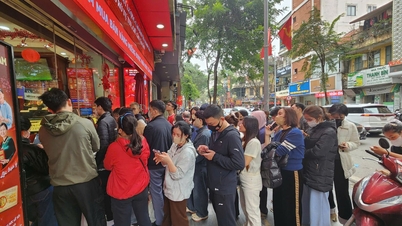
At the Safer Internet Day event on February 10th, experts stated that security risks are increasing amidst the proliferation of AI and deepfake technologies. According to Ngo Minh Hieu, co-founder of the Anti-Phishing project, attackers are increasingly "AI-izing" old phishing tricks to "refresh" them, such as using deepfake technology to impersonate faces and voices, creating chatbots to deceive users, and exploiting fear or urgency to steal identities or accounts.
|
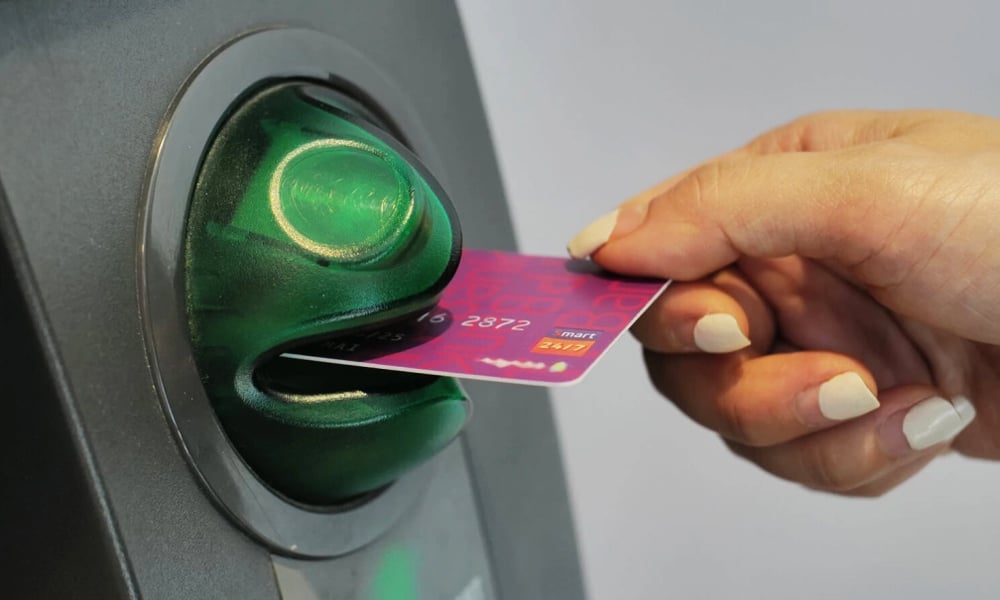
Illustrative image. |
Impersonating government officials or police officers.
A common scam that traps many people during the Lunar New Year season involves impersonating police officers, prosecutors, or court officials. Scammers call people, claiming they are involved in a case, have violated the law, or owe administrative fines, then demand money for "verification, payment of fines, or investigation assistance." Some even use AI tools to mimic the images and voices of official agencies.
Driven by fear, reluctance to get involved in legal issues, and a desire for a quick resolution to enjoy the Lunar New Year without worry, some people easily comply and may have all the money in their accounts stolen.
Impersonating a delivery driver to gain access to a bank account.
Taking advantage of the surge in online shopping demand leading up to Tet (Lunar New Year), scammers are using the tactic of impersonating delivery personnel to steal people's money.
The scam begins with a call from an unknown number, claiming to be a delivery driver, announcing a small payment for an order to create a false sense of security. After paying, the victim receives another call claiming the driver is a "new employee who made a mistake" and is instructed to contact customer support. From there, the scammer requests screen sharing, camera activation, and bank account-related actions. One victim in Hanoi was scammed out of nearly 1.3 billion VND using this method.
Scams involving fake Lunar New Year subsidies and promotions.
Taking advantage of social welfare policies and the increased shopping demand at the end of the year, many scam groups impersonate local officials or insurance agents to call and text with messages offering Tet (Lunar New Year) gifts, social welfare benefits, and subsidies, requesting bank account numbers, verification codes, and personal identification numbers. In reality, this is a way for scammers to collect personal information, then use AI to exploit this data and carry out other scams to gain access to and withdraw money from accounts.
Furthermore, numerous fake fan pages and websites impersonating major brands and stores have been created online, promoting deep discounts, special promotions, or valuable Tet (Lunar New Year) gifts. Before delivery or gift giving, the scammers will request the recipient to transfer a deposit or shipping fee. After receiving the money, they quickly block communication and pocket the transferred funds.
Scams involving exchanging small denominations of money, new banknotes, and offering quick loans.
Recognizing the surge in demand for small denominations and new banknotes for Lunar New Year celebrations and temple offerings, scammers are using social media to exchange money. In reality, most of these transactions take place outside of legitimate channels, posing risks to the public. A common tactic is to request a deposit or upfront payment via bank transfer. After receiving the money, they immediately block communication, delete accounts, or delay transactions before stealing the funds.
In some cases, fraudsters deliver counterfeit money or less than agreed-upon amounts; when caught, they will claim it was a "mistake." Additionally, there is the practice of advertising low exchange fees to lure customers, then adding numerous extra charges, driving up the fees to unusually high levels. They often use fake accounts, employing AI to create images impersonating reputable individuals or organizations, even misleading people into thinking they are banks to gain trust. According to experts, illegal currency exchange and the use of counterfeit money not only cause financial losses but also pose potential legal risks to citizens.
Furthermore, taking advantage of people's need for money during this period, scammers advertise on social media services such as "online loans," "same-day disbursement," and "low interest rates, no collateral required." When borrowers contact them, they are asked to submit documents and pay fees such as appraisal fees, insurance fees, and disbursement fees, but this money may then be stolen without the loan being granted as promised.
Scamming people with train, bus, and plane tickets, as well as hotel bookings.
Another common scam involves impersonating employees of transportation companies, railways, airlines, or accommodation establishments, using images, logos, and names similar to the official ones to deceive users. Scammers often create content like "last-minute tickets," "internal deals," or "rooms just vacated" to urge buyers to transfer money quickly due to limited availability. Additionally, they create fake fan pages and websites impersonating hotels and resorts, copying images from legitimate sites and offering significantly lower prices than the market rate. Once users transfer deposits, the scammers immediately block communication, delete the pages, and fail to fulfill their commitments, resulting in financial losses.
The police advise people to only buy travel tickets through official websites, apps, or authorized agents, and to avoid transactions with unknown individuals on social media. When booking hotels or homestays, carefully check the information of the accommodation, fan page, website, and contact address before transferring money. Be wary of unusually cheap tickets or rooms, especially those containing information about "internal deals" or "last-minute bookings," and regularly monitor warnings from authorities to recognize signs of fraud.
In response to this scam, authorities advise people to check order information through the official website or app of the shipping company; not to click on suspicious links, not to share screenshots or verification codes, or to make bank transfers before receiving the goods; and to promptly report any suspicious activity to the police.

Vietnam encourages US businesses to expand investment in high technology.On the morning of June 26th, at the Government Headquarters, Deputy Prime Minister Ho Quoc Dung received Mr. Jeff Place, Supply Chain Director of Coherent Group (USA). During the meeting, the Deputy Prime Minister affirmed that Vietnam encourages US businesses to expand investment, especially in high-tech, innovation, and semiconductor industries. Arun Kumar, Vice President of APAC at ManageEngine, believes that safe internet use begins with individual vigilance and a multi-layered defense system. "As digital activity accelerates in work and daily life, no single tool or control measure can protect users from the ever-evolving array of online threats," he said.
Authorities also recommend that people regularly monitor announcements about new scam methods and tactics to protect their personal information and bank accounts when conducting transactions online.
According to VnExpress
• See source link: https://vnexpress.net/hang- loạt-chieu-lua-dao-tren-mang-dip-can-tet-5039483.html
Source: https://baobacninhtv.vn/lua-dao-ai-hoa-bua-vay-nguoi-dung-dip-can-tet-postid439258.bbg











![[Photo] Strengthening character and expertise: Intense training for artillery soldiers.](https://vphoto.vietnam.vn/thumb/1200x675/vietnam/resource/IMAGE/2026/06/30/1782815602541_lu-368-1875-4571-jpg.webp)