

As of the end of September 2024, 125,338 fake websites impersonating agencies and organizations for fraudulent purposes had been recorded.
During the week of October 7th to 13th, the Cybersecurity Department issued a warning about the following tactics:
- Warning about illegal multi-level marketing fundraising scams: Scammers introduce a foreign-based corporation that undertakes transportation technology projects and operates by raising capital through the purchase of share packages.
Accordingly, victims only need to refer more members to the system to receive commissions; the more members they refer, the higher the commission.
This corporation has offices in Vietnam but has not yet been licensed by the Ministry of Industry and Trade to operate a multi-level marketing business.
The Cybersecurity Department advises people to be cautious of investment and fundraising offers with unusually high interest rates. People should check the legality (including operating licenses and related information) before participating. They should also consult with reputable experts. In case of suspected fraud, they should immediately report it to the authorities for assistance.
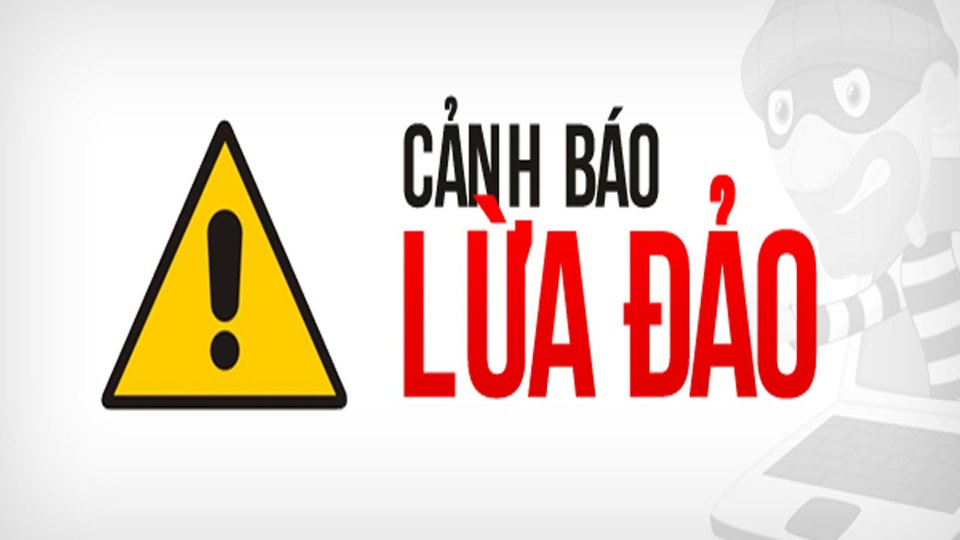
- Warning about "black market" online lending: Taking advantage of people's need for online loans, these individuals have impersonated bank officials to scam and steal money.
Scammers lure people in by promising quick loans, no collateral required, no credit check, and simple procedures.
After gaining the victim's trust, the perpetrator requests the borrower to pay a deposit or upfront payment of a certain amount as a service fee or processing fee, with the intention of defrauding them.
Additionally, these individuals may request users to download fake loan apps in order to steal personal information, bank account numbers, and even credit card information.
After filling out the information, people not only didn't receive the loan but also had their personal information exposed.
In addition, there are online lending services that initially promise low interest rates, but when the loan is disbursed, the interest rate increases along with a series of unreasonable penalty fees. If borrowers are unable to repay the debt, these individuals will resort to threats, psychological harassment, and even defamation on social media.
The Cybersecurity Department recommends that people be wary of online loan advertisements, only borrow from reputable and licensed organizations and banks, and avoid accessing or downloading loan applications and websites from unknown sources. Do not transfer money to strangers, and do not share personal information, bank account details, OTP codes, or passwords.
- Impersonating the power company: Scammers impersonate power company employees, calling customers to inform them of large outstanding electricity bills and threatening to cut off their power if they don't pay.
Then, the perpetrators ask people to transfer money to a personal account or provide bank information to settle the debt.
Scammers send fake messages and emails notifying people about electricity bills, along with links and fake apps that prompt people to pay online. When people download the app, click on the link, and fill in their information, the scammers will steal their personal information.
The Cybersecurity Department stated that electricity companies typically do not request urgent payments via phone or bank transfer to personal accounts. Therefore, the Department recommends that people be vigilant and verify information directly from official channels. Absolutely do not transfer money or provide personal information to strangers, and do not access links or download apps sent by strangers.
Source: https://kinhtedothi.vn/canh-bao-lua-dao-cho-vay-tin-dung-den-tiep-tuc-hoanh-hanh.html

![[Photo] General Secretary and President To Lam meets with National Assembly delegates from ethnic minorities.](https://vphoto.vietnam.vn/thumb/1200x675/vietnam/resource/IMAGE/2026/04/20/1776696701056_a1-bnd-8331-3342-jpg.webp)



![[Image] National Assembly discusses the implementation of the socio-economic development plan.](https://vphoto.vietnam.vn/thumb/1200x675/vietnam/resource/IMAGE/2026/04/20/1776696707422_ndo_br_img-20260420-185419-jpg.webp)






























































































Comment (0)