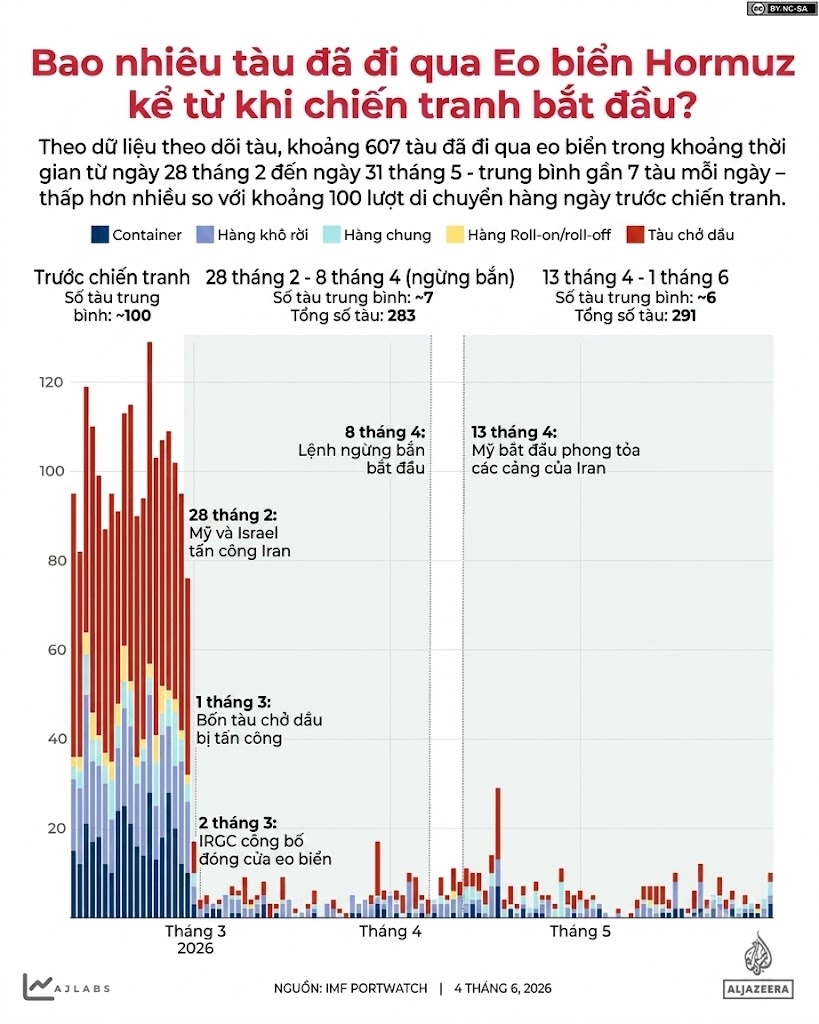
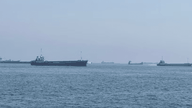
This figure is currently only half of what it was before the conflict, but it is a positive sign that energy transport activity on this strategic shipping route is gradually recovering.
Recent data suggests that traffic is beginning to increase again, with dozens of trains passing through on some days, although levels remain far below pre-crisis standards and are easily subject to unexpected reversals.
Ship tracking data and freight rates clearly show that shipowners and charterers are proactively navigating early to capitalize on export shipments from the Gulf region. However, this erratic recovery indicates that the system is not yet fully stable. Instead, it is undergoing a real-world "test," as shipowners operate while simultaneously exploring safety limits and economic efficiency.
 |
On July 1st, Iran and the United States concluded a round of indirect talks without making progress toward a lasting peace. Instead, the discussions mainly revolved around issues already agreed upon in the interim agreement announced two weeks ago, according to Reuters.
Sources familiar with the negotiations said representatives from both countries spent two days in Doha, Qatar, discussing maritime traffic through the Strait of Hormuz and the release of frozen Iranian funds, two key issues within the framework of the initial agreement.
The Qatari Foreign Ministry said that US and Iranian negotiators held separate meetings with mediators from Qatar and Pakistan.
Reuters, citing an anonymous source, reported that President Trump's son-in-law, Jared Kushner, and senior US envoy Steve Witkoff – who were sent by the White House to the region for "high-level" talks – did not directly attend these sessions.
The Qatari Foreign Ministry said the next meeting would take place after the funeral of Iranian Supreme Leader Ali Khamenei, who is scheduled to be buried on July 9.

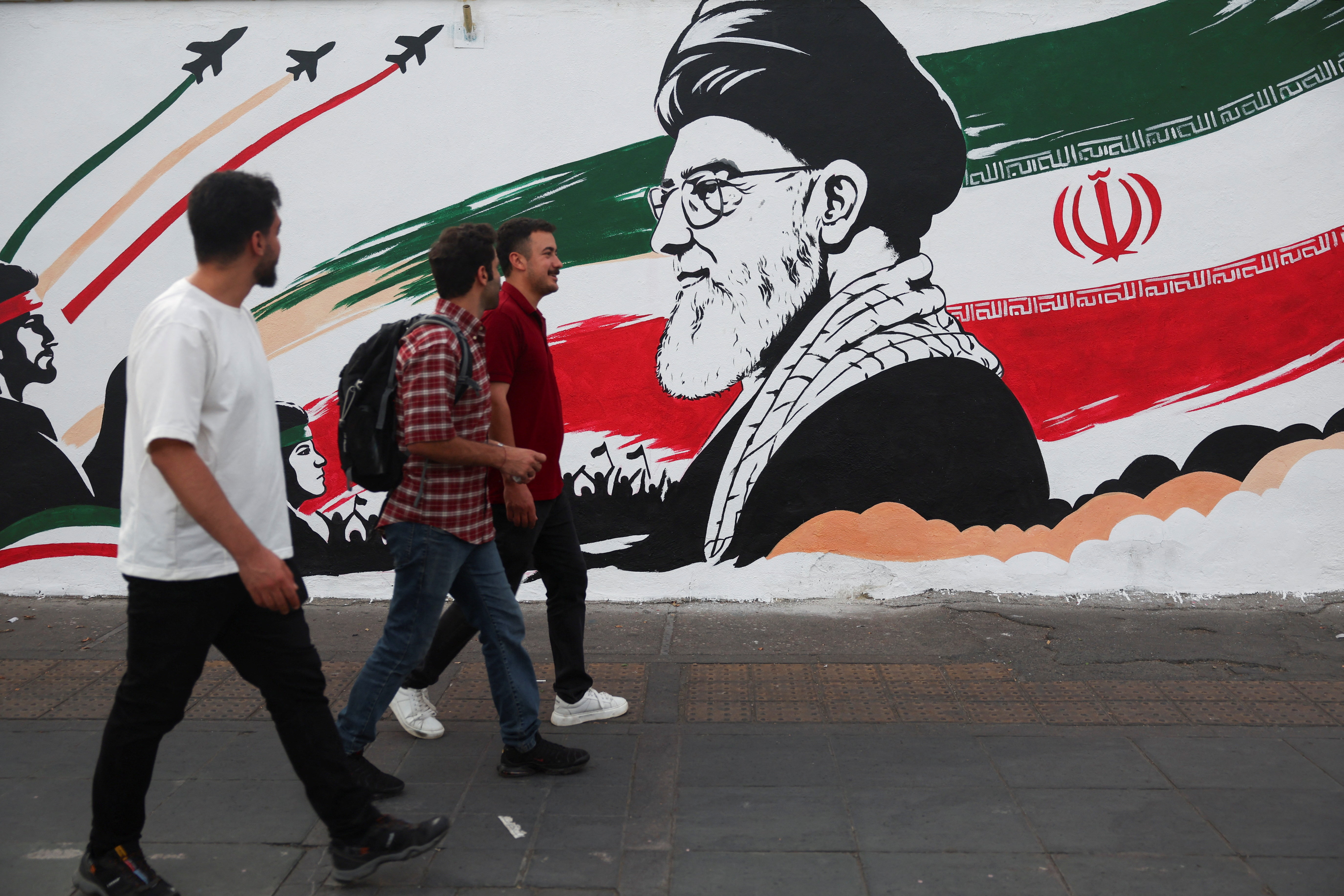 |
A mural depicting the late Iranian Supreme Leader Ali Khamenei before his funeral in Tehran, Iran, on July 1. Photo: Reuters. |
According to the ministry, the discussions in Doha achieved "positive progress" on issues related to the memorandum of understanding between the US and Iran, and "built upon the results" achieved at the summit in Switzerland.
On the same day, US President Donald Trump said that the two sides were making progress in discussions about potentially imposing limits on Iran's nuclear program.
"The denuclearization process in Iran is going very well. They've had very productive meetings and we'll see," Trump told reporters.
However, sources indicate that the nuclear program was not mentioned in the negotiations, which were purely technical in nature.
US Vice President JD Vance said the issue would be discussed later. He told reporters, "Clearly, we are concerned about the nuclear issue and will begin discussions about it."
On Tehran's side, Iran's chief negotiator, Deputy Foreign Minister Kazem Gharibabadi, said the talks had concluded but did not say whether the two countries had narrowed any differences.
According to the IRNA news agency, Mr. Gharibabadi said he would establish a communication channel to inform and discuss violations of the memorandum.
Following a meeting with Qatari mediators, Gharibabadi said that part of the $6 billion in frozen Iranian assets would be used to purchase goods that Tehran needed.



Also on July 1st, Iranian President Masoud Pezeshkian defended Tehran's talks with the US amid criticism that Supreme Leader Mojtaba Khamenei had not yet ratified the memorandum.
According to a statement published by IRNA , Pezeshkian said that if Khamenei "orders no negotiations, we will certainly obey."
The Supreme Leader's stance on the US-Iran memorandum has become a subject of widespread debate within Iran, after he declared that he "has a different view" on the agreement.
Source: https://znews.vn/luu-luong-dau-qua-hormuz-dan-phuc-hoi-post1665334.html