

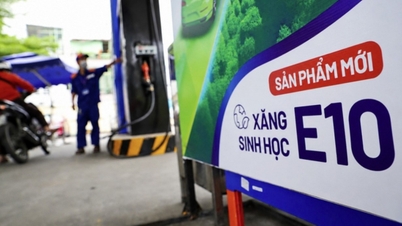
According to Associate Professor Dr. Do Van Dung - Chairman of the Ho Chi Minh City Automobile and Power Equipment Association, when using E10 gasoline, common malfunctions in the fuel system due to ethanol include fuel injectors and fuel pumps.
Common malfunctions
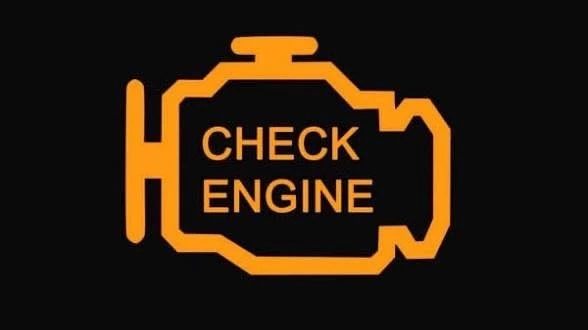
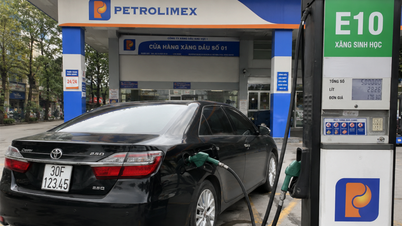
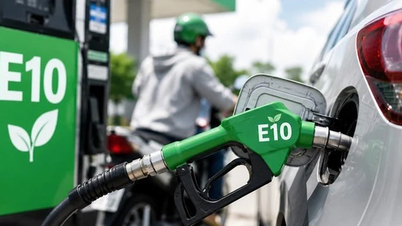
According to Associate Professor Dr. Do Van Dung, E10 gasoline, containing 10% ethanol, has been widely used in Vietnam since 2026. Many owners of newer cars have reported that the Check Engine light (the "goldfish" light) illuminates after refueling with E10, even though the car runs normally. This is usually not a serious malfunction but rather a protective mechanism of the electronic control unit (ECU). This phenomenon is closely related to fuel changes, closed-loop control mode, oxygen sensor, and fuel trim mechanism.
Pure gasoline has an ideal air-fuel ratio of approximately 14.7:1. With E10, this figure drops to around 14.1:1 because ethanol requires less air to burn completely. If the actual ethanol content is higher than the stated level due to some batches of gasoline being suspected of being blended by 10-15% for profit, the air-fuel mixture will become leaner than the fuel map programmed by the ECU.
Ethanol is highly hygroscopic, making it prone to phase separation (water-ethanol layer separation). When a vehicle is left unused for extended periods, water accumulates in the fuel tank, causing numerous problems. Water leads to rust formation on the fuel tank and pipes, especially on metals that are not resistant to ethanol. Oxidation produces acids and deposits, resulting in clogged fuel filters.
Dirt and rust can also cause injector needle sticking. When the needle sticks, the injector operates erratically or leaks (fuel leakage). This further reduces the lean fuel mixture, pushing fuel trim levels higher and easily triggering the P0171 error code.
In addition, the fuel pump has to work harder due to dirt buildup, leading to overheating and premature failure. Ethanol also damages rubber seals and diaphragms if these parts are not ethanol-resistant.
Older vehicles manufactured before 2010-2012 and motorcycles generally carry a higher risk compared to modern vehicles with specialized components and software.
How to deal with the goldfish light coming on.
The vehicle owner should address the issue immediately when the Check Engine light comes on. First, the owner should take the vehicle to a garage with an OBD-II diagnostic tool to read the error codes and check the STFT and LTFT fuel adjustment values. If the LTFT is consistently greater than +20-25%, the most likely cause is a lean mixture due to a high ethanol content (E10 fuel has been added) or a leak.
The owner should check basic elements such as whether the fuel cap is airtight, whether there are any vacuum leaks at the throttle body and intake manifold, and measure the fuel pressure. Next, the owner should clean the fuel injectors and throttle body with a specialized solution, replace the fuel filter, and check and replace the oxygen sensor if it is old.
After the repair, the owner resets the ECU to clear the errors and test drives the car for a short distance so the ECU can relearn the fuel trim.
If the problem is severe, the owner should check the fuel pump and replace the injectors if the injector rods are stuck or damaged. Owners should not simply reset the warning light without addressing the root cause, as the problem will likely reappear.
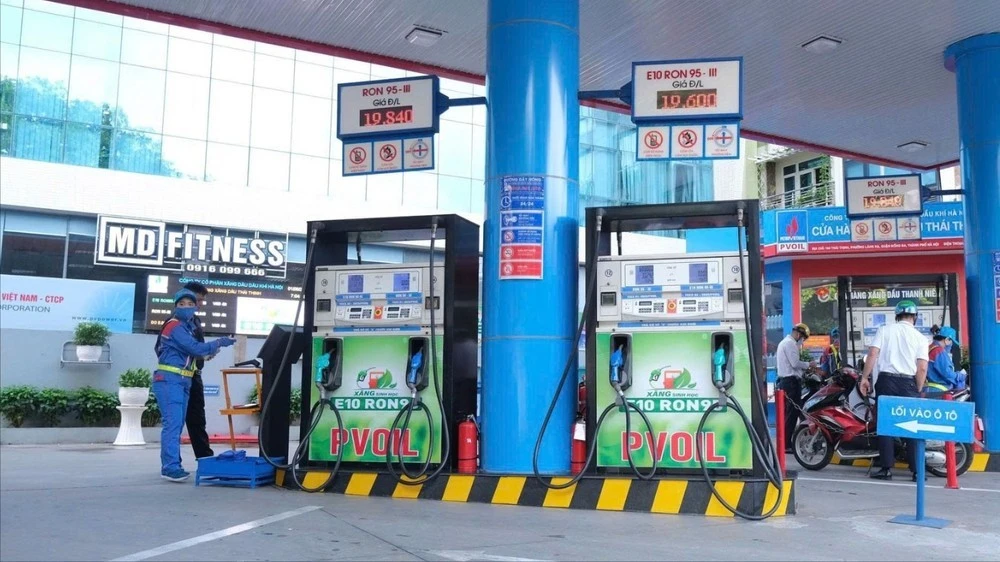
Important note: If the check engine light frequently comes on again shortly after clearing the fault code, the owner should switch to a different gas station. The cause could be that the fuel advertised as E10 actually contains a higher ethanol content (E15 or E20). Owners should also regularly check fuel quality by monitoring fuel consumption, driving feel, and keeping a record of refueling history to detect any unusual fluctuations early.
Troubleshooting fuel injector and fuel pump malfunctions caused by E10.
If fuel injectors are damaged by ethanol, owners should flush them using ultrasonic cleaning or specialized ethanol-based chemicals. If the injector rods are heavily contaminated or damaged, owners must replace the injectors with new ones, preferably ethanol-resistant ones. For the fuel pump, if the pressure is low or there are unusual noises, owners need to replace it with a new one compatible with E10.
Refine fuel map, ignition map, and cold start enrichment for older cars.
For older vehicles that haven't been programmed to be compatible with E10, owners can take their cars to professional ECU tuning centers to fine-tune the fuel maps. Technicians will adjust the fuel map to increase fuel injection, compensating for the altered stoichiometric ratio of E10. They will also fine-tune the ignition map by shifting the ignition timing forward by about 2-4 degrees to take advantage of E10's high octane rating, increasing engine power without the risk of knocking. The cold start enrichment feature also needs to be adjusted to make starting easier in the early morning or in cold weather.
This adjustment helps the car run smoother, slightly increases power, reduces fuel consumption, and minimizes the Check Engine light from illuminating. However, car owners should only have this done at reputable places with specialized equipment and knowledgeable technicians. Incorrect map adjustment can lead to knocking, overheating, or engine damage.
According to Associate Professor Dr. Do Van Dung, to minimize problems, car owners should refuel at large, reputable gas stations, avoid letting the fuel tank fall below half full when the car is left unused for extended periods, and add anti-corrosion additives and stabilizers. Car owners should also replace gaskets and fuel lines with ethanol-resistant ones and have fuel injectors and filters serviced every 10,000-15,000 km.
The Check Engine light when using E10 fuel mainly stems from excessive fuel trim in the closed loop due to ethanol altering the fuel's properties. Modern vehicles with wideband sensors handle this better, but consistent fuel quality and proper maintenance remain crucial. Ethanol offers environmental benefits but requires more proactive management from the owner, and is especially more expensive for older vehicles. If the light comes on frequently, owners should take their vehicle to a reputable dealership or garage for inspection as soon as possible to prevent further damage.
Source: https://baolaocai.vn/ly-do-xe-doi-moi-do-xang-e10-gap-tinh-trang-den-bao-loi-check-engine-den-ca-vang-post900289.html
































































































Comment (0)