

Mrs. Đệ, whose real name was Đặng Thị Kim Liên (born in 1922 in Vỹ Dạ village, Huế City, Thừa Thiên - Huế province), established her business producing tré, nem, and chả from 1956 to 1990.
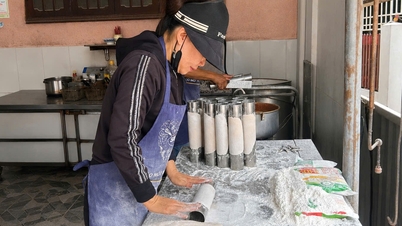
As the only person to inherit the craft, Mrs. Binh (Mrs. De's youngest daughter) says that to make delicious tré, the use of machinery must be minimized, and certain steps must be done by hand to ensure the tré is wrapped to perfection.
"In the old days, my mother personally went to the market to choose fresh, hot lean pork and pork belly. If anyone tore the banana leaves incorrectly, she would definitely discard them. Then there was the way she boiled the meat, sliced it, chopped the galangal, mixed the spices, and wrapped the tré... everything had to be done meticulously. If any step was wrong, you could tell immediately if the tré was cooked through. Tré must be eaten with chili sauce and crushed roasted peanuts to be truly delicious," Mrs. Binh shared.
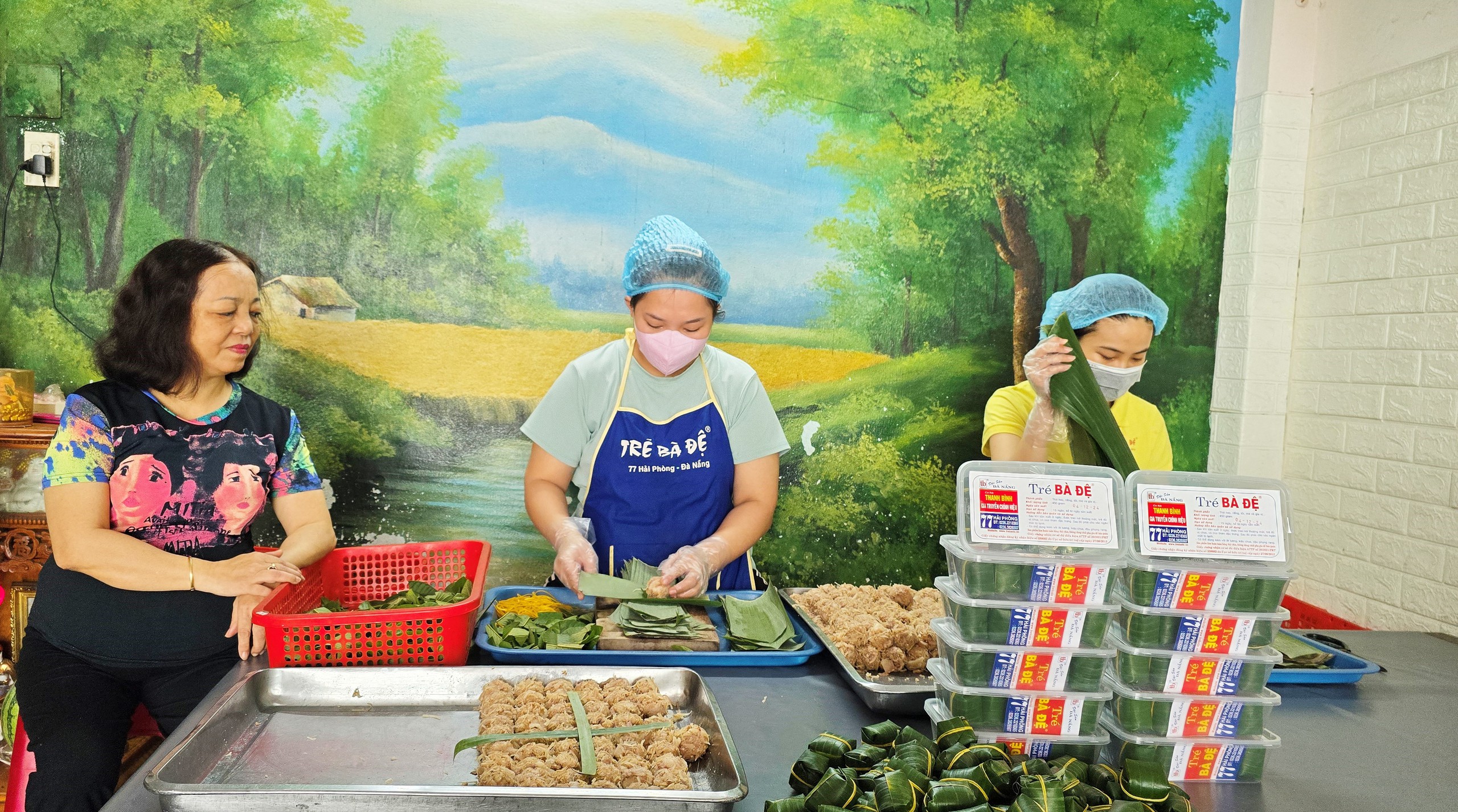
Ms. Binh (Ms. De's youngest daughter) said that tré mainly uses pork belly and lean pork, etc., to make it tastier and more flavorful.
Originally, Bà Đệ's tré originated as a "poor man's dish" in Hue, primarily using pork head meat. However, after moving to Da Nang with her husband, Mrs. Đệ modified the recipe, using mainly pork belly and lean pork to make the tré tastier and more flavorful. Since the 1990s, Bà Đệ's tré has catered to more affluent customers or as gifts during holidays and Tet (Lunar New Year).
Good quality Tré, when cooked, should retain the vibrant pink color of the lean meat and pork skin strands; the fat strands should be glossy white, still crispy when eaten, and combined with the fragrant, rich, and slightly sour taste of galangal, sesame, garlic, and spices. Freshly made Tré can be eaten immediately. However, Tré fermented in banana leaves for 2-3 days will have a subtle aroma of fermented meat, galangal, and garlic.
On a spring day, the host arranges the tré (fermented pork sausage) in the center of a plate, adding some pickled vegetables such as shredded papaya, carrots, and shallots. Then, they alternately arrange nem (fermented pork sausage), cha (pork sausage), chili sauce, peeled garlic, roasted peanuts, and mint around it. Adding a ripe red chili and a carved onion in the center of the tré creates a meticulously prepared feast to offer guests. This dish embodies the dedication and passion of the people of Da Nang, being both delicious and visually appealing, and deeply rooted in their traditional culinary heritage.
Source: https://nld.com.vn/me-man-tre-ba-de-19625012413472899.htm
![[Photo] General Secretary and President To Lam works with the Party Committee of the Ministry of Health on the work of Vietnamese traditional medicine.](https://vphoto.vietnam.vn/thumb/1200x675/vietnam/resource/IMAGE/2026/05/20/1779294323718_a1-bnd-2978-3319-jpg.webp)
![[Image] "Journey of Hope" promotes the organ and tissue donation movement in Vietnam.](https://vphoto.vietnam.vn/thumb/1200x675/vietnam/resource/IMAGE/2026/05/20/1779294400833_1-8910-jpg.webp)
![[Photo] National Assembly Chairman Tran Thanh Man working with the Standing Committee of the National Assembly's Delegation Affairs Committee.](https://vphoto.vietnam.vn/thumb/1200x675/vietnam/resource/IMAGE/2026/05/20/1779294340023_ndo_br_1-1691-jpg.webp)










































































Comment (0)