

I stood on the porch, silently gazing towards the small kitchen, where my mother's figure was busy amidst the lingering smoke. The smoke, thin at first, then thick, mingled with the dull yellow sunlight, blurring the space like an old film reel slowly playing back.
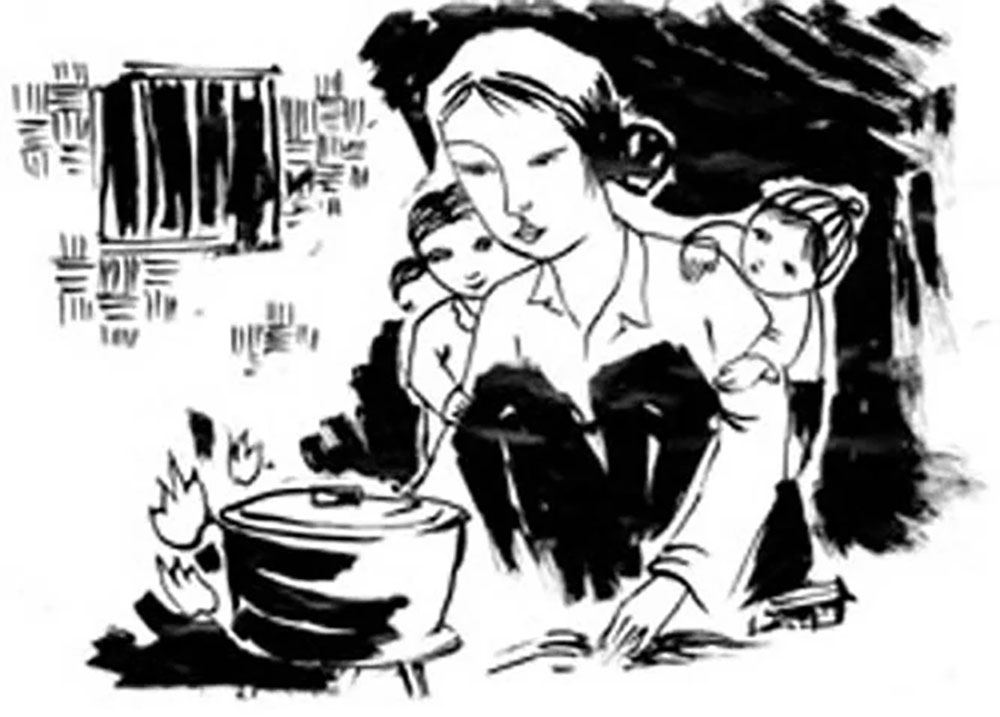 |
| Illustration: nongnghiepmoitruong.vn |
My mother is cooking eggplant soup. An old aluminum pot sits on the stove, the water beginning to simmer. She adds a handful of wild greens she'd hastily picked from the garden: a few sprigs of wild water spinach, some tender jute mallow shoots, and a pinch of juicy purslane. The eggplants are quartered, their white flesh rinsed in rainwater to remove the bitter sap. My mother seasons it simply, with just a little white salt and a touch of rich fish sauce. Nghe An-style eggplant soup doesn't need to be elaborate, but it must have the refreshing sourness of the eggplant, the slightly pungent aroma of the wild greens, and most importantly, it must be accompanied by a bowl of hand-ground green chili sauce, intensely spicy enough to awaken the senses.
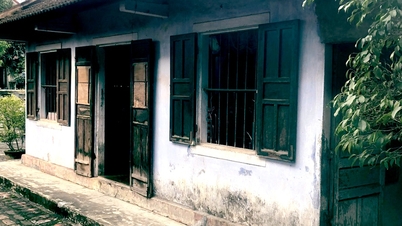
The kitchen was low-ceilinged, with a rough earthen floor and a weathered fiber cement roof. Through countless seasons of sun and rain, smoke had blackened every rafters and wall. Some soot stains, no matter how many times they were wiped away, stubbornly remained, like the marks of a lifetime—the more you try to erase them, the more you realize they have become a part of your soul.
My childhood was shaped by that wisp of smoke. I remember those drizzly winter mornings, the kitchen a place filled with warmth and human presence. My mother would place a pot of thin porridge by the stove to keep it from getting cold. I would huddle on a worn wooden stool, watching the red flames lick around the bottom of the pot, listening to the crackling of the firewood, and feeling an unusual sense of peace. My mother's thin back, her shoulders slightly sloping, shielded the fire from the gusting wind. On some days, when the wind was raging and the smoke stung my eyes, she would just blink her eyelids and bend down to blow on the fire again.
Seeing me staring, my mother smiled gently: "Move away, or the smoke will get in your eyes and make them red like mine now."
Back then, I secretly wished I could grow up quickly so I could take over my mother's role in the kitchen, so her shoulders could rest and her eyes wouldn't be clouded by the gray smoke anymore. I wanted to be a strong, sturdy shoulder, capable of shielding her from the wind blowing through the gaps in the bamboo walls, just as she always protected me in this small kitchen. But then, as I grew older, passing by countless modern, spotless kitchens free of charcoal smoke, I found myself yearning intensely for the smell of smoke clinging to my mother's clothes. It turned out that what I longed for wasn't just to grow up and protect my mother, but to be a child again, sitting on that worn wooden chair, watching my mother's silhouette against the earthen wall, and seeing the world as complete as a pot of thin porridge on a cold winter night.
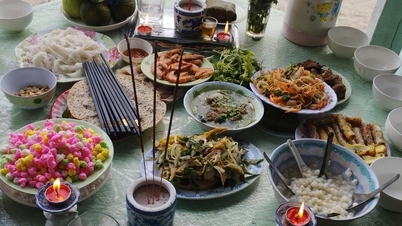
That kitchen witnessed simple meals: a bowl of tomato soup, a plate of boiled vegetables, at most a small, slightly burnt fish stew. At the table, my mother was always the last to eat, and ate the least. She said she didn't like the soup when it was almost gone, and that she preferred eating the fish head because it had more bones, "to get used to the taste." As a child, I believed her, but only later did I understand the silent sacrifice behind that preference. Now, when I can prepare meals with plenty of meat and fish, looking at that full bowl of soup, my eyes well up with tears. Some of the world's greatest lies originate from a mother's heart, and some lessons in gratitude are only learned after a lifetime, when a mother's hair has turned gray.
Source: https://www.qdnd.vn/van-hoa/van-hoc-nghe-thuat/mien-khoi-cu-1031268






















































































Comment (0)