

Besides the name above, the temple is also known by other names such as: Thi Truc Temple, Ba Cay Temple (because it is 3 km from the beginning of Ky Cung Bridge). The Doan family, however, often calls it Ba Co Temple, a term used in relation to kinship. This temple was established around the 19th century to worship a young woman who died prematurely in Hoang Dong commune, Tru Tri district, Thoat Lang province, named Hoang Thi Truc. The book "Dai Nam Thuc Luc Chinh Bien" (National History Institute of the Nguyen Dynasty) writes: " Hoang Thi Truc, 19 years old, was beautiful. The local chieftain Nguyen Dinh Thong wanted to sexually assault her, but Thi Truc resisted and was killed by Thong ." The book "Dai Nam Nhat Thong Chi" adds that she was the daughter of Mr. Hoang Van Ngoc, and was praised by the court in the 14th year of Minh Menh (1833).

The shrine dedicated to Đoàn Thị Trúc is located in Khòn Pịt village, Tam Thanh ward.
Under feudalism in general and the Nguyen dynasty in particular, the emperor placed great emphasis on praising virtuous women according to Confucian standards, which were considered the moral principles and spiritual foundation of society. This often included commending and rewarding those who remained faithful to their husbands, raised their children, cared for their parents-in-law, or resolutely preserved their virginity, even to the point of suicide. During the Nguyen dynasty, besides Hoang Thi Truc, in Lang Son there was also Mrs. Vi Thi Phi from Chau On – a woman whose husband died at the young age of 26, but she remained faithful to her husband, respected her parents-in-law, and raised her son to adulthood… These are shining examples of virtue. After her death, Hoang Thi Truc was posthumously awarded the title "Hoang Thi, the Virgin." Out of compassion for the young woman who died unjustly, and to show their respect, the local people erected a shrine in her honor. Mr. Doan Phuc from Phu Loc, Ky Lua ward, stated: According to the Doan family's genealogy and the book "Historical Figures of the Hoang and Huynh Families of Vietnam" (Culture Publishing House, 2010), it is recorded that Ms. Hoang Thi Truc, originally from Thanh Hoa, migrated to Lang Son. Due to inheriting and receiving benefits from the Doan family (Tay ethnic group in Hoang Dong), she was named Doan Thi Truc. For a long time, the Doan family has revered her as their ancestral aunt, worshipping her for generations.
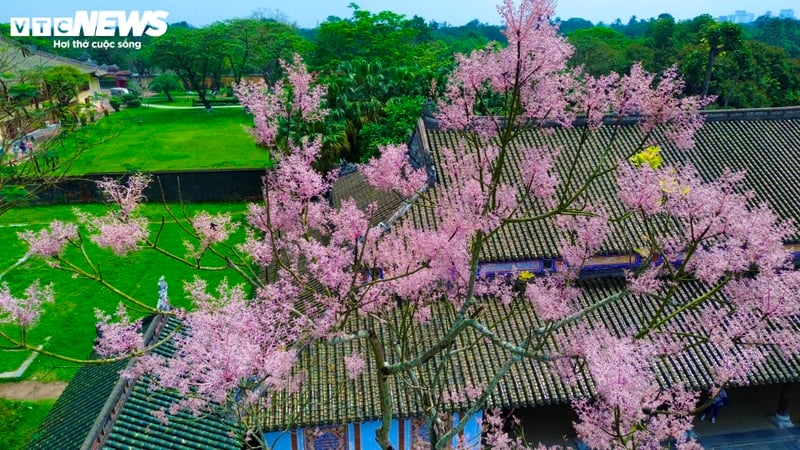
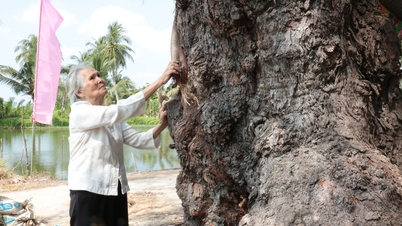
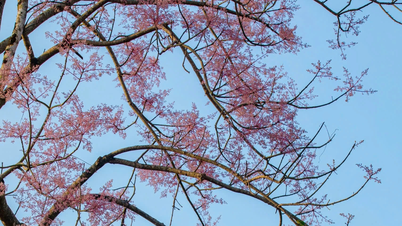
When it was first established, it was just a small, simple shrine in the middle of a field. In 1937, out of respect and remembrance of their ancestors, the Doan family rebuilt it into a more spacious and grand structure, serving both as a place of worship for their female ancestor and as the Doan family's ancestral temple. Since then, the site has been commonly known as the Doan Thi Truc Temple. The shrine is built in the traditional architectural style of Lang Son: brick walls, tiled roof, a veranda, tiled floor, one main door and two windows... The front hall consists of three bays and a rear sanctuary with an altar, totaling approximately 50 square meters. The shrine has a very large grounds, and right next to it is a lush, shady kapok tree. Legend says this shrine is very sacred. During the war against the Americans, the shrine was used as a temporary office for the Hoang Dong Commune People's Committee, and Hoang Dong Primary School also set up a classroom there. Over time, due to war, the temple was damaged and deteriorated. The Doan family has repeatedly contributed to its restoration and renovation, notably in 2004, 2012, and 2016. The current architectural appearance of the temple is the result of the 2016 restoration.
The temple has a "Ding" (丁) shaped structure, similar to the old temple. The front hall consists of three spacious chambers; the central chamber has an altar with a wooden, gilded and lacquered ancestral tablet, very dignified. The rear hall contains an altar dedicated to Hoang Thi Truc, with the central image being a statue of a beautiful young woman in a seated position. Above the rear hall is a horizontal plaque inscribed in large Chinese characters, displaying the goddess worshipped as "Hoang Thi Trinh Nu" (Hoang Thi, the pure and virtuous girl), crafted around the late 19th century. On either side are couplets praising her noble image.
In the northern part of Lang Chau, the Emperor's dream is to occupy the throne.
Hoang Dong, a noble land, a true immortal.
(Temporary translation: In Lang Son in the North, the king once had a dream)
The precious land of Hoang Dong, where a female immortal appeared.
On the two side walls of the inner sanctuary are carvings of a pair of white horses with canopies, symbolizing the nobility of the goddess being worshipped.
The site was included in the inventory list according to Decision No. 73/QD-UBND, dated January 10, 2019, of the People's Committee of Lang Son province. Today, Doan Thi Truc Temple is the only remaining temple dedicated to a female martyr in the province. It is a typical representative of a type of architectural and artistic relic, contributing to enriching the province's cultural heritage. The site contains historical and cultural values that profoundly reflect the traditional morality of the nation, and the concept of ethics and dignity of women in ancient feudal society.
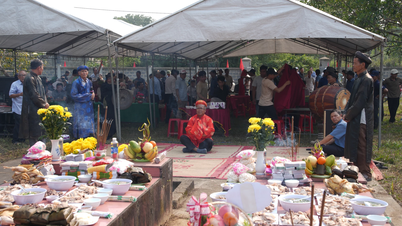
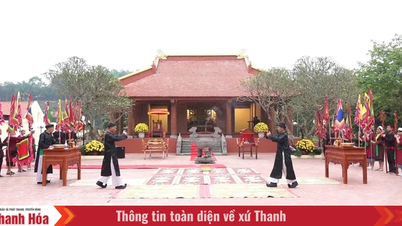
Every year, on the 24th day of the first lunar month, the Doan family organizes a festival at the historical site. It's an opportunity for younger generations to remember their ancestors and strengthen community bonds. The festival includes activities such as offering incense and performing rituals to pray for peace and prosperity for the Doan family, the local people, and visitors from all over. Taking place one day after the Le King's Temple festival, the festival contributes to connecting heritage and creating a rich cultural and historical beauty for the spring days in the border region of Lang Son, a land rich in history and culture.
Source: https://baolangson.vn/mieu-tho-doan-thi-truc-5081198.html


























































Comment (0)