

 |
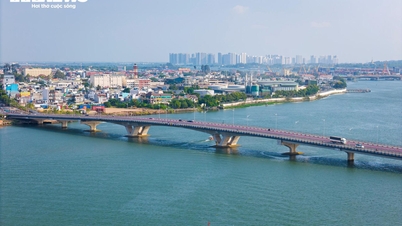
| Hue has the beautiful Perfume River, but river tourism has yet to make a distinct impact. |
The platform is favorable but needs more investment.
Over the past period, the city has gradually invested in and upgraded its technical infrastructure, creating favorable conditions for socio-economic development in general and tourism in particular. Located on a vital national transportation artery, Hue possesses a diverse transportation system, including roads, railways, air routes, sea routes, and inland waterways. This is a significant advantage that helps the locality strengthen its connections with domestic and international economic centers.
Hue City is located on the North-South transportation corridor with many important routes such as National Highway 1, Ho Chi Minh Highway, and the eastern North-South expressway. Roads connecting mountainous and border areas, notably National Highway 49 linking the city center with A Luoi, are opening up many opportunities for the development of ecotourism and community-based tourism in the western region.
In recent years, many important transportation infrastructure projects have been and are being implemented, contributing to improved connectivity between tourist areas. These include projects such as the Phu My - Thuan An section (Tu Duc - Thuan An road), the extended To Huu road connecting to Phu Bai airport, the Tuy Loan - La Son expressway, and the Cam Lo - La Son expressway… The system of main transportation arteries is gradually being completed, creating a continuous connection between the central area, coastal areas, lagoon areas, and the Chan May - Lang Co Economic Zone.
In terms of air transport, Phu Bai International Airport is a crucial gateway for tourists to Hue and the Central region. Since the opening of Terminal 2 in 2023, the airport's capacity has increased to approximately 5 million passengers per year. In addition, Hue Station on the North-South railway line remains a familiar transit point for tourists. Regarding sea transport, Chan May Port has many favorable conditions for developing services to receive international cruise ships. As for inland waterway transport, the network of rivers and canals stretching over 338km opens up great potential for river tourism.
Besides transportation infrastructure, the commercial and service system serving tourism is also gradually developing with traditional markets, supermarkets, shopping malls, restaurants, and many services for tourists. Cultural institutions such as museums, theaters, cultural centers, and art spaces along the Perfume River continue to be developed.
However, despite its relatively favorable foundation, Hue's tourism infrastructure still has many limitations. Regarding air travel, current routes are mainly domestic, connecting Hue with Hanoi and Ho Chi Minh City, while the number of international routes remains quite limited.
In the field of maritime transport, Hue still lacks a dedicated port for cruise ships. International cruise ships currently have to dock alongside cargo ships at Chan May Port. According to Mr. Le Chi Phai, Deputy General Director of Chan May Port Joint Stock Company, because cruise ships are usually large, the port has to temporarily suspend other operations to ensure safety whenever a ship arrives. This somewhat affects the capacity to handle and receive cruise ships.
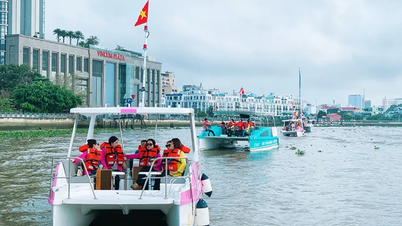
Regarding inland waterways, despite its advantages in terms of rivers and waterways, Hue's waterway tourism remains monotonous due to a lack of standard vessels, limitations in infrastructure and services, and issues related to waterway planning and inland waterway safety.
Not only transportation infrastructure, but the tourism service system in Hue also has gaps. Many accommodation facilities have not yet received comprehensive investment in amenities and services. Large-scale entertainment, health care, spa, and culinary services remain limited in number. In particular, Hue still lacks world-class shopping and entertainment centers and sufficiently attractive nightlife venues. "These bottlenecks have somewhat reduced the attractiveness and retention of tourists," said Mr. Do Ngoc Co, Vice President of the Tourism Association and President of the Hue City Travel Agency Association.
Selective development
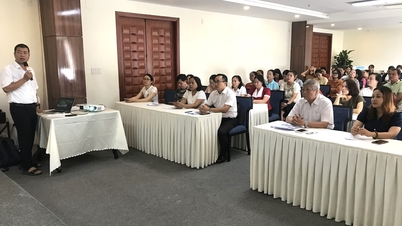
Speaking at the conference on the implementation of tourism tasks for 2026, Nguyen Khac Toan, Member of the Central Committee of the Party, Deputy Secretary of the City Party Committee, and Chairman of the City People's Committee, emphasized the goal of double-digit growth, in which tourism must affirm its role as one of the important driving forces.
Determined to achieve its set goals, the Hue City People's Committee recently issued Plan No. 66/KH-UBND (dated February 3, 2026) on the implementation of the "Development of Tourism and Tourism Services in Hue City" project in 2026. According to the plan, Hue City will focus on attracting investment and developing infrastructure in a selective, synchronized manner, linked to specific tourism products. It will create favorable conditions to attract strategic investors and international hotel and resort brands to Hue, while strictly requiring the preservation of heritage, environmental protection, architecture, and landscape. In addition, it will promote and coordinate with ministries, agencies, and airlines to expand domestic and international flight routes; and organize activities to welcome and promote the first flights and trains of the year.
According to tourism leaders, the city and the tourism industry will focus on investing in infrastructure and facilities to serve cruise ship tourists; developing experiential tourism railway products, implementing the Hue - Lang Co - Da Nang route, and researching expanding inter-regional connectivity. They will also upgrade the transportation system connecting key tourist areas and destinations, coastal routes, and lagoons to the city center; expand public parking areas and transfer points; and develop green transportation with electric vehicles and boats on the Perfume River, Ngu Ha River, and lagoons.
Another important task is to upgrade spaces for tourism. In addition, the city will accelerate the progress of key projects; linking each building, road, boat dock, and public space with specific product packages, tours, and services, avoiding the situation where "infrastructure comes first, products follow later." It will review suitable land plots to attract investment in building showrooms, product display and shopping areas for traditional crafts and Hue specialties, linked to tourism tours and routes; and complete golf courses and infrastructure for sports and entertainment tourism.
Investing in infrastructure and technical facilities to serve tourism requires significant resources. However, if investments are selective, synchronized, and linked to specific tourism products, it can open up many opportunities for Hue to achieve breakthrough development. This is a necessary and sufficient condition for Hue tourism to reach its long-term development goals.
Source: https://huengaynay.vn/du-lich/mo-duong-cho-du-lich-phat-trien-164753.html
![[Photo] National Assembly Chairman Tran Thanh Man attends the policy seminar to promote Vietnam-Türkiye cooperation.](https://vphoto.vietnam.vn/thumb/1200x675/vietnam/resource/IMAGE/2026/04/16/1776351415367_vna-potal-chu-tich-quoc-hoi-tran-thanh-man-du-toa-dam-chinh-sach-thuc-day-hop-tac-viet-nam-tho-nhi-ky-8705791-jpg.webp)

















































Comment (0)