

For many years, one of the bottlenecks in the vocational education system has been the inflexible management mechanism, while the labor market's demand for manpower and skill requirements changes rapidly. This has caused many training institutions to struggle in updating programs, organizing training, and adapting to production and business practices.
Furthermore, the mechanisms for articulation between different levels of training still present certain barriers, affecting opportunities for lifelong learning and professional skill development for workers. In particular, difficulties with practical equipment, inconsistent technological infrastructure, and limited digital governance capacity are hindering many vocational education institutions from adapting to the increasingly rapid demands of digital transformation.
This context necessitates changes in governance to ensure vocational education operates more flexibly and expands the possibilities for articulation between different levels. The draft regulations for secondary and higher education institutions recently published by the Ministry of Education and Training for public comment have fundamentally met this requirement.
The regulations in the draft clearly show a shift in management thinking, increasing autonomy and granting more power to vocational education institutions coupled with accountability. Schools will be more proactive in organizing training, student recruitment, linking with businesses, and international cooperation. This is necessary and appropriate given that each training institution has its own specific characteristics in terms of professions, scale, and student recruitment needs; it is also consistent with the requirement to link training with the labor market.
Another highlight of the draft is the seamless interoperability mechanism, requiring comprehensive digital transformation to remove barriers, create conditions for flexible learning for students, and improve the operational efficiency of vocational education institutions.
Of course, expanded autonomy also comes with higher demands on management capacity, staff quality, and physical infrastructure for each school. In a context of limited resources, the responsiveness and creativity of vocational education institutions are extremely important.
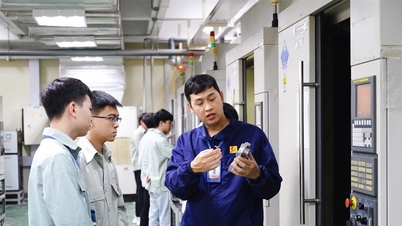
For example, leveraging enterprise resources, sharing training equipment, or coordinating on-site training could be suitable approaches. Simultaneously, promoting the application of technology in management and training organization not only helps standardize and streamline operational processes but also reduces pressure on the system and improves management efficiency.
This allows vocational education institutions to focus more resources on professional activities, training quality, and staff development.
It is evident that the draft regulations for vocational secondary schools and colleges are expected to help resolve many bottlenecks. However, for these directions to be truly effective, collaboration from many sides is needed, from perfecting mechanisms and increasing investment in resources to improving the management capacity of vocational education institutions, thereby creating a real transformation in training quality and meeting new requirements.
Source: https://giaoducthoidai.vn/mo-rong-khong-gian-tu-chu-post778448.html

















![[Video] Proposal to use 300 billion VND to train 10,000 managers in 5 years](https://vphoto.vietnam.vn/thumb/402x226/vietnam/resource/IMAGE/2026/05/21/1779348541647_ceo-jpg.webp)




































































Comment (0)