

 |
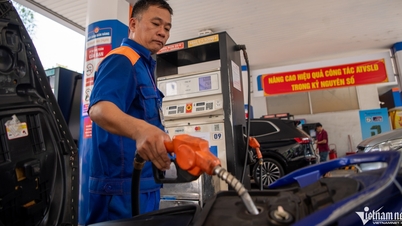
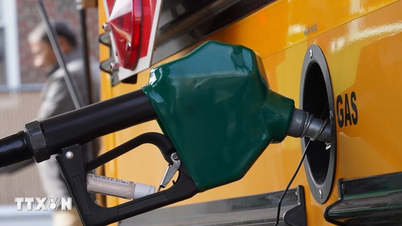
| People fill up their cars with gasoline for their daily commutes. |
When the "energy blood vessels" vibrate.
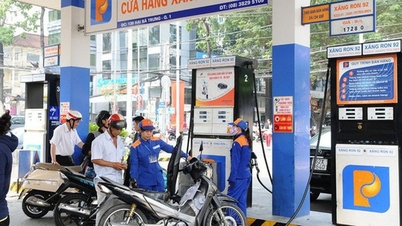
One morning on Hung Vuong Street, a gas station began to get busy. Some people stopped to fill up their motorbikes with a few tens of thousands of dong worth of gasoline, while others filled their tanks before hurrying to work. The familiar rhythm of urban life continued calmly. Few people realize that behind those gas pumps lies a global energy market in constant flux.
In the modern economy , oil has long been considered the "energy lifeblood." The vast majority of transportation – from motorcycles and cars to ships and airplanes – relies on refined petroleum products. Beyond transportation, many important industries such as chemicals, plastics, synthetic textiles, and fertilizer production depend on this raw material. Therefore, any fluctuations in world oil prices quickly spread to many sectors of the economy.
Recently, the global energy market has become more sensitive as tensions in the Middle East – a region holding a large portion of the world's oil reserves – continue to escalate. Strategic oil shipping routes, particularly the Strait of Hormuz, are closely monitored by analysts. Even a minor disruption there could upset global supply, leading to higher fuel prices.
Vietnam is a country with oil and gas resources, but the energy needs of the economy are constantly growing. Oil fields such as Bach Ho, Rong, Dai Hung, and Rang Dong once played a crucial role in our country's oil and gas industry. However, to meet production and consumption needs, Vietnam still has to import a portion of refined petroleum products.
Currently, the two major refineries, Dung Quat and Nghi Son, supply the majority of domestic fuel needs. The remainder is supplemented by imports to ensure a stable supply. The regulatory mechanism for fuel prices, implemented cyclically by the authorities, helps the domestic market closely track international developments while limiting major shocks to the economy.
Hue keeps pace with the market.
In Hue City, the fuel market has remained stable in recent days. According to the local Department of Industry and Trade, the city currently has 128 retail fuel stations in operation, basically meeting the needs of residents and businesses. Market management forces regularly inspect price listings and monitor business operations to ensure that stations sell at the correct prices and in accordance with regulations, preventing speculation or hoarding.
Mr. Dang Huu Phuc, Director of the Department of Industry and Trade, said that the industry and trade sector is closely monitoring developments in the petroleum market and has requested businesses operating in the area to proactively secure supplies and organize continuous sales to meet the needs of the people. Thanks to this, the supply of petroleum in Hue remains secure, and there has been no localized shortage in the market.
According to Mr. Le Nam, a business owner, fuel costs currently account for approximately 30-35% of the total operating costs of transportation businesses. Therefore, when fuel prices fluctuate, businesses are forced to recalculate their operating schedules and closely manage fuel consumption to reduce cost pressure.
Save money on every ride.
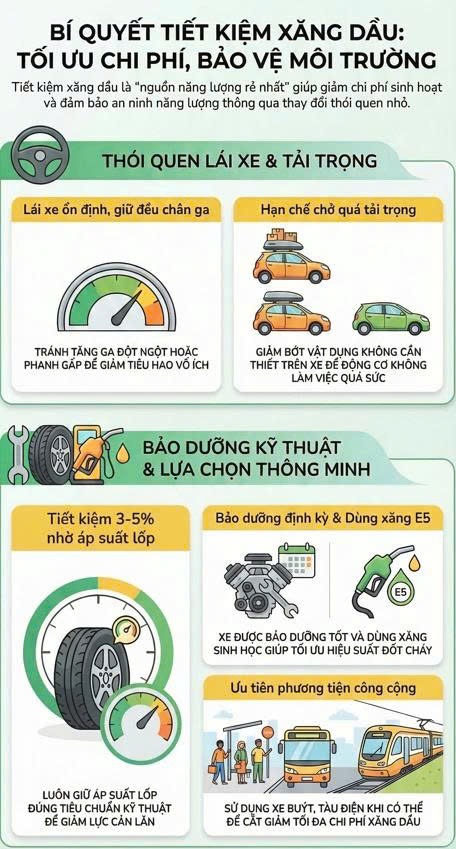 |
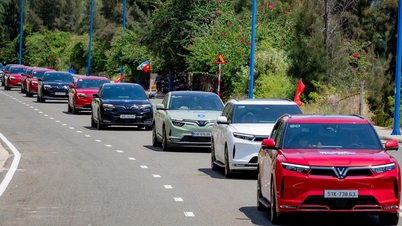
| Several solutions can help save fuel. |
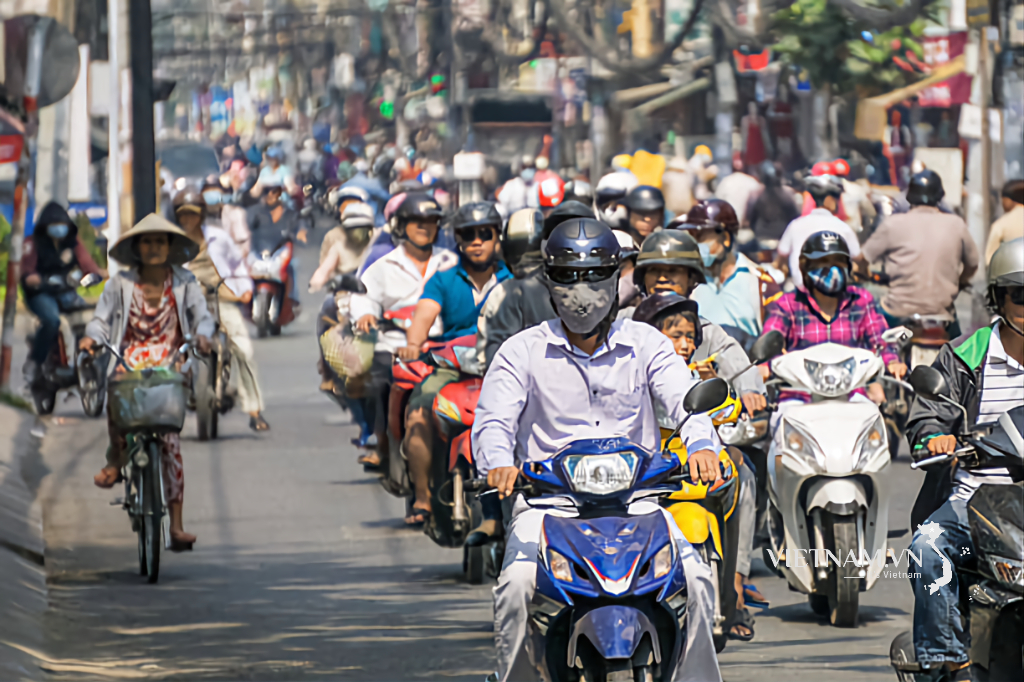
In the context of an unpredictable global energy market, fuel efficiency is seen as the most practical solution. Simply changing a few small habits, such as maintaining a steady speed, avoiding sudden acceleration, checking tire pressure, or performing regular vehicle maintenance, can significantly reduce fuel consumption.
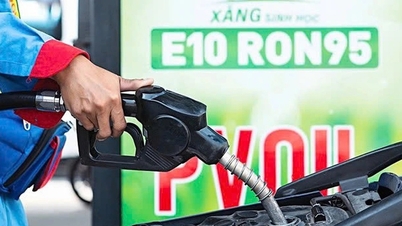
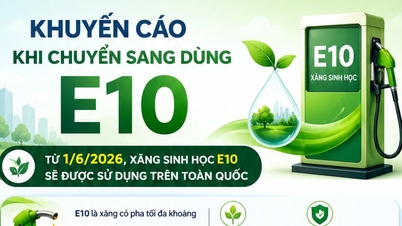
Furthermore, the use of E5 and E10 bioethanol fuels is also a positive option. These fuels are blended with ethanol from agricultural raw materials such as cassava and sugarcane, helping to reduce emissions and contributing to a reduction in dependence on imported petroleum. Expanding the use of bioethanol fuels not only has environmental benefits but also creates additional outlets for domestic agricultural products.
The story of gasoline, therefore, is not just about price figures. It's also about the stability of life and the functioning of the economy. And sometimes, the solution begins with very simple things: driving a little slower, maintaining your vehicle on time, and using fuel wisely. When each person saves a little gasoline, it adds up to a significant energy source for society as a whole.
Source: https://huengaynay.vn/kinh-te/moi-lit-xang-deu-dang-quy-163549.html





























































































Comment (0)