These days, residents of Minh Phuong residential area, Bac Gianh ward, are familiar with the QR code signs attached to each household. Simply by scanning the code with a smartphone, the location of the house will be displayed on an electronic map. This makes finding addresses faster and more convenient compared to the traditional method of describing addresses.
This is the initial result of the "QR Numbering - Building a Digital Community" model piloted by Bac Gianh ward. With 277 households, all addresses have been updated and linked to QR codes that connect to their actual locations on a digital map, facilitating daily life and transactions for residents.
According to Mr. Tran Minh Thai, Head of Minh Phuong Residential Group, the implementation of QR codes for house numbers brings many practical benefits. “The QR codes make it easier for people to identify the addresses of their families. From the perspective of the residential group, management is also easier, especially in the event of natural disasters or emergencies, as support for residents will be quicker and more timely,” Mr. Thai shared.
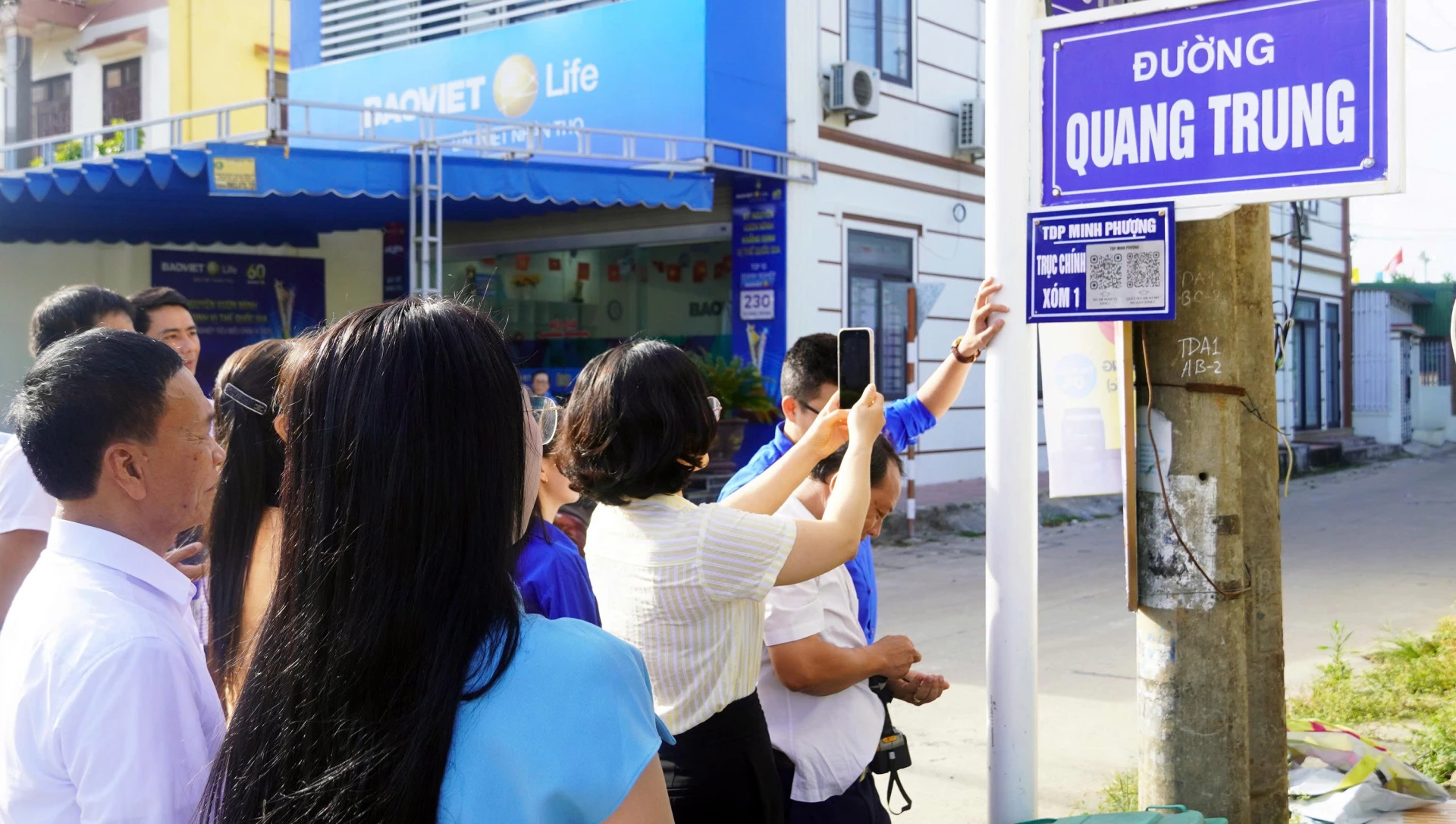 |
| Residents experience the convenience of the QR code house numbering system in Bac Gianh ward - Photo: C. Minh |
As an area frequently affected by natural disasters, accurately identifying the location of each household is crucial. In emergency situations such as floods, rescue operations, or assistance for residents in distress, authorities can quickly access the scene, contributing to more efficient response and reduced search time. Beyond address lookup, QR codes for house numbers also facilitate goods delivery, postal services, transportation, and many other services serving daily life. For small businesses, providing precise locations makes it easier for customers and delivery companies to find them.



Thanks to the involvement of local units and forces, the model quickly gained the consensus of the people. The implementation process not only helped households access a new utility but also contributed to narrowing the digital divide between population groups, making practical applications increasingly accessible to daily life.
Mr. Phan Van Cong, residing in Minh Loi residential area, said: “Previously, whenever relatives or visitors from other places came looking for my house, I often had to spend quite a long time giving directions. Since the introduction of QR codes, all they need to do is send the location or scan the code to find the correct address. I find this method very convenient and suitable for modern life.”
Based on the initial results in Minh Phuong residential area, Bac Gianh ward plans to expand the model throughout the entire area to more than 7,400 households. The goal is to have 100% of households with digital addresses and QR codes by 2028, creating a foundation for building a synchronized and modern digital community.
According to Tran Ngoc Huong, Vice Chairman of the People's Committee of Bac Gianh Ward, the biggest goal of the model is to create convenience for people in their lives, while simultaneously improving the quality and efficiency of state management. Building an address system linked to QR codes not only helps people access new amenities more conveniently but also contributes to completing the database serving local management and administration.
“When each household has its own unique address, the connection between the government and the people will be more convenient, contributing to improved management efficiency and better service for the people. In the future, the ward will continue to refine and expand the model, aiming to build a synchronized and accurate address information system that meets management requirements in the new situation and better serves the needs of the people,” Ms. Huong said.
From the small QR code signs in front of each house, the people of Bac Gianh are enjoying many practical conveniences in their daily lives. Not only does it make finding addresses easier, but the model also effectively supports community welfare, disaster response, and serving the people at the grassroots level. These initial results are laying the groundwork for the model to be further expanded, better meeting the needs of the people and the management requirements of the locality.



C. Minh
Source: https://baoquangtri.vn/khoa-hoc-cong-nghe/202606/moi-ngoi-nha-mot-ma-qr-5b96261/














































































![[Infographic] Details of 6 toll stations on the North-South Expressway through Ha Tinh](https://vphoto.vietnam.vn/thumb/402x226/vietnam/resource/IMAGE/2026/06/29/1782685020813_fb_anh-dai-dien-infographic-khanh-phuong-1-png.webp)