 |
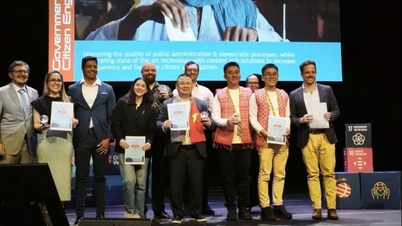
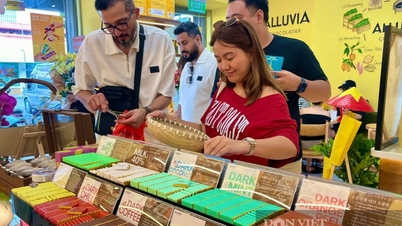
| Ms. Pham Thi Chinh (far left), Director of Phan Hoang Production and Trading Company Limited, Cao Bang province, introduces local specialties. Photo: Binh Nguyen. |
With the development of tourism , many specialties from the Northeast highlands are now produced in large quantities by facilities that invest in machinery and equipment, supplying them to all regions of the country. However, these specialties still retain their essence and unique character, reflected in the traditional processing methods as well as the selection of local ingredients.
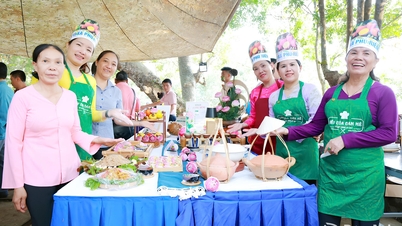
A variety of cakes made from flowers and herbs from the mountains and forests.
In the northeastern provinces of Vietnam, Ha Giang (now Tuyen Quang province) is famous for the Dong Van Karst Plateau, which has been recognized by UNESCO as a global geopark. This region attracts many domestic and international tourists not only because of its majestic mountain scenery but also because of the poetic beauty of its terraced rice fields and the buckwheat flowers that blanket the mountains and villages. Although this flower can be found in many provinces and cities, Ha Giang is renowned for having the most buckwheat flowers, associated with the famous traditional buckwheat festival.
Buckwheat flowers bloom most profusely in October and November, but in April and May, Ha Giang still experiences an off-season buckwheat flower season. Buckwheat flowers not only bring a romantic beauty to this land known as the "northernmost point of the country," but are also an important food source in this rocky plateau region with scarce soil and water. After the flowering season, locals harvest buckwheat seeds to prepare many unique dishes and drinks such as: buckwheat cakes, stir-fried buckwheat vegetables, buckwheat porridge, buckwheat beer, buckwheat wine…
Among these, buckwheat triangular cakes leave a lasting impression on those who taste them. According to the people of Ha Giang, the cakes are made from finely ground buckwheat grains, kneaded into dough, shaped into round cakes, flattened, then steamed and grilled over hot coals. The cakes are best when taken off the grill, still hot, with a soft, fluffy texture and a subtly sweet, fragrant flavor characteristic of mountain flowers and herbs.
One popular dish from the mountainous region of Northeast Vietnam is the five-colored sticky rice. For the people in the highlands, the five-colored sticky rice, with its colors of white, red, green, purple, and yellow, symbolizes the five elements: metal, wood, water, fire, and earth. A unique feature is that these vibrant sticky rice dishes use natural ingredients to create the colors, such as: red from gac fruit or beetroot, green from pandan leaves, and yellow from wildflowers…
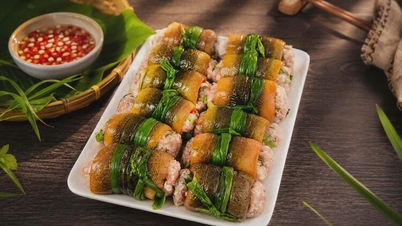
Using wildflowers and wild vegetables to prepare delicious dishes is also a unique cultural feature of the cuisine of the mountainous provinces in Northeast Vietnam. Among them, Cao Bang's "rau da hien" (also known as "rau bo khai" or "khau huong") is a specialty dish that locals use to entertain honored guests. This vegetable is considered the essence of the mountains and hills, as it only grows on rocky mountain peaks. It can be prepared in many delicious ways: stir-fried with garlic, stir-fried with beef, shrimp, or squid; used in soups or hot pots... When cooked, the vegetable retains its vibrant green color, is crispy, and has a sweet taste with the distinctive flavor of the mountains and forests.
Turning local dishes into tourist specialties.
A unique aspect of the cuisine of the Northeast highlands is its renowned specialties, which are not only made from unique ingredients found only in the mountains and forests, but are also rustic dishes that still possess their own distinctive character.
Banh Khao is considered a traditional food of the Tay and Nung ethnic groups in the mountainous region of Cao Bang. Previously, this dish was only made during festivals and holidays. Today, this rustic dish is prepared year-round, becoming a specialty that tourists enjoy and a memorable gift from Cao Bang to give to family and friends. Although mass-produced, this cake still retains the essence of the traditional dish in its ingredient selection. The glutinous rice flour for the crust is selected from the "golden flower" glutinous rice variety. The filling is made from Luc Khu red peanuts (also a Cao Bang specialty) mixed with pork fat and molasses, or from mung bean paste… To make the cake fragrant and delicious, the preparation process is very elaborate. High-quality glutinous rice is roasted golden brown in a cast iron pan and then ground into a fine powder. To prevent the dough from drying out, the baker must "bury" it underground, pouring the dough onto a wooden frame lined with layers of cloth, a layer of mesh on top, and a layer of sand at the bottom.
Cao Bang mugwort cake is a rustic yet popular specialty among tourists. This traditional cake of the Tay and Nung ethnic groups in Cao Bang is often featured during festivals, Tet (Lunar New Year), weddings, and funerals. The cake's outer layer is made from glutinous rice flour, colored green by mixing it with mugwort leaves. The filling consists of black sesame seeds, white sugar, and pork fat. These small, pretty cakes have a beautiful green color and a light sweetness from the sugar, a rich flavor from the sesame, peanut, and pork fat filling, but are not greasy thanks to the slightly bitter, earthy taste of the mugwort in the outer layer. This cake is considered healthy and is reasonably priced for tourists to enjoy or buy as gifts. Therefore, some tourist stops have invested in machinery to produce the cakes on-site, allowing for large-scale production to meet tourist demand.
Along with the development of tourism, culinary specialties are also becoming increasingly diverse. Many establishments have invested in machinery and equipment to produce large quantities, while still preserving the essence of traditional handcrafted methods, ensuring that delicious dishes retain the rich cultural identity of the indigenous ethnic groups in the highlands.
Black jelly is a familiar dish in the mountainous provinces of Northeast Vietnam. Cao Bang is considered the "capital" of black jelly, as the black jelly plant is a key crop contributing to the local economy. This type of jelly has a mild, refreshing aroma and a chewy, delicious texture that leaves a lasting impression on visitors. This delicacy also possesses many health benefits, making it even more popular with consumers. Consequently, many businesses and enterprises have invested in modern machinery for production and packaging, turning this traditional dish into an OCOP (One Commune One Product) product distributed throughout the country.
According to Ms. Pham Thi Chinh, Director of Phan Hoang Production and Trading Co., Ltd. in Cao Bang province, the company now has 7 OCOP products, all of which are local specialties such as black jelly, sausage, vermicelli, smoked meat, etc. Each specialty retains the traditional processing methods of the indigenous people; for example, the sausage is made from local pork, marinated with ginger grown in the rocky mountains. Initially, the company operated as a small-scale, artisanal business, processing products manually and selling them to local people. With the development of tourism, the number of visitors to Cao Bang has increased, and the demand for specialties has become more diverse. The company has invested in expanding production, diversifying products, and participating in the OCOP program to build its brand and help local specialties reach a wider market.
According to food processing and trading establishments specializing in Northeast Vietnamese cuisine, thanks to the development of tourism, dishes that were once only served to local people have now become well-known specialties. Cuisine is also a unique feature that attracts tourists to the Northeast region. In addition to distributing products through traditional retail channels, local specialties are also widely sold on e-commerce platforms.
Plains
Source: https://baodongnai.com.vn/dong-nai-cuoi-tuan/202605/mon-ngon-cua-nui-rung-ong-bac-87d4b4c/











































































Comment (0)