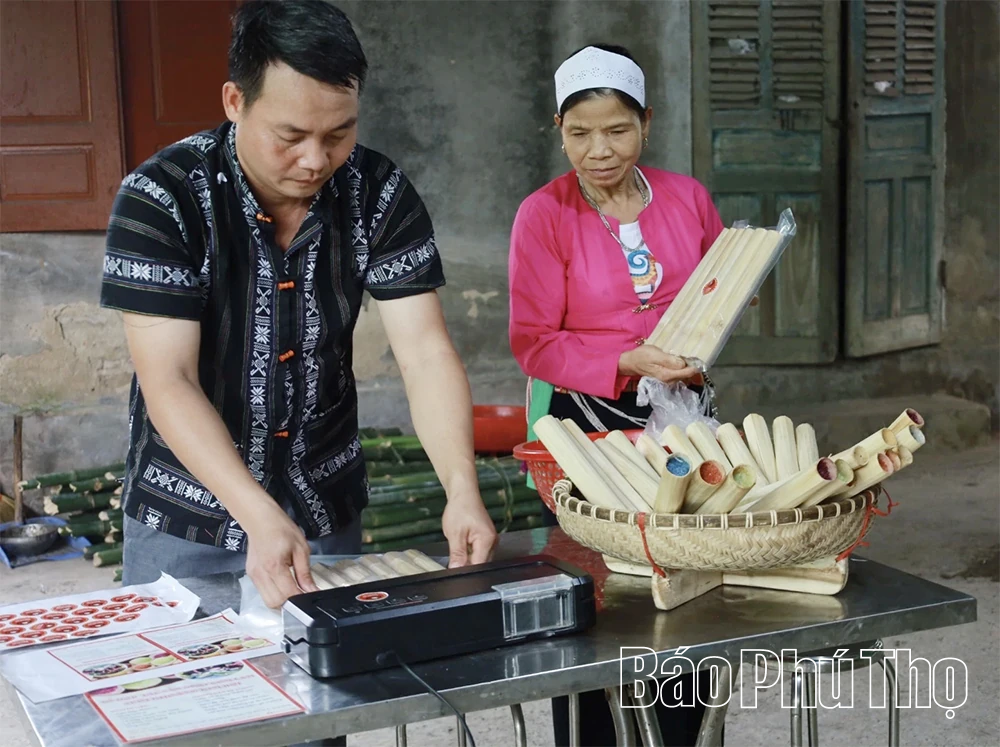
Muong Dong's sticky rice cooked in bamboo tubes is produced and packaged according to a process that ensures food safety and hygiene.

 Báo Phú Thọ•01/02/2026
Muong Dong's sticky rice cooked in bamboo tubes is produced and packaged according to a process that ensures food safety and hygiene.
The tradition of making rice cooked in bamboo tubes has been passed down through many generations, stemming from the need for convenient cooking when working in the fields or in the forests of the mountainous regions. Over time, rice cooked in bamboo tubes has become a dish closely associated with the spiritual life of the people, present at festivals, weddings, and Tet (Lunar New Year), and a gift for honored guests from afar.
According to the households producing sticky rice cooked in bamboo tubes in Mo Da area, Kim Boi commune, the main ingredient is glutinous rice. The rice is washed clean and soaked before being placed into bamboo tubes (a type of bamboo), then water is added, the tubes are sealed with banana leaves or dong leaves, and finally, they are roasted over a fire.
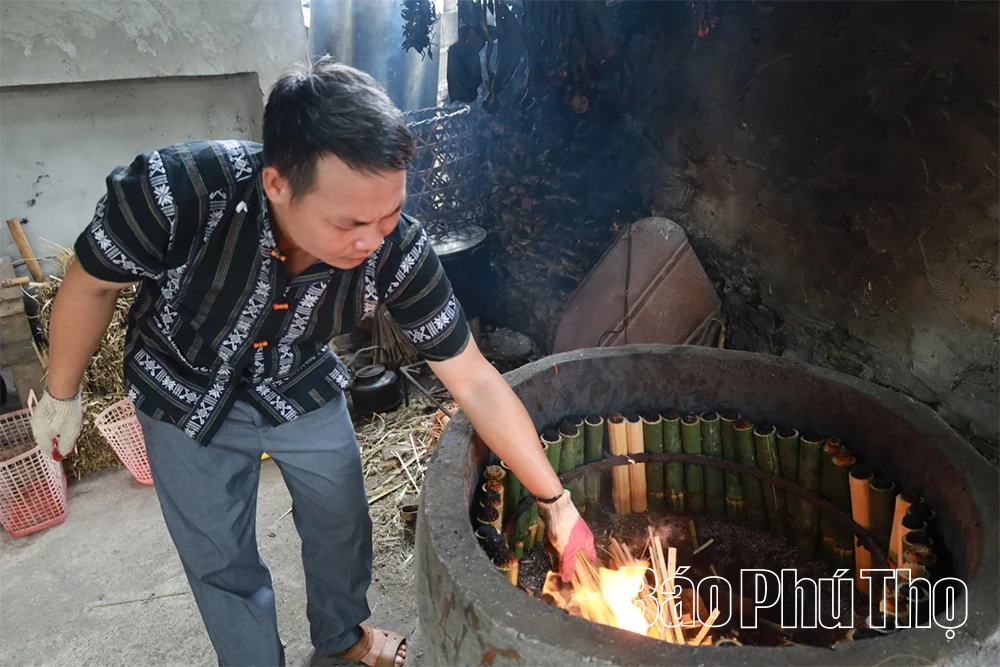
Nowadays, households are improving their rice-making methods, using ovens to produce larger quantities.


The traditional method of cooking rice in bamboo tubes is still maintained by families in the Muong Dong region. However, the cooking method has been improved. To cook large quantities of rice, people place many bamboo tubes at once into a charcoal-fired oven. The tubes are sealed with corn cobs, ensuring the rice cooks evenly, is fragrant and delicious, and retains its nutritional value and traditional flavor.
Mr. Bui Duc Tiep from Mo Da area revealed: "The secret to making authentic sticky rice cooked in bamboo tubes lies in the selection of ingredients. The bamboo tubes must be fresh and young, containing pure bamboo water; the rice used is glutinous rice of the 'golden flower' variety, with plump, round grains and a naturally fragrant aroma. In particular, the Muong Dong region possesses a valuable source of natural hot mineral water, which the locals use in the cooking process, creating a unique characteristic for this local specialty."
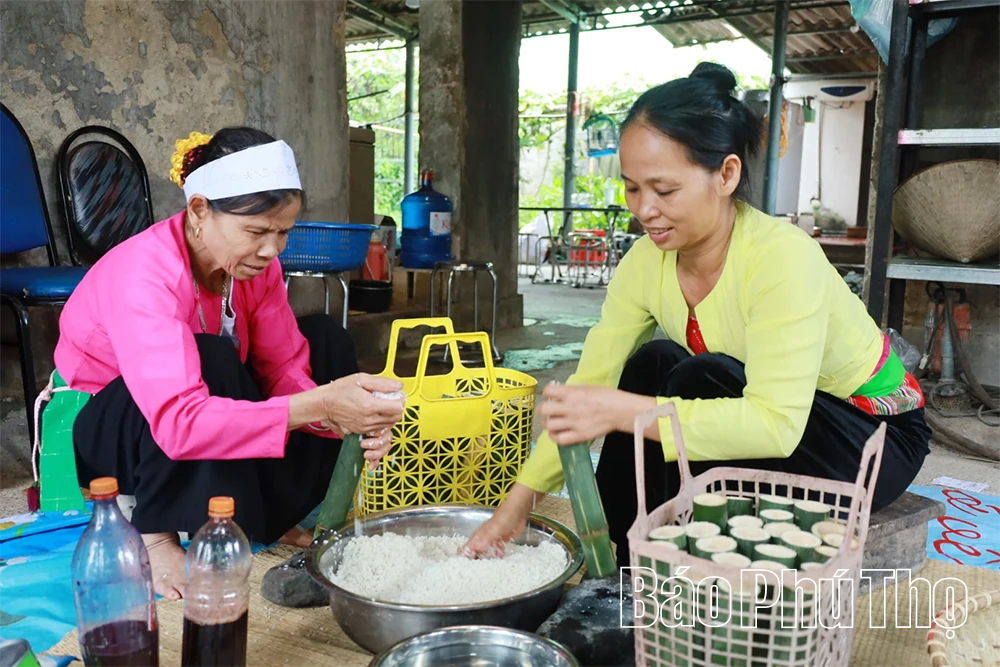
Families use glutinous rice of the "golden flower" variety to make bamboo-cooked rice.
Besides its naturally chewy and fragrant flavor, the people of Muong Dong also creatively use leaves and roots grown in their home gardens, such as pandan leaves, purple leaves, beetroot, and turmeric, to create eye-catching colors for sticky rice cooked in bamboo tubes while still preserving its traditional taste. Sticky rice cooked in bamboo tubes is often eaten with rustic sesame salt or served with grilled dishes such as skewers of meat, grilled fish, and grilled chicken, reflecting the rich flavors of the mountains and forests.
Currently, nearly 100 households in the commune are engaged in the production of bamboo-cooked rice, mainly concentrated in the Kim Boi hot spring tourist area. Closely linked to the development of the tourist area, this type of rice, cooked over a bonfire and often offered to guests by the locals, has become a delicious and unique dish, available in many restaurants, hotels, and eateries. Many tourists who try bamboo-cooked rice once want to enjoy it again and again, even ordering it as a souvenir.
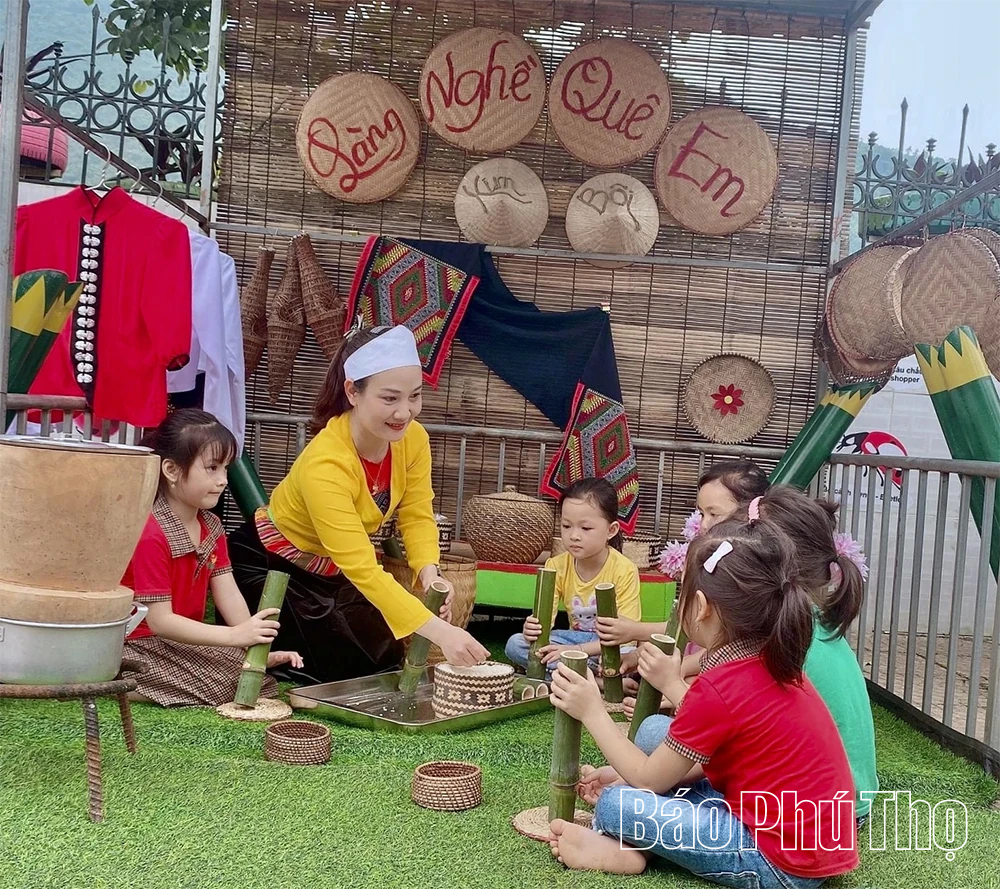



Kim Boi Hot Spring Tourist Area is organizing experiential activities to introduce and promote the traditional craft of making bamboo-cooked rice.
In addition, local households actively participate in displaying and introducing traditional bamboo-cooked rice specialties at markets and consumer goods fairs inside and outside the province. Some production facilities have been selected as destinations for experiencing culinary culture and learning about the traditional bamboo-cooked rice making craft, serving the needs of tourists visiting the area. In the Muong Dong region, the Kim Boi mineral spring bamboo-cooked rice production cooperative has been established, specializing in supplying bamboo-cooked rice specialties to all regions, building a brand and expanding its market.
Bui Minh
Source: https://baophutho.vn/mon-ngon-gay-thuong-nho-246295.htm