

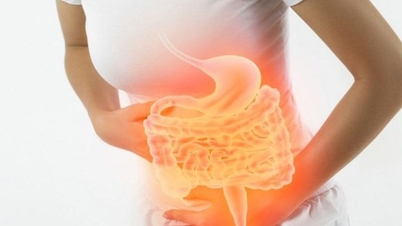
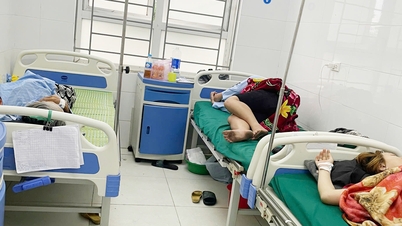
A 57-year-old female patient from Bac Ninh province came to the Central Hospital for Tropical Diseases for examination due to prolonged digestive disorders, frequent abdominal pain around the navel, and frequent diarrhea, along with a weight loss of approximately 2 kg.
The patient stated that they have a habit of eating raw vegetables and some undercooked dishes. These factors increase the risk of intestinal parasitic infections.
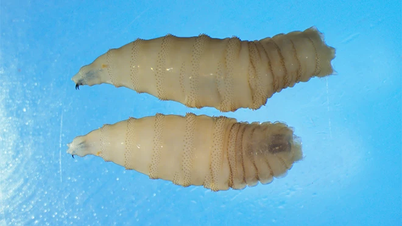
After clinical examination and symptom assessment, the patient was scheduled for a colonoscopy. During the procedure, the team at the Center for Gastrointestinal Endoscopy and Functional Examination discovered numerous ivory-white worms, approximately 0.3-0.5 cm long, in the colon.
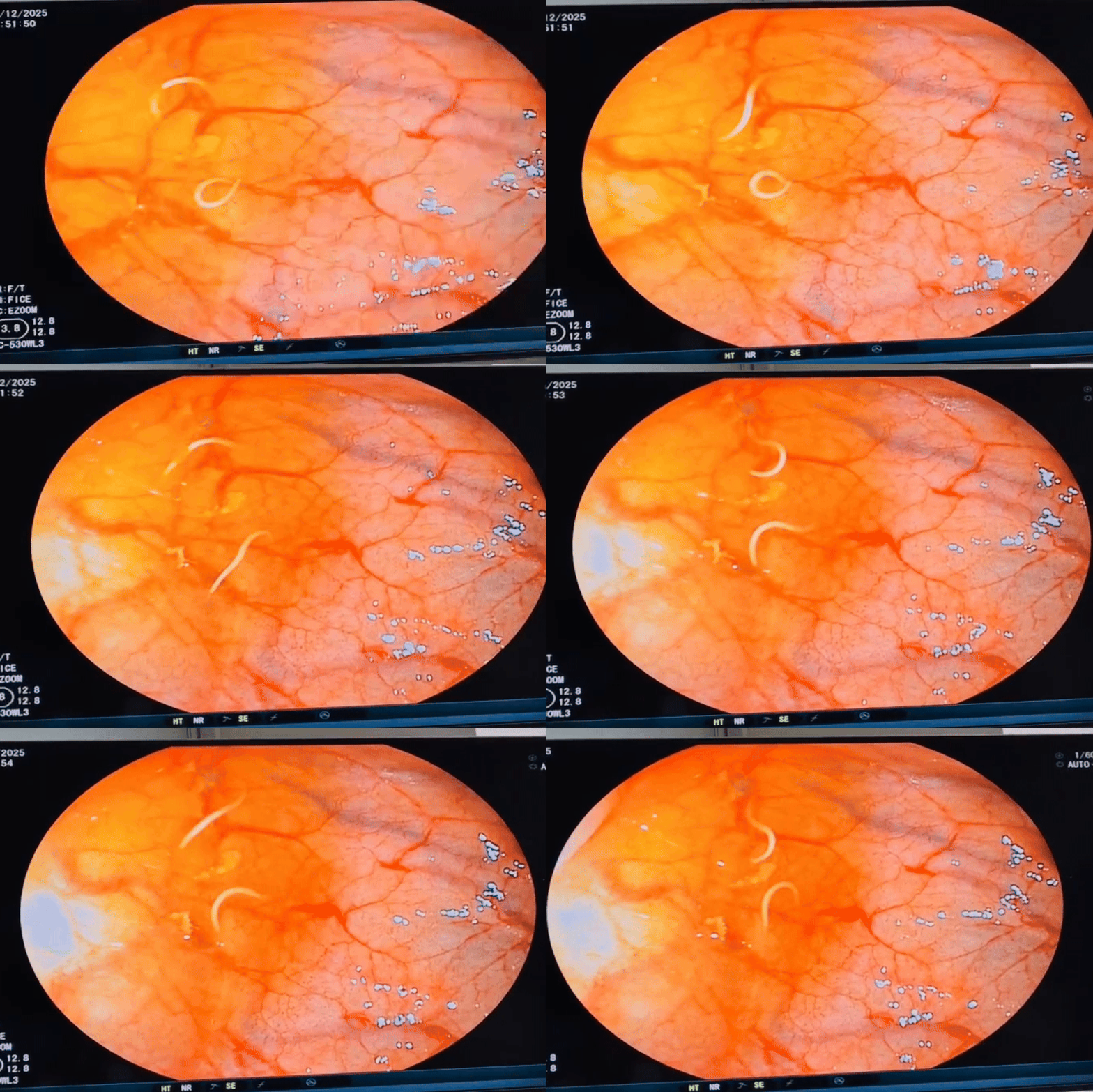
The patient's colon contained many worms (Image: Screenshot from video).
The large number of worms indicates that the patient had been infected with worms for a long time but was unaware of it due to atypical symptoms.

Test results confirmed it was whipworm, a parasitic worm found in the colon, transmitted through ingestion when food or hands come into contact with soil containing worm eggs.
According to the doctors, this is a case of severe intestinal worm infection with a large number of worms living in the colon, which is quite rare in adults.
Associate Professor Dr. Le Tran Anh, a specialist in Fungi and Parasitology at the Central Hospital for Tropical Diseases, stated: "Trichiasis occurs worldwide , most commonly in areas with warm climates, high rainfall, plenty of shade, and poor sanitation."
Whipworms can occur at any age, but are more common in children due to their frequent play and direct contact with soil. Prolonged whipworm infection can cause various health problems such as abdominal pain, anemia, malnutrition, and affect a child's development.
Whipworms attach to the intestinal lining to suck blood and nutrients, causing damage and leading to symptoms such as abdominal pain, digestive disorders, fatigue, micronutrient deficiencies, anemia, rectal prolapse, etc.
Trichuriasis is diagnosed by testing for worm eggs in stool or by colonoscopy revealing worms in the intestinal lumen.
To prevent whipworm infection, according to Associate Professor Dr. Le Tran Anh, people need to: "Maintain personal hygiene and a clean living environment; wash hands with soap before eating and after using the toilet; eat cooked food and drink boiled water, limit the consumption of raw vegetables that have not been thoroughly washed and soaked; clean the house and use safe water sources; do not go barefoot and do not let children crawl or play directly on the ground."

To detect whipworm infection, people should proactively seek medical attention if they experience persistent symptoms such as abdominal pain around the navel, digestive disorders, frequent diarrhea, or unexplained weight loss and anemia.
When these symptoms appear, you should go to a medical facility for examination and necessary tests such as stool tests or colonoscopy to accurately determine the parasitic infection status and receive timely treatment.
Source: https://dantri.com.vn/suc-khoe/mon-nhieu-nguoi-me-dua-o-giun-vao-bung-nguoi-phu-nu-20251212115702473.htm























































![[Video] Sunset at Lap An Lagoon – Where the sun sets over the fishing nets](https://vphoto.vietnam.vn/thumb/1200x675/vietnam/resource/IMAGE/2026/05/31/1780192137701_beach-landscape-sea-water-nature-grass-745871-pxhere-com.jpeg)




































Comment (0)