

Morocco lost to France, but they became the first African team to reach the semi-finals of a World Cup , and along the way, they defeated Belgium, Spain, and Portugal. Morocco achieved something great by ushering Africa into a new era. Images of players embracing their mothers and wives, weeping with happiness on the sidelines, and fans pouring into the streets with joy mixed with tears, truly showed Morocco creating a global community connection. The Moroccan team had 14 out of 26 players born outside of Morocco, including Achraf Hakimi and Brahim Diaz from Spain, Hakim Ziyech and Noussair Mazraoui from the Netherlands, and Bilal El Khannouss and Anass Zaroury from Belgium. Even their coach, Walid Regragui, was born in France...
 |
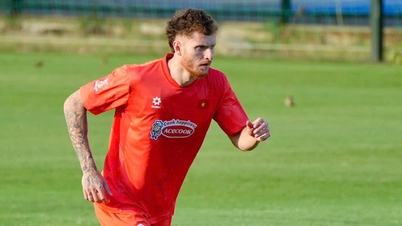
| Saibari, the brightest star of the Moroccan national team at the 2026 World Cup, was born in Spain. Photo: Getty |
It must be said that, in a flat world , European countries also benefit greatly from players of African descent, as exemplified by France—the team that defeated Morocco in Qatar—whose 17 out of 23 players were born outside of France. For many years, Morocco has actively monitored and cultivated relationships with dual-citizen players across Europe. A recruitment campaign launched in 2014, meaningfully titled "Bringing Talents Home," followed a clear strategy of identifying promising players of Moroccan origin across Europe, building trust with the players and their families, and then, at the appropriate time, persuading them to represent the national team.
With nearly 6 million Moroccans living abroad, Morocco fosters positive connections between its players, their families, and their homeland. Each summer, they organize trips , allowing children born in Madrid, Brussels, or Amsterdam to vacation in Tangier, Casablanca, or Fez, forming identities inseparable from Morocco. Sofyan Amrabat—who played for the Netherlands at youth level before joining the Moroccan national team—described this connection as follows: “Every time I return to Morocco, I can’t put into words what I feel; it’s simply my home.” Clearly, if the Moroccan community abroad felt alienated from society, the project would have failed from the start.
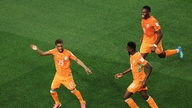
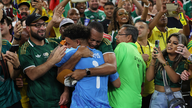
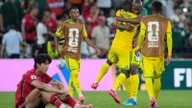
Previously, this plan nearly fell apart due to tensions between domestic and foreign players. But coach Regragui affirmed at the 2022 World Cup in Qatar: "We have proven that every Moroccan, in every sense, is Moroccan."
Part of the choice also stems from racial experiences. Hakim Ziyech said he often felt out of place growing up in the Netherlands but with foreign roots. “You have to work twice as hard to be respected. If you play well, you’re Dutch. If you play badly, you’re just an immigrant.” This is a common occurrence in Europe, and has happened to stars like Oezil and Yamal. For many young players with dual citizenship, the question isn’t just which country they belong to, but where they feel truly accepted.
For several decades, African football has been caught in a vicious cycle: it produces a wealth of talent, but European clubs and national teams almost always manage to acquire the best players. Morocco has broken this pattern by attracting talent from the Moroccan diaspora abroad, taking advantage of Europe's advanced infrastructure and football environment. Moroccan players are trained at major academies in Amsterdam, Madrid, and Paris before returning to play for their home country.
To achieve this, in addition to connecting emotionally with their homeland, Morocco must also improve its domestic infrastructure. The $65 million Mohammed VI Academy was built, and the country won the right to host major tournaments—including the 2025 Africa Cup of Nations and the 2030 World Cup (co-hosted with Spain and Portugal)—reflects many ambitions. Billions of dollars have been invested in modernizing stadiums and facilities such as the 115,000-seat Grand Stade Hassan II.

Morocco's approach is reshaping the future of African football, with many other teams following suit, such as Tunisia, Senegal, and Ghana. After coach Regragui left, his successor, Mohamed Ouahbi (also Moroccan, born and living in Belgium), continued the journey to prove that the Moroccan national team can be among the top teams in world football!
Source: https://www.qdnd.vn/the-thao/worldcup-2026/morocco-va-he-thong-chieu-mo-toan-cau-1045179
![[Photo] General Secretary and President To Lam receives Palestinian Ambassador Saadi Salama](https://vphoto.vietnam.vn/thumb/1200x675/vietnam/resource/IMAGE/2026/06/25/1782365384740_a1-bnd-9423-8322-jpg.webp)
![[Image] Ho Chi Minh City: Ma Lang area, Chicken-Rice Market about to change its appearance](https://vphoto.vietnam.vn/thumb/1200x675/vietnam/resource/IMAGE/2026/06/25/1782377698627_ndo_br_m1-jpg.webp)
![[Image] Schools organize meetings and introduce teaching models to students admitted to grade 10.](https://vphoto.vietnam.vn/thumb/1200x675/vietnam/resource/IMAGE/2026/06/25/1782368077271_ndo_br_z7970052192242-1ec8daeb77a6eed1a4e9f58c564ddd3e-jpg.webp)














![[Video] Weather forecast for tonight and tomorrow, June 26, 2026: Northern Vietnam to end heatwave from tomorrow, Central Vietnam to continue experiencing a heatwave.](https://vphoto.vietnam.vn/thumb/402x226/vietnam/resource/IMAGE/2026/06/25/1782392692278_thumb-dem-png.webp)