

Addressing overlaps and raising national standards.
One of the fundamental changes in the Law is the systematization and clarification of the concept, scope, application principles, and methods of publishing technical standards and regulations.
Article 3 has been amended and expanded to clearly define 23 basic concepts such as "standards," "technical regulations," testing activities, inspection, conformity assessment, declaration of conformity, and conformity assessment organizations.
Notably, the Law clearly defines that standards are voluntary, while technical regulations are mandatory, and only one national technical regulation applies uniformly to a product, unless otherwise specified. This puts an end to the situation where each industry and locality applies its own separate standards and regulations, causing conflicts, overlaps, and difficulties for businesses.
The law also for the first time legalizes the concept of "technical barriers to trade," contributing to clarifying the limits and principles for developing and applying standards so that they do not become unreasonable barriers in the context of Vietnam's deep integration with FTAs.
Strengthening the role of the State and socializing the standardization process.
With the goal of building a high-quality, integrated, and modern infrastructure, the 2025 Law expands the policy framework and principles of state management in the field of technical standards and regulations. Article 6 clearly states: State orientation – market dominance – enterprise center – social participation, reflecting a strong institutional reform mindset, focusing on promoting innovation and digital transformation.
Articles 7 and 7a establish a specific policy framework to enhance budget investment, support research and development of conformity assessment organizations, promote the training of high-quality human resources, build a standards culture within the community, and honor the contributions of organizations and individuals. The Ministry of Science and Technology is assigned as the focal point for unified management, development of the National Standards Strategy, and coordination of international commitments on technical barriers.
Notably, the Law allows for the expansion of public-private partnerships in the development of standardization services, encouraging associations, businesses, and overseas Vietnamese to participate in the development of national standards.

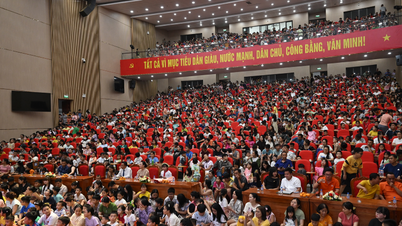
The delegates voted in the assembly hall.
For the first time, there is a national standards strategy.
A notable new feature in the Law is the provision on the development of a National Standards Strategy in Article 8a. This is a long-term tool aimed at providing overall direction, synchronizing the technical standards infrastructure, integrating standards from the central to local levels, and linking them with sustainable development goals, digital transformation, and international integration. The Strategy emphasizes standards serving strategic technologies, the export of high-tech products, and the development of standards harmonized with international standards, thereby contributing to enhancing national competitiveness.
In line with the comprehensive digital transformation trend, the Law adds Article 8c, stipulating the National Database on Standards, Measurement, and Quality – a unified, modern digital platform connected to other government data systems. This will be an important tool to support state management, allowing public access to standard data, conformity assessment organizations, declaration of conformity, and management of measuring instruments. This not only helps save costs and reduce administrative procedures but also contributes to improving the efficiency of state supervision and management, supporting businesses in accessing technical information transparently and promptly.
The new law has addressed the issue of slow updating of technical standards and regulations by clearly stipulating the plan for developing, reviewing, and amending technical standards and regulations (Articles 14, 19, 29, and 35). All of this is linked to socio- economic development goals and harmonized with international standards.
In particular, in emergency situations such as natural disasters, epidemics, or national security and defense requirements, the process of developing technical standards and regulations may be applied using a simplified procedure (Articles 17 and 32), enabling a rapid response to the actual situation.
The law adds two completely new provisions: Articles 11a and 27a, stipulating the rights and responsibilities of organizations and individuals participating in the development of technical standards and regulations. This is an important step in democratizing the process of developing technical documents, while also creating opportunities for businesses, industry associations, technical experts, and consumers to directly contribute opinions and initiatives. Individuals and organizations with outstanding achievements in this work will also be given priority in receiving science and technology awards and other incentives, demonstrating a clear incentive policy from the State.
The law has comprehensively amended Chapter IV, which revises all provisions regarding conformity assessment, certification, and declaration of conformity. The new regulations (Articles 40-45, 48, 50-52) emphasize the requirements for transparency, fairness, and non-discrimination between domestic and imported products; confidentiality of information and assessment results; and respect for businesses' right to choose their certification body.
In particular, the Law allows conformity assessment to be carried out by domestic or international organizations, or by the businesses themselves, creating a flexible mechanism that reduces costs for businesses while still ensuring technical rigor.
Article 57 on mutual recognition of conformity assessment results is also a very noteworthy point. Vietnam will continue to expand mutual recognition agreements (MRAs) and allow unilateral recognition of assessment results from reputable international organizations. This helps reduce technical barriers, save time and costs for retesting when importing and exporting products, and strengthen the confidence of the international market in Vietnamese goods.
The law has repealed 12 articles and one chapter (Chapter VI), while replacing or adjusting a number of outdated terms and provisions, such as removing the phrase "calibration" and replacing "certification" with "assessment"... This demonstrates a determination to streamline the legal apparatus, while clarifying the roles and functions of each relevant entity, ensuring the law is easy to understand and implement.
The importance of the new law
This comprehensive revision and amendment of the Law on Standards and Technical Regulations is a fundamental institutional step forward, contributing to overcoming old limitations and paving the way for a modern, synchronized, integrated, and business-centered standards ecosystem.
In the context of the digital economy, green transformation, and increasing integration pressure, the new Law is the "soft infrastructure" that helps Vietnam enhance its competitiveness, promote innovation, achieve sustainable development, and affirm its position on the international standardization map.
The 2025 revised law not only places businesses at the center of the standards system but also encourages the participation of social organizations, industry associations, and experts in the process of developing and revising standards and technical regulations. Organizations and individuals can propose the development of new standards, participate in the National Standards Technical Committee, and be recognized and honored if they make outstanding contributions.
At the same time, the Law adds provisions to facilitate access to and application of standards for small and medium-sized enterprises. The State will invest budget to support the development of standards for key products, standardization of production lines, training of conformity assessment experts, and promoting public-private cooperation in the development of basic standards.
The addition of a mechanism for declaring and using conformity marks also encourages businesses to proactively transparently disclose product quality. Conformity assessment organizations are clearly defined in terms of operating conditions, legal responsibilities, and compensation obligations if they cause damage to organizations or individuals using their services.
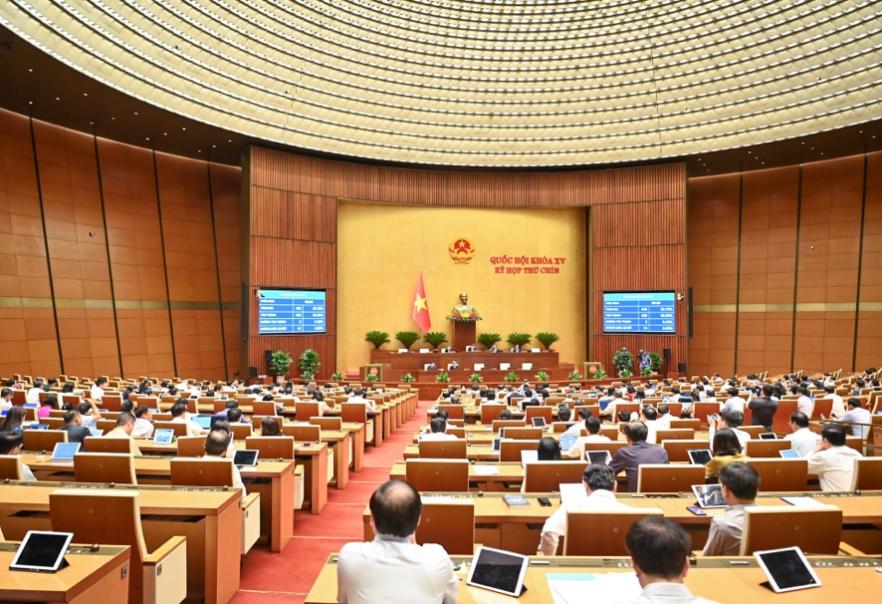
Overview of the meeting.
Source: https://mst.gov.vn/mot-luat-nhieu-dot-pha-luat-moi-mo-duong-cho-hoi-nhap-1972506141425504.htm

![[Photo] General Secretary and President To Lam and the President of the Philippines hold talks.](https://vphoto.vietnam.vn/thumb/1200x675/vietnam/resource/IMAGE/2026/06/01/1780286997787_anh-man-hinh-2026-06-01-luc-11-09-43.png)




























































































Comment (0)