

Kinhtedothi - On the morning of October 30th, during group discussions on "1 law amending 4 laws," delegates from the Hanoi National Assembly delegation expressed their hope that the law would resolve difficulties and obstacles, creating a more favorable environment for the implementation of regulations on planning, investment, business, and bidding.
On the morning of October 30th, continuing the program of the 8th Session, National Assembly deputies discussed in groups the Draft Law amending and supplementing a number of articles of the Planning Law, the Investment Law, the Law on Investment under the Public-Private Partnership method and the Bidding Law (1 law amending 4 laws); and the Draft Resolution on piloting the handling of evidence and assets during the investigation, prosecution, and trial of some criminal cases.

To ensure that the bidding process is not merely a formality.
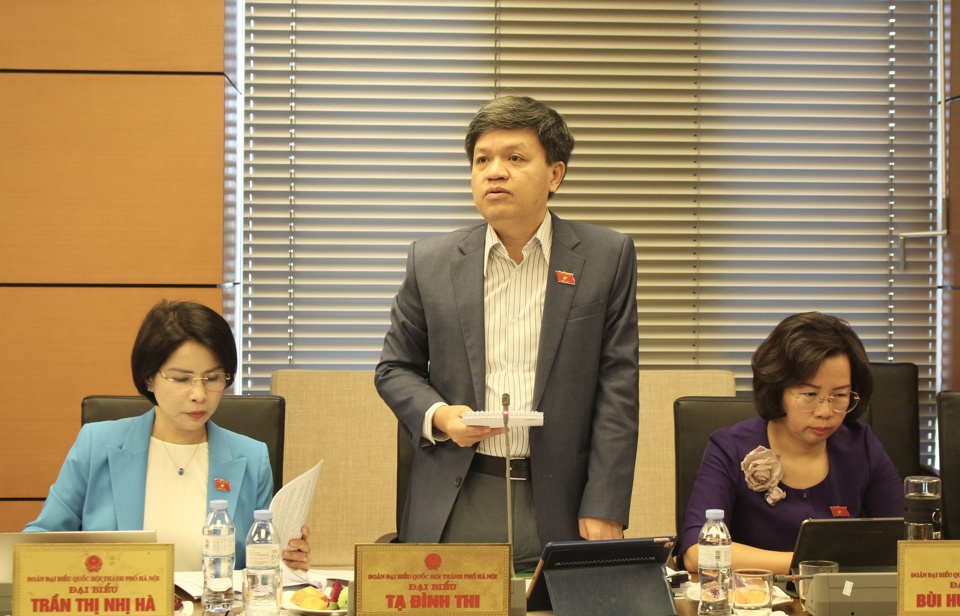
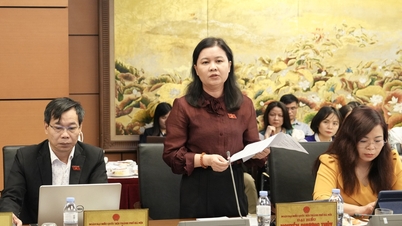
During the Hanoi delegation discussion on the draft law amending four laws, delegate Ta Dinh Thi highly appreciated the contents of the draft law submitted by the Government to the National Assembly this time. Specifically, the draft law proposes amendments and additions to several regulations related to the planning process, planning content, and adjustment of national, regional, and provincial plans – plans that are prepared, appraised, approved, and adjusted according to the provisions of the Planning Law.
According to the delegates, the draft law needs to clearly stipulate which level of authority approves and is also authorized to make adjustments to ensure consistency in planning and meet practical development requirements. Furthermore, responsibility for adjusting planning should be assigned to the competent authority; for example, provincial-level planning should be assigned to the Provincial People's Committee.
“The development of the marine economy has great potential for coastal localities. However, the draft law, regarding the amendment and supplementation of some articles of the Investment Law, only mentions marine economic projects without clearly specifying the authority and responsibility of which unit, for example, offshore wind power projects. Therefore, the draft law needs to clearly define these contents to facilitate the development of the marine economy in coastal localities,” said Representative Ta Dinh Thi.
Regarding the amendment of the Planning Law, National Assembly representative Nguyen Phi Thuong suggested that the drafting agency should review the entire draft to address practical obstacles, especially focusing on long-term goals. Specifically, in Clause 2, Article 1, concerning the funding sources for planning activities, a transitional clause should be added to address cases where ongoing projects require final settlement. The clause should state: "For cases where funding for planning activities has been allocated and paid before the Law takes effect, implementation should continue using the allocated funds without adjustment."
Regarding the Law on Bidding, Representative Nguyen Phi Thuong argued that it is time to consider a comprehensive revision to ensure that bidding activities are effective and fair in terms of both price and quality.
Noting that there have been many shortcomings in drug procurement at hospitals in the past, delegate Nguyen Phi Thuong suggested that the amendment of the Law should focus on substance, so that procurement is not merely a formality.
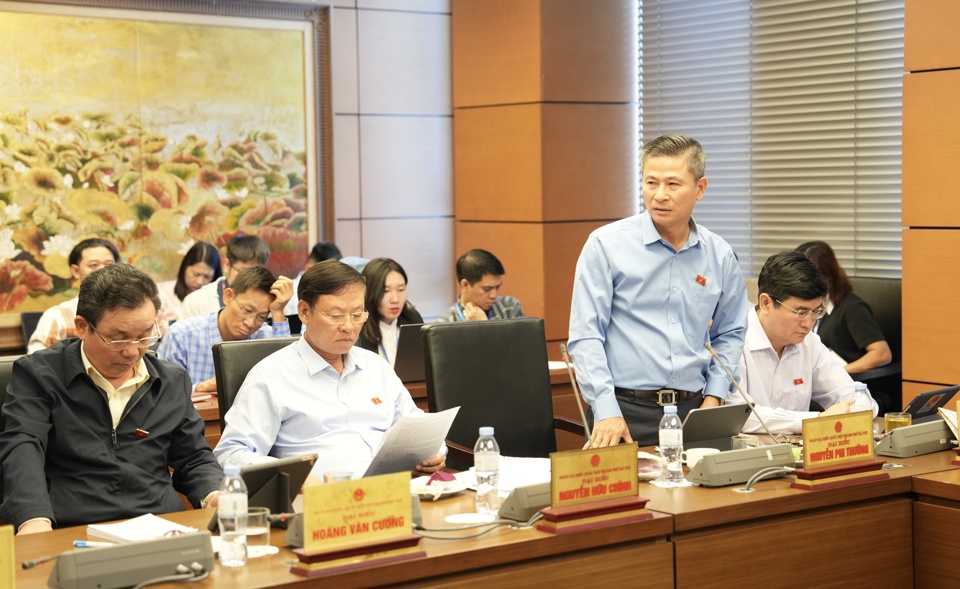
Additionally, delegates proposed supplementing regulations on the limit for direct contracting for packages under projects for the renovation, repair, upgrading, and expansion of public assets; and that consulting packages using recurrent expenditure funds should be subject to the same regulations as projects using public investment funds.
There are artifacts that have deteriorated over the years, resulting in waste.
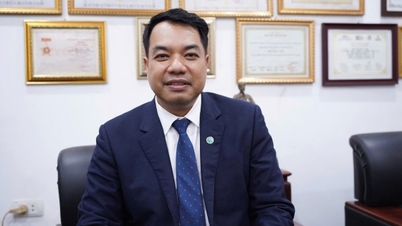
During a group discussion on the draft Resolution of the National Assembly on piloting the handling of evidence and assets during the investigation, prosecution, and trial of certain criminal cases, National Assembly representative Nguyen Hai Trung - Director of the Hanoi City Police - stated that the issuance of the Resolution is very necessary.
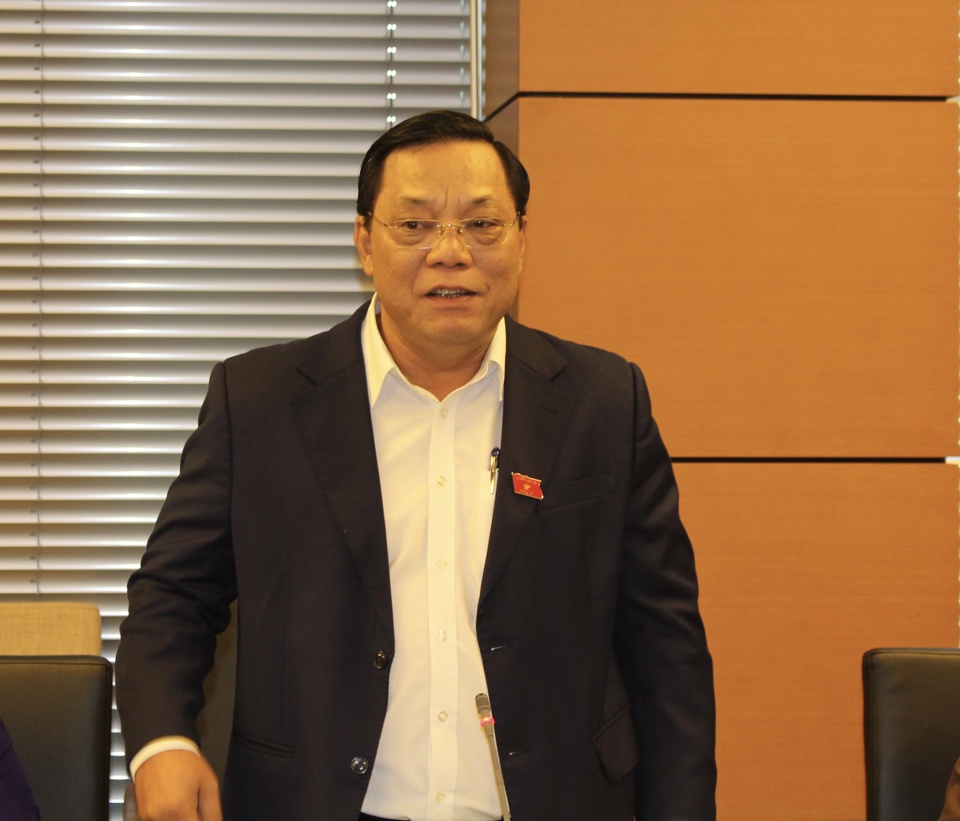
According to delegate Nguyen Hai Trung, the Hanoi City Police are currently managing and processing a very large volume of evidence, some of which has been around for many years, causing waste. The first waste is the very value of the evidence itself. Some assets are kept for too long, losing their value, and the owners simply ignore them, treating them as worthless. Meanwhile, they cannot be liquidated or destroyed, and are therefore kept, resulting in significant waste.
The second wasteful aspect is the need for large evidence storage facilities. The Hanoi City Police Department should have a central evidence storage facility, and each district and county should have its own evidence storage facility for district-level investigative agencies. So where will the land come from to build evidence storage facilities that meet the standards? In the judicial reform program, Hanoi is required to have evidence storage facilities for both criminal and civil cases, but either none exist, or they do not meet the required area and standards.
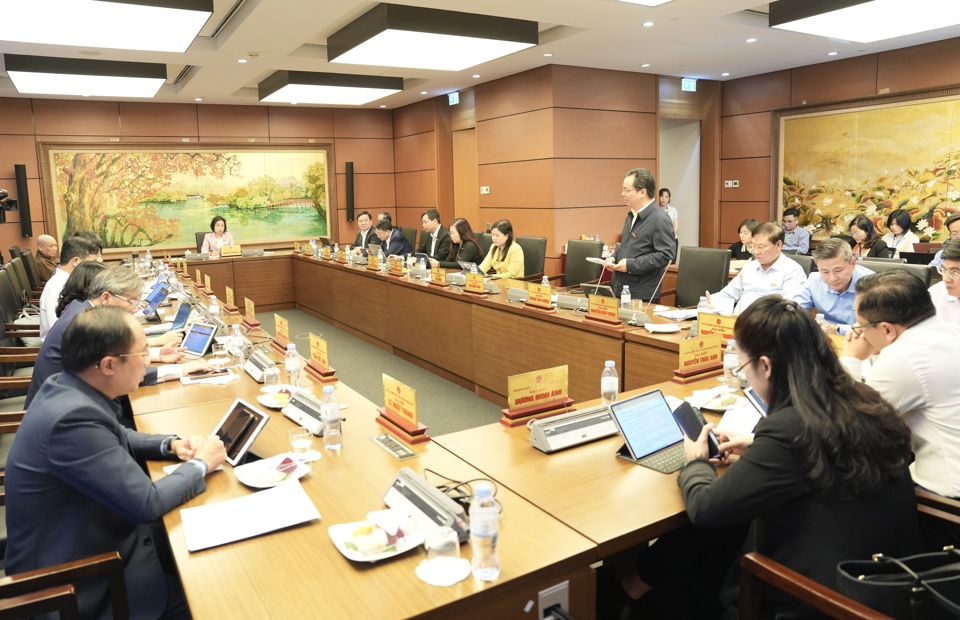
The third wasteful aspect is the need to assign personnel to guard the evidence storage facility. According to regulations, the police are responsible for managing and guarding the evidence, while the courts handle the assets. “Recently, we received dozens of tons of rare earth minerals in a case and had to build a temporary structure to store them. Even though it's a temporary structure, we still have to ensure quality and prevent loss. Meanwhile, guarding it requires more than just one or two people. Compared to the latest regulations, this is a very problematic, inadequate, difficult, and frustrating issue,” shared Representative Nguyen Hai Trung.
Therefore, delegates affirmed that the issuance of a National Assembly Resolution on piloting the handling of evidence and assets during the investigation, prosecution, and trial of certain criminal cases is very necessary. However, according to the presentation and draft Resolution, the scope of the Resolution is still too narrow, only applying to a few cases of the Central Steering Committee on Corruption, and therefore does not fully represent all cases to draw general conclusions.
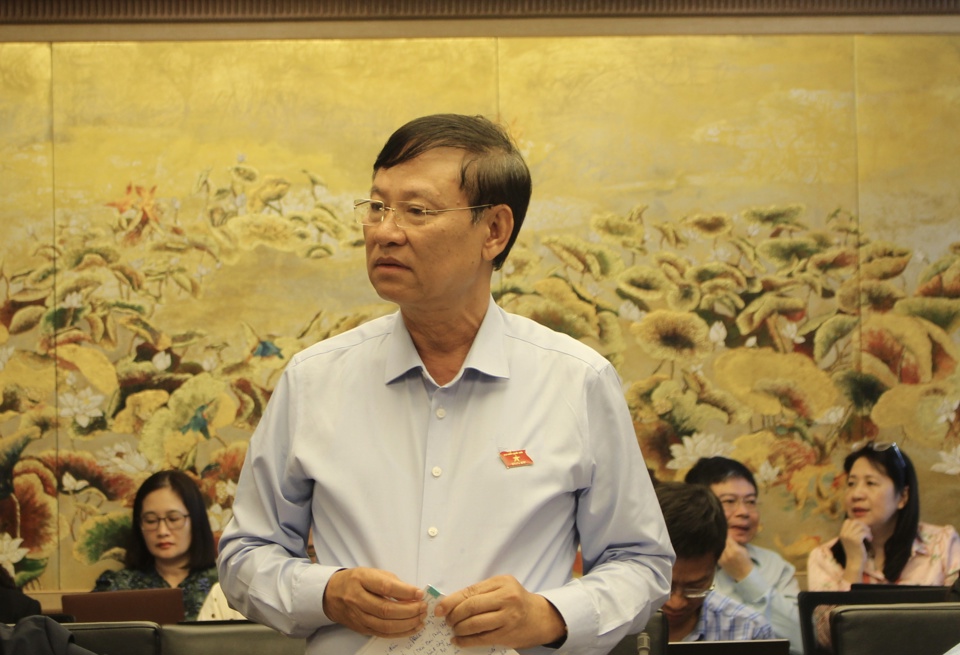
"After the pilot implementation of the Resolution, we must consider expanding its scope of regulation, even to the point of enacting a law. Furthermore, the three-year pilot period is too long; if it's considered a bottleneck, we must urgently address and resolve it in accordance with the directives of the General Secretary and the National Assembly," emphasized delegate Nguyen Hai Trung.
Sharing the same view, delegate Nguyen Huu Chinh stated that the Resolution on piloting the handling of evidence and assets during the investigation, prosecution, and trial of certain criminal cases should have been issued sooner, because the current regulations are extremely inadequate and disadvantageous to the accused and victims. According to regulations, when initiating a case, the investigating agency has the right to freeze and seize assets. However, the final authority to handle these assets is the Court, which takes a very long time, usually 1-2 years, causing damage to the evidence…
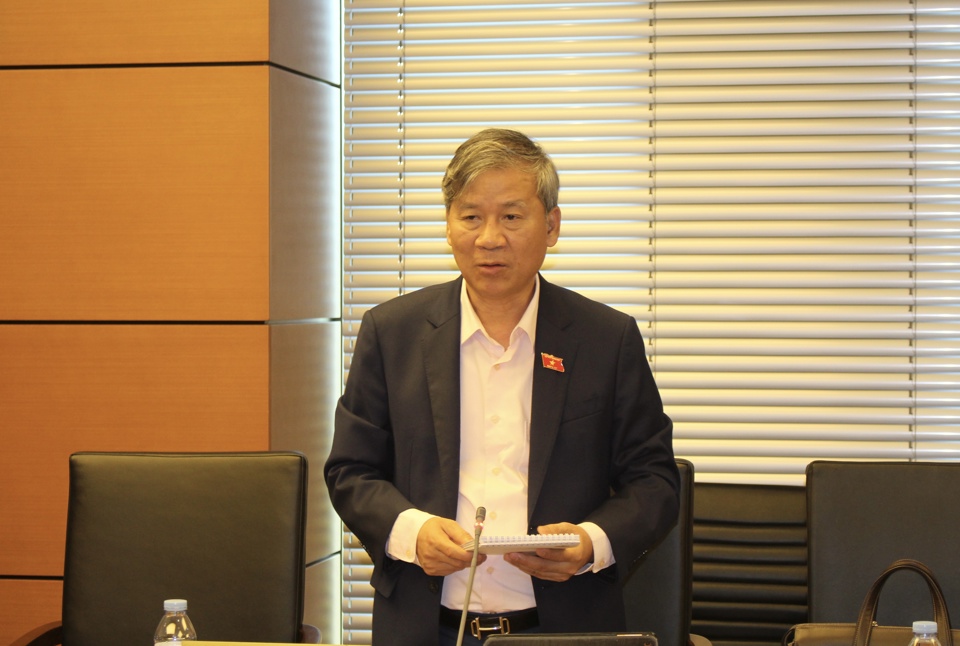
Meanwhile, delegate Nguyen Anh Tri stated that in the past, there have been cases where hospital directors were arrested and detained, leaving related machinery and equipment virtually unusable despite high demand. “I have witnessed large piles of timber, evidence from criminal cases, rotting away, and many seized vehicles and machinery being severely damaged,” the delegate shared. He also emphasized the urgent need to issue a Resolution on handling evidence and assets during the investigation, prosecution, and trial of certain criminal cases, but stressed the importance of effective implementation.
Source: https://kinhtedothi.vn/mot-luat-sua-4-luat-coi-troi-nhung-vuong-mac-trong-quy-hoach-dau-tu.html



![[Photo] General Secretary and President To Lam presides over the meeting to approve the draft report on the results of the second inspection by the Politburo of the Standing Committee of the Hanoi City Party Committee.](https://vphoto.vietnam.vn/thumb/1200x675/vietnam/resource/IMAGE/2026/05/26/1779789811432_a2-bnd-4430-9620-jpg.webp)


























































































Comment (0)