1. Medicinal parts of the plum tree
The plum tree, scientifically known as Prunus salicina Lindl., is also known colloquially as plum fruit, plum seed, or Gia Khanh fruit. All parts of the plum tree, such as the fruit, roots, root bark, sap, leaves, and seeds, have medicinal uses.
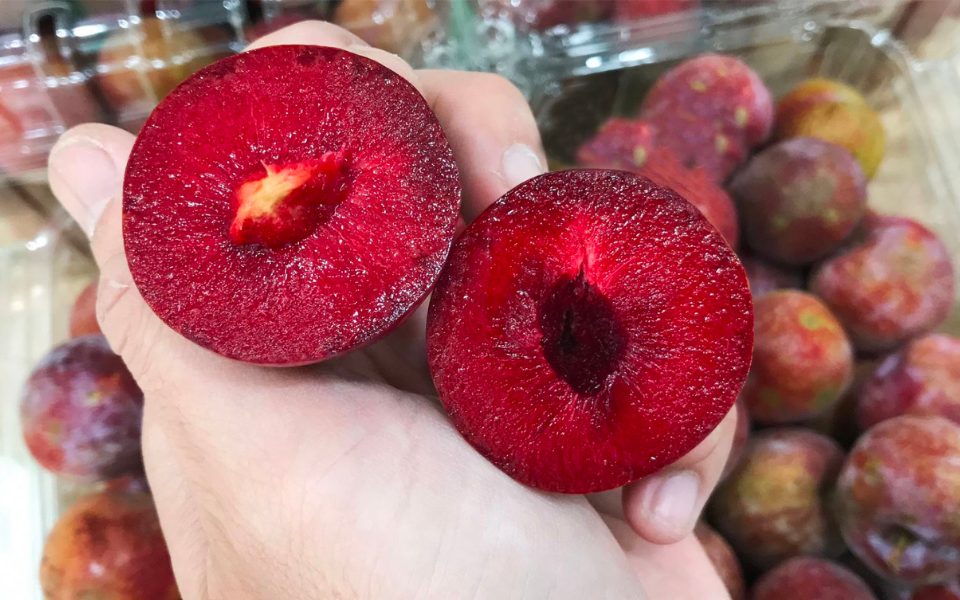
Plums are usually harvested between May and July. They have a sweet and sour taste, are neutral in nature, and are used to clear the liver, regulate heat, and promote fluid production. They are often used to treat conditions such as chronic bone disease, yin deficiency with internal heat, dry lips and throat, edema, diabetes, and urinary difficulties. They are usually eaten raw or crushed and juiced.
Plum roots, usually harvested in September-October, are bitter and cooling in nature. They are used to clear heat and detoxify, treating conditions such as diabetes, urinary disorders (painful urination, frequent urination, hematuria, etc.), dysentery, toothache, and boils. They are used in the form of a decoction for internal consumption or burned to ash and powdered for external application.
The root bark of the plum tree, with the inner core removed and only the outer bark used, is bitter and cooling in nature. It is used to clear heat and reduce gas, and is commonly used to treat ailments such as excessive thirst, restlessness, leucorrhea (vaginal discharge), and toothache. It is usually taken as a decoction, used as a mouthwash, or crushed and pressed to extract the juice for external application.
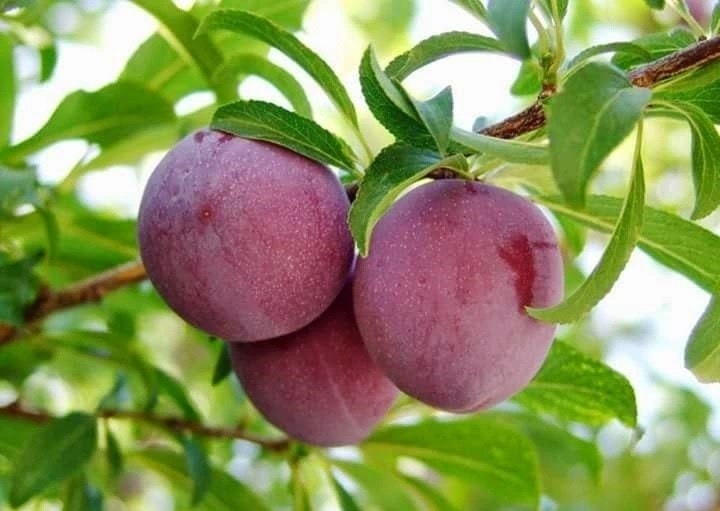
Plum trees in general, and plums in particular, are unique medicinal ingredients.
Plum leaves , with their sour taste and neutral nature, are used to treat high fever, convulsions, edema, and traumatic wounds in children. They are used in the form of decoctions for internal consumption, bathwater, or crushed and applied externally. Ancient medical texts such as the Compendium of Materia Medica, the Japanese Materia Medica, the Zhennan Materia Medica, and the Thousand Gold Prescriptions all record remedies using plum leaves to treat diseases, with quite unique interpretations.
Plum kernel, also known as plum seed, has a sweet and bitter taste and a neutral nature. It is used to disperse blood stasis, promote diuresis, and lubricate the intestines. It is commonly used to treat conditions such as bruises from injuries, coughs with excessive phlegm, abdominal distension, and constipation. It is usually taken orally as a decoction, with a daily dose of 6-12g, or crushed, dried, and powdered for external application.
Plum resin , harvested in spring and dried in the shade, is bitter and cooling in nature. It is used to reduce swelling and relieve pain, and is particularly effective in treating blurred vision (eyes with a film covering the eye) and hives. It is usually taken as a decoction, with a daily dose of 15-20g.
2. Some specific uses
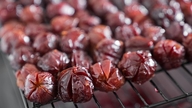
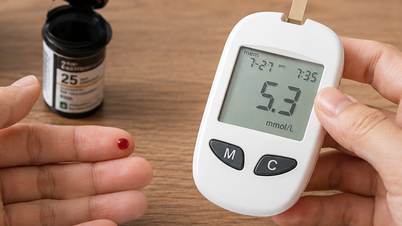
* To support the treatment of diabetes: Wash fresh plums, remove the pits, and squeeze out the juice. Drink one tablespoon three times a day, or boil 10g of plum root bark in water and drink daily.
* For dry mouth: Take a sufficient amount of fresh plums, wash them, remove the pits, and soak them in white sugar for 2 weeks. Eat 5 plums twice a day.
* Ascites due to cirrhosis: Eat an appropriate amount of plums daily.
* Dysentery: Boil a handful of plum tree bark in water and drink the decoction.
* For children with high fever: Boil plum leaves in water and use the resulting liquid to wipe the entire body.
* Urticaria (hives): Boil 15g of plum resin in water and drink 5-10ml twice a day.
* Constipation: Soak 400g of dried plums and 100ml of honey in 1800ml of white wine for 2 months before use. Drink 10ml twice a day. Alternatively, boil 10g of plum kernels, 10g of peach kernels, and 10g of almonds in water and drink the decoction.
* Anemia: You should eat more dried or fresh plums.
* Injuries from sprains and bruises: Boil 10-15g of plum kernels in water and drink the decoction.
* Facial tanning: Dry plum kernels, grind them into a fine powder, mix with egg white, and apply evenly to the face; or crush a sufficient amount of plum blossoms and rub them onto the face.
* Toothache: Boil 30g of plum root until a concentrated decoction is formed, then rinse your mouth with it several times a day.
* For swollen and painful eyes with a membrane: Take powdered dried plum resin twice daily, 1g each time, with a decoction of roasted cassia seeds.
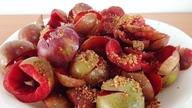

* Insect bites: Wash plum seeds, crush them, and apply the paste to the wound.
* Facial beauty treatment: Wash 250g of fresh plums, remove the pits, crush them, and extract the juice. Mix the juice with 250ml of rice wine, store in a sealed jar, and use gradually. Drink 10-20ml twice a day.
Note that eating too many plums can generate phlegm and dampness, harming the spleen and stomach; therefore, they should be consumed in moderation. After eating plums, avoid drinking too much water as it can easily cause diarrhea. Do not consume plums with sparrow meat, deer meat, duck eggs, or honey as these can harm the internal organs. Plum kernels have laxative and blood-activating properties, so they should not be consumed by people with weak spleens and stomachs, those who frequently have loose stools, or pregnant women.
Please watch the video for more information:
Source: https://suckhoedoisong.vn/mot-so-bai-thuoc-tu-cay-man-169260613164121426.htm
![[Photo] General Secretary and President To Lam receives Palestinian Ambassador Saadi Salama](https://vphoto.vietnam.vn/thumb/1200x675/vietnam/resource/IMAGE/2026/06/25/1782365384740_a1-bnd-9423-8322-jpg.webp)



![[Image] Ho Chi Minh City: Ma Lang area, Chicken-Rice Market about to change its appearance](https://vphoto.vietnam.vn/thumb/1200x675/vietnam/resource/IMAGE/2026/06/25/1782377698627_ndo_br_m1-jpg.webp)
![[Image] Schools organize meetings and introduce teaching models to students admitted to grade 10.](https://vphoto.vietnam.vn/thumb/1200x675/vietnam/resource/IMAGE/2026/06/25/1782368077271_ndo_br_z7970052192242-1ec8daeb77a6eed1a4e9f58c564ddd3e-jpg.webp)