I don't know why I became so deeply attached to that mailbox, so naturally and unintentionally. Perhaps it's because it's linked to a period of intense bombing that I experienced during my childhood?
Or was it because it was the first time my brothers and I had to live far away from our father, facing hardship and deprivation, and constantly anxiously awaiting his letters? Or was it because of my father's incredibly captivating stories about a rural area in Kinh Bac? Perhaps it was all of these reasons!
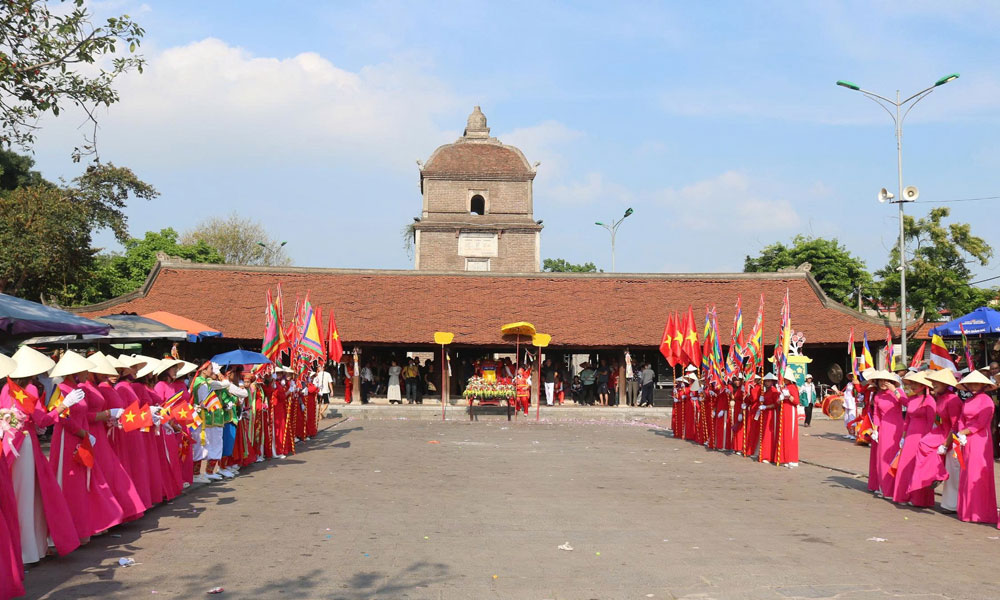 |
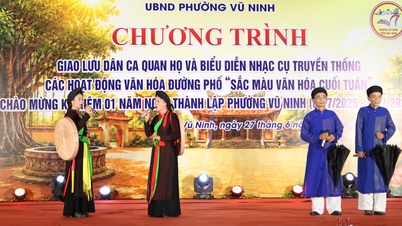
The Dau Pagoda Festival is held annually on the 8th day of the 4th lunar month. Photo: Thuan Thao |
In the summer of 1967, less than a month after my uncle, then only 19 years old, was killed by an American bombing raid, my father was sent by the leaders of Tuyen Hoa district (formerly Quang Binh province) to study at the Central School of Administration, which was then evacuated to Thuan Thanh district, Ha Bac province (now Bac Ninh province).
Before I left for school, my father took a few days off work and dug four A-shaped bunkers in the four corners of the garden so that my mother and I could each take a bunker to study and sleep at night. To put it bluntly, if American planes had bombed or fired rockets into the garden…
From his village, my father cycled against the Lao wind, joining the strategic Highway 15B that ran along western Ha Tinh, Nghe An, Thanh Hoa... then down to Ninh Binh, Nam Ha... During the day, he stopped at people's houses along the road to eat and rest to avoid the sun and American planes. At dusk, he would trudge back on his way, covering about fifty to seventy kilometers each night. After more than a week of arduous work, my father reached Gia Lam district of Hanoi.
From there, he cycled to some ferry landing on the south bank of the Duong River whose name I've forgotten. Across the river was Thuan Thanh district in Ha Bac province. The Central School of Administration was scattered across three communes: An Binh, Gia Dong, and Tram Lo. My father and another uncle from Le Thuy were assigned to stay in a villager's house in An Binh commune. The school's classrooms were set up under bamboo groves, in communal houses, temples, or borrowed from villagers.
Despite extremely harsh and deprived conditions, with the support and protection of the people of Thuan Thanh, the Central School of Administration successfully completed its mission of training and nurturing core administrative cadres for the country during the fierce years of the resistance war. The land of Thuan Thanh became the birthplace of the current National Academy of Public Administration.
Thuan Thanh is one of the representative sites of the Red River civilization. It is home to the complex of relics including the Mausoleum and Temple of King Kinh Duong Vuong, a sacred space dedicated to the founding king who laid the first foundations for the Xich Quy state, the earliest state of the Vietnamese people before the Hung Kings era. It also boasts the ancient Luy Lau citadel, the center of the Giao Chi district of the Vietnamese people in the early centuries AD, and one of the oldest Buddhist centers in Vietnam. Furthermore, it features Dau Pagoda, built in the 2nd century, notable for its Hoa Phong Tower in the courtyard, housing an ancient bronze bell and chime.
Not far from Dau Pagoda is But Thap Pagoda, a masterpiece of 17th-century architecture that remains relatively intact. The pagoda is famous for its Bao Nghiem stone tower, which resembles a giant pen reaching towards the blue sky, and the largest wooden statue of the Thousand-Eyed, Thousand-Armed Goddess of Mercy in Vietnam…
It was only later, through reading books and newspapers and hearing our father's firsthand accounts, that we learned all of this. Back then, we only knew that our father lived near the village that produced paintings like "The Mouse Wedding," "Collecting Coconuts," "Buffalo Herding and Playing the Flute," and "Carp Gazing at the Moon"—paintings that every household in our village bought at least one to hang during Tet (Lunar New Year). And it was only much later that we learned they were products of the famous Dong Ho painting village, a unique and unparalleled style of folk painting.
Dong Ho paintings are not painted with chemical dyes but with materials entirely from nature. Each painting not only embodies the colors of traditional Tet (Lunar New Year) but also contains humanistic lessons, humor, and aspirations for a prosperous and harmonious life for the Vietnamese people. Sadly, by the time we learned all this, Dong Ho paintings were very rare in my hometown during Tet and the arrival of spring.
At the end of 1968, my father finished his course and returned to his hometown to continue working. From then until his retirement, enjoying time with his children and grandchildren, he would occasionally begin a story with the words, "When I studied in Thuan Thanh...". Because of this, many place names, legends, customs, and traditions of Thuan Thanh were unconsciously ingrained in me.
There's Mao Dien village, nicknamed the "university village," rivaling the scholarly villages of Nghe Tinh region. Then there's Ho Bridge across the Duong River, a target of fierce bombing by American aircraft, no less intense than other key targets in Quang Binh. Most appealing are the local delicacies, such as Dinh Ho soy sauce, crab soup, Mao Dien mung beans, and stir-fried shrimp with starfruit…
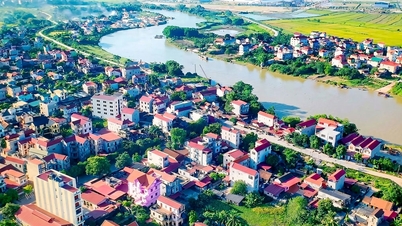
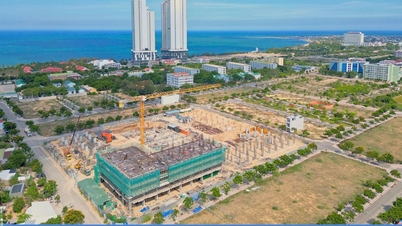
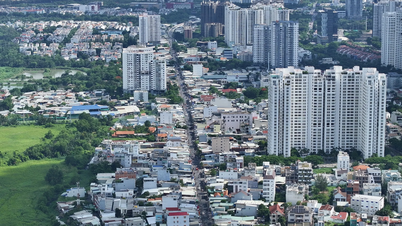
After his retirement, my father longed to revisit Thuan Thanh, but due to his advanced age and frail health, he passed away with that wish. In 2014, after the mourning period for my father ended, I decided to arrange a trip back to Thuan Thanh. That was a time when the former Bac Ninh province was actively developing the area south of the Duong River, and Thuan Thanh was a key area, with an average economic growth rate of 13% - 14% annually.



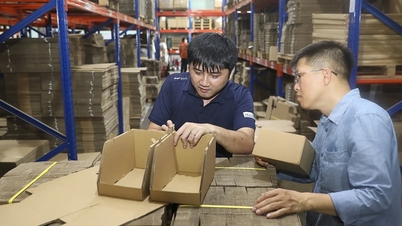
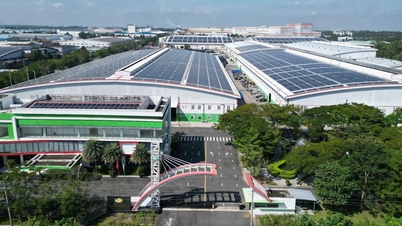
Thuan Thanh I Industrial Park became a highlight of the entire province. Thuan Thanh II and Thuan Thanh III Industrial Parks then began to fill up their industrial land area, attracting many businesses to invest. Traditional craft villages were re-planned to minimize environmental pollution and apply new technologies. These results provided a solid foundation for the National Assembly Standing Committee to issue a resolution establishing Thuan Thanh town in 2023.
Source: https://baobacninhtv.vn/mot-tinh-yeu-trao-truyen--postid448816.bbg