

Hanoi – After wearing contact lenses for a year, a 25-year-old man noticed a gritty sensation in his eye, blurred vision, and complete loss of sight. Doctors diagnosed blindness due to corneal ulceration.
The boy has been nearsighted since he was 6 years old and started using daytime contact lenses with a prescription of -4 diopters. Since then, he has enjoyed wearing contact lenses but has only used them regularly for the past year.
The patient stated that previously, his work was mainly in an office, so removing and cleaning his contact lenses was easy. However, since last summer, he has had to work on construction sites more often, making the use of contact lenses inconvenient. On one occasion, while inserting a contact lens, it fell to the ground. He picked it up and put it back on because he didn't have any spare eyeglasses. There were even days when he didn't have time to remove and clean his eyes, so he wore contact lenses for 24 hours straight.
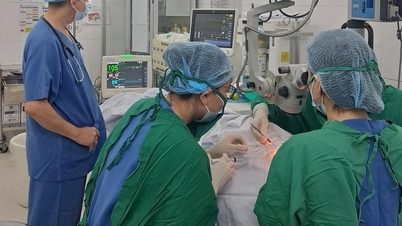
Recently, a young man noticed scratches and a lumpy feeling in his eye, and experienced blurred vision. He went to Hanoi Eye Hospital 2 for examination, where doctors concluded he had corneal ulceration leading to vision loss. The immediate priority is treatment to prevent further damage to the eye structure, followed by corneal transplantation surgery to restore his vision.
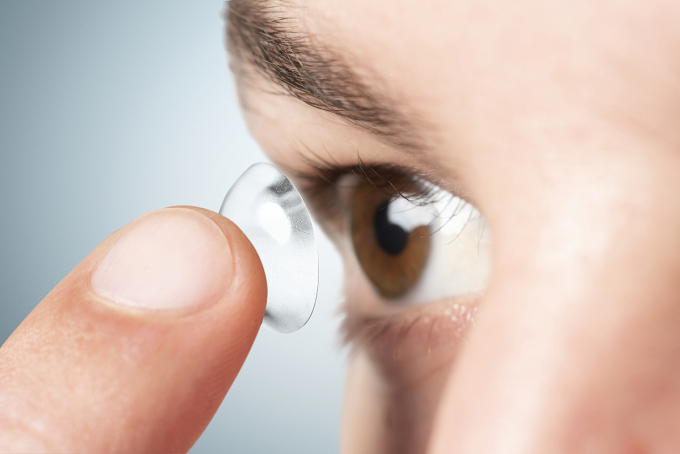
The risk of blindness from wearing contact lenses incorrectly. Photo: Freepik
On July 16th, Dr. Hoang Thanh Nga from Hanoi Eye Hospital 2 stated that contact lenses offer many advantages if worn correctly, according to indications, and with proper hygiene. However, patients who wear them incorrectly, for example on an inflamed eyeball, wearing them overnight, or reusing disposable lenses without soaking and rinsing them with specialized contact lens solution, are prone to infection. Contact lenses come into direct contact with the corneal surface, damaging the outer epithelial layer. When this protective barrier is lost, bacteria can easily penetrate and cause inflammation.
"Even with treatment, scarring will still occur, and in severe cases, it can cause blindness. If the patient cannot control the condition with medication and does not have the means for a corneal transplant, the worst-case scenario is having to remove the eye," Dr. Nga said.
According to Ms. Nga, this patient worked outdoors in a dusty construction site. When wearing contact lenses, tears couldn't effectively wash away dirt, allowing bacteria to easily penetrate. Additionally, the habit of wearing contact lenses overnight increased the risk of corneal epithelial damage. The patient didn't seek immediate medical attention after noticing the scratches, which eventually led to vision loss.
Currently, many patients buy contact lenses from unreliable sources without following the instructions and prescriptions of their doctors or manufacturers, especially color-changing contact lenses that dilate the pupils for a more attractive appearance, which can cause many eye complications. It is essential to consult a doctor before using contact lenses.
People should not overuse soft contact lenses. They should not be worn for more than 12 hours a day, and should not be worn while sleeping or showering. Use specialized lens cleaning solution. Do not share lenses with others. Do not reuse lenses multiple times.
Le Nga
Source link








































































































Comment (0)