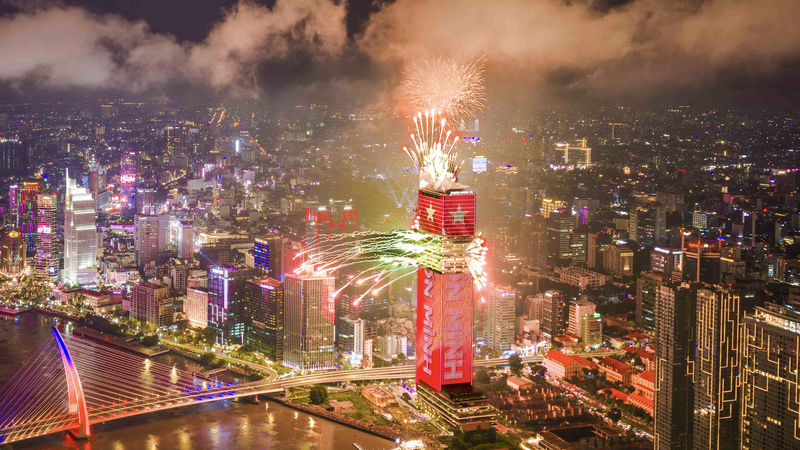
I have experienced many autumns, each with its own unique charm. There were autumns with incessant rains, floods that swept away everything, leaving behind only withered vegetation. There were autumns with vast, deep blue skies, a gently flowing river, a few boats with gleaming brown sails under the honey-colored sunlight, and a soft, cool breeze. But all the autumns I have experienced share one thing in common: they all resonate with the joyful cries of the human heart. September is always like that. The autumn of flags and flowers, the autumn of the Vietnamese people.
In my peaceful childhood in the countryside, along with Lunar New Year, Independence Day was perhaps a gift from the State, allowing me to witness the vibrant colors of the festival once more, to live in a different atmosphere, and to feel that my life had something new. Every year on that day, the souls of us children would light up with the colors of the national flag covering the landscape. Around the beginning of August, the drums would begin to resound with the rhythmic footsteps of teenagers practicing for the official celebration. In the mornings, when the first faint rays of sunlight shone down from the horizon, or in the evenings when the golden moonlight peeked from behind the bamboo groves at the edge of the village, the drying yards of the production teams were always bustling and lively.
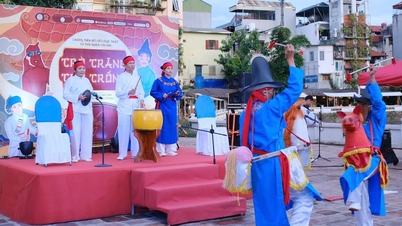
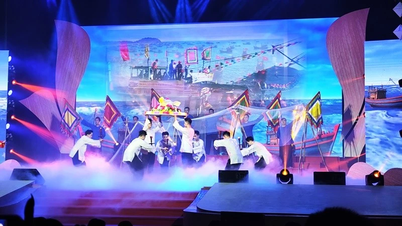
Starting from the afternoon of September 1st, along the village roads, youth groups lined up and marched in unison, wearing white shirts and blue pants, carrying sticks and colorful bracelets. Today seemed to begin earlier than usual. Many villagers poured into the streets, waving to welcome the parade. Waves and smiles stretched on. From the cooperative's loudspeakers blared familiar yet captivating songs: "The March of the Ho Chi Minh Young Pioneers," "I Am a Young Seed of the Party," "As If Uncle Ho Were Present on the Day of Great Victory"... September 2nd was the most bustling day, when at the village stadium, youth groups gathered to march, perform cultural shows, and set up camp... On another side, beyond the riverbanks and along the deep blue Lam River, at the river confluence, people organized traditional folk games: boat races, human chess, and swinging on swings...
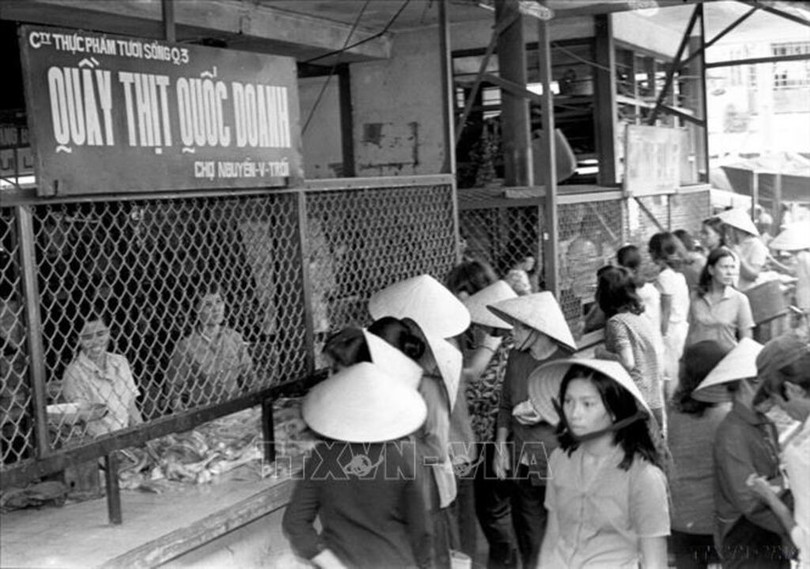
But what I remember most is the Independence Day celebration in families. Back then, many families in my hometown switched from celebrating the 15th day of the seventh lunar month to celebrating Independence Day. The primary reason, of course, was patriotism and devotion to the beloved President Ho Chi Minh. But there was another reason, which sometimes evokes a touch of sadness when I think back. The economy was difficult at that time, transportation was inconvenient, and trade was very limited (partly due to the bureaucratic, centrally planned economy and the fight against private enterprise), so food was quite scarce. My siblings and I often had to wait a long time for a meal with meat during holidays and festivals. And, September 2nd was a major national holiday, and only then did the cooperative allow the slaughter of pigs to be distributed to the people. So, celebrating Independence Day was more convenient than celebrating the 15th day of the seventh lunar month, as those two days were usually close together.
Around 4 a.m., the cooperative began slaughtering pigs. On the surface of a production team's storage yard, several pigs were laid out, people jostling inside and outside, waiting to get a few hundred grams of meat. The pigs were bled, their hair shaved clean, their skin a pale pinkish-white color, butchered, and neatly arranged on banana leaves spread out side by side. The pigs back then were small, around 30-40 kg, not as large and heavy as the new breeds today. The meat from the unfortunate pigs was cut into small pieces. Each family was only allowed to buy a few hundred grams. Even those without money couldn't afford more, despite the large number of children in each family. These children grew up after days of hunger and hardship, sleeping wherever they could find a place – sometimes at the foot of a haystack, sometimes at the edge of a rice field, dark-skinned and emaciated… A few hundred grams of meat from that pig would become the main dish on the altar during Independence Day.

Families decorated lavishly for Independence Day celebrations. My house was no exception. I still remember the image of red flags with yellow stars fluttering in the wind alongside the hammer and sickle flag. The flagpole was made from a bamboo trunk, which almost every garden had back then. Right below the flag was an old, faded tray with prominent inscriptions written in freshly slaked lime: "Nothing is more precious than independence and freedom," "Long live President Ho Chi Minh." Looking at that image, my heart was filled with emotion.
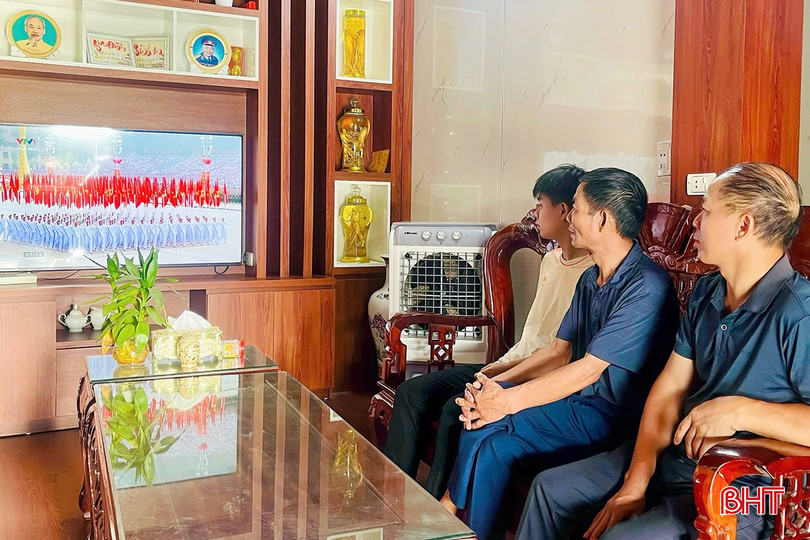
The family of war invalid Nguyen Xuan Toan (Vinh Phu village, Cam Xuyen commune) felt proud watching each contingent march and parade.
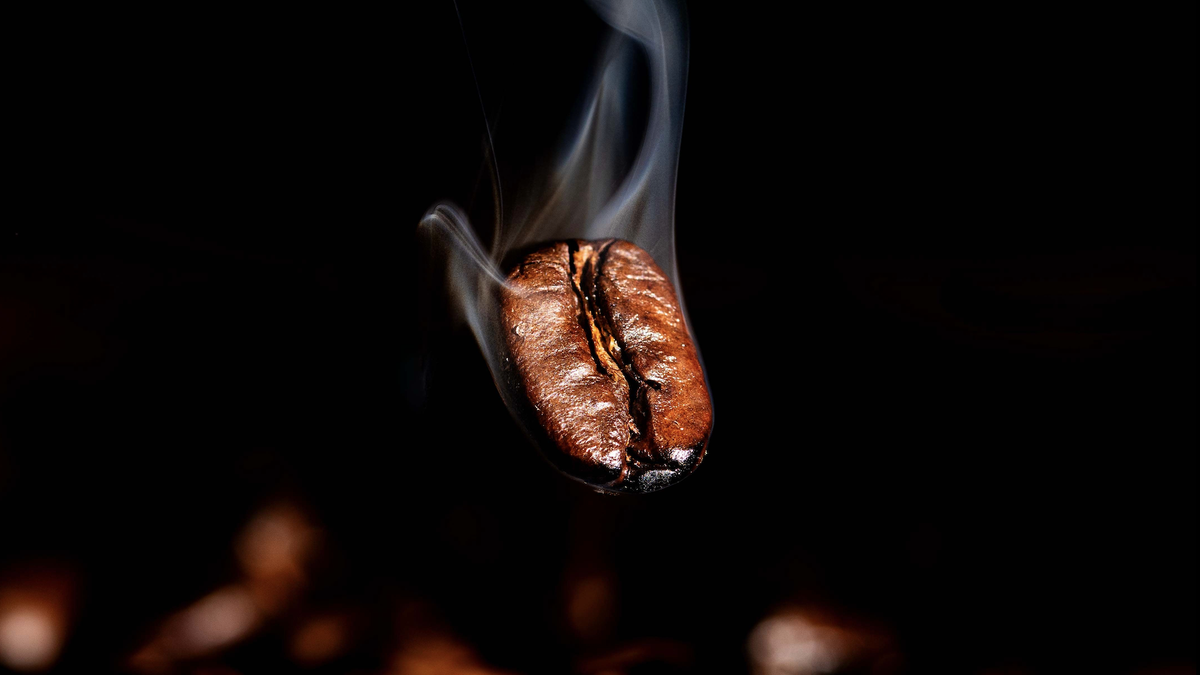
Back then, I was young and naive, books were scarce, and I didn't have much to read, but I often heard my teacher tell stories about Uncle Ho in a respectful, solemn tone, with eyes brimming with tears—stories that, if there were a camera, could have captured countless documentary clips of the Vietnamese people's affection for him. The house was filled with the quiet scent of incense. On the altar, which was once a rice storage table, my mother had prepared two trays of offerings, a plate of sticky rice cakes, along with wine, betel nuts, candles, and other items... Above, inside, hung a picture of Uncle Ho, respectfully placed against the backdrop of the national flag. It felt like the Lunar New Year. The smoke from the incense sticks and sandalwood mingled in the small, warm, and fragrant house, trying their best to dedicate themselves to Independence Day.
I don't think any other language dictionary besides the Vietnamese dictionary has an entry for "Independence Day." It's a holiday unique to the Vietnamese people. The two words "independence" always resonate with pride in national sovereignty and identity. These epic echoes, passed down from "Nam Quoc Son Ha," "Du Chu Ti Tuong Hich Van," "Tung Gia Hoan Kinh Su," "Binh Ngo Dai Cao," "Hich Diet Thanh," and "Declaration of Independence," are perhaps not only found in books and in people's hearts, but also in the earth, trees, and streams...
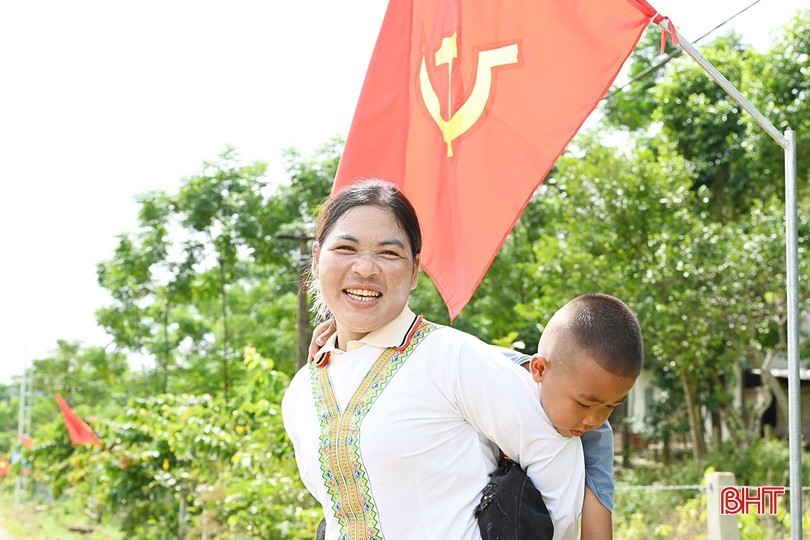
With that spirit, generation after generation, the Vietnamese people have spared no blood or sacrifice to protect every blade of grass and every inch of land, to write pages of history colored red with blood, glistening with tears, radiant with smiles, and glorious with flags and flowers. And the word "Tet" anchors the Vietnamese soul to the shores of history, evoking a peaceful festive atmosphere. It skillfully connects the political and historical significance of the nation's founding day with the distant memory of the rice-farming civilization and culture at a time when heaven and earth harmonized, hearts were open, and people awaited a new beginning.
"Independence Day" is a term that evokes a yearning for eternal life, linking the spiritual meaning of our origins with the revolutionary spirit of the era. The appearance of banh chung and banh day (traditional Vietnamese rice cakes) on the feast table reminds us that the celebration of independence is a continuation of a journey from Lac Long Quan teaching the people to cultivate rice, to Lang Lieu making cakes to offer to his father, the king...
I sit here writing these lines on an autumn morning, sunlight filtering through the leaves in the garden. The sound of children's drums echoes from afar, poignant and nostalgic. Perhaps, the villagers will soon be making sticky rice cakes, traditional games will be organized again, and the camp will be inaugurated with great fanfare. All of this brings me back to an unforgettable childhood, filled with the happiness of a citizen breathing the air of peace and freedom.
Source: https://baohatinh.vn/mua-thu-don-tet-post294881.html