The trap from the forest
The scorching sun still seemed to crack everything. Somewhere along the way, in the characteristic wind, dust occasionally danced and swirled up in gusts, much like the old name of this place, which had changed over the years from Truy Phong to Tuy Phong. Ignoring the overturned bushes and mud stains on the trees, no one would have thought that the communes of the former Tuy Phong district had just experienced an unusually heavy rainfall of 461 mm on the night of December 3rd, creating a flash flood that swept from the high mountains of Phan Dung down to the Lien Huong estuary in just one hour.
Because Lien Huong market still has plenty of vegetables and fruits, there is no shortage or price increases of 5-6 times like in other flood-affected markets in the province. Someone said, "To know what a rural area is like after a flood, you should go to its market," which is quite true. The vendors at Lien Huong market all said the same thing: only the areas along the river leading to the sea were damaged, while other areas were not significantly affected, so there are still vegetables and fruits from the region to sell at the market.
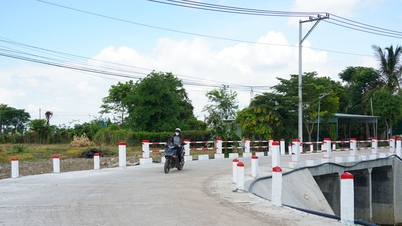
We followed the flood trail towards Phan Dung, where the Phan Dung reservoir is located. Since its creation, it has been used to divert water to reservoirs in the old Tuy Phong delta region, creating opportunities for crop production in an effort to distribute water resources effectively. However, these days, the reservoir has become a "culprit" in the minds of some people when it is mentioned. Six days after the flood, the scene around the two bridges, often called the "double bridges" in Phan Dung, still reflects the ferocity of that night. The riverbed is wide and deep compared to the road surface, as if someone had slashed it. The water is still flowing chaotically, as it merges two streams: Tan Le stream, passing through Phum dam, and Phan Dung stream before flowing into Long Song river, then into Long Song reservoir, and finally out to sea.
“It was like a trap. At 3 PM on December 3rd, looking towards the distant mountains, I saw the sky turn pitch black, with thunder and lightning, and knew it was going to rain. At 5 PM, the river behind my house started flowing more heavily. At 8 PM, the water level dropped, so I felt reassured. But who would have thought that at 11 PM or midnight, it would rain heavily, and water would suddenly flood the road and into my house,” said Mr. Nguyen Phuoc Bao Luyen, whose house is near the bridge, opposite the Memorial Monument at Cay Dau 3. A long-time forest ranger of the Long Song - Da Bac Forest Management Board, Mr. Luyen knows every corner of the forest in Phan Dung. At 68 years old, having settled in La Ba, Phan Dung since 1997, he witnessed the 2008 flood, which was just as devastating as this year's. But back then, there was no Phan Dung reservoir, so there was no basis for blaming anything as there is now. As someone who understands this forest area, he discovered the secret behind the flood that year.



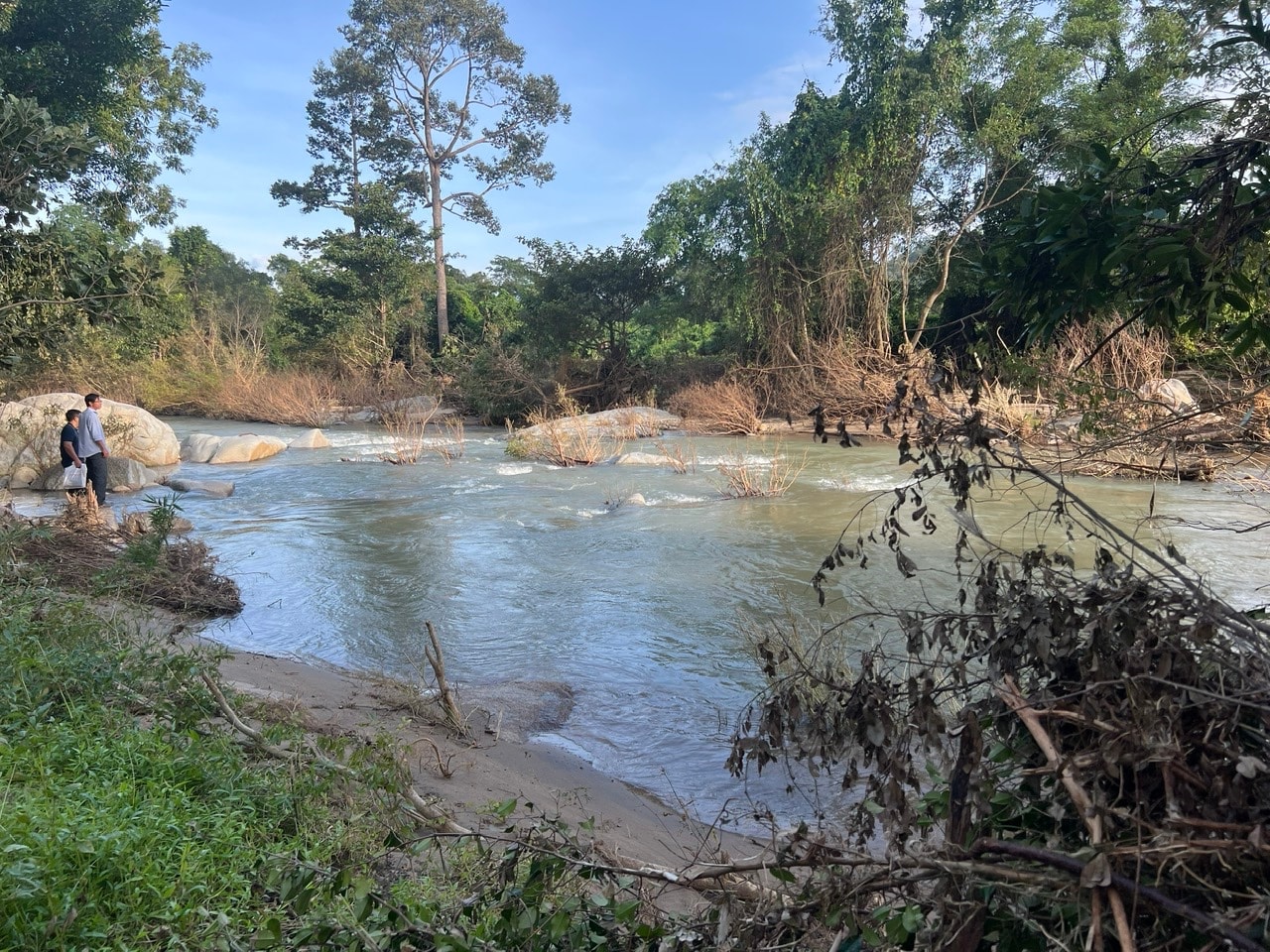
The Phan Dung forest is full of dense foliage, so every year a large amount of leaves fall. During the dry season, to prevent forest fires, his unit has to mobilize to clean up the forest and prevent fires, which is very laborious. The terrain reveals that in some places, two steep cliffs are close together, and the accumulated fallen leaves can form a barrier, inadvertently creating pools or pockets of water that collect rainwater. When the water level rises, it will break through and rush downstream. “I haven’t been to the forest to check again in the past few days, but given that the river behind my house dropped low at 8 PM on December 3rd, I suspect that the forest created these artificial pools, pockets, or dams to retain water. Then, late at night, heavy rain caused them to burst, rushing down with the floodwaters from the Phan Dung reservoir,” Mr. Luyen asserted. He also added that the Long Song River, as its name suggests, is dry year-round and shallow compared to its banks, so it doesn’t collect all the water when floods arrive. Moreover, this area has only experienced flooding once every 18 years since 2008. Furthermore, that day coincided with the full moon of the tenth lunar month, and the high tide at Lien Huong estuary surged as usual.
A strange stroke of luck
Mr. Luyen also recounted other secrets of the forest, the pattern of floods occurring after a certain period, in the old Tuy Phong area, which was the driest in the country. His words brought back memories of the historical efforts by the central and provincial governments to alleviate the drought in the area through the construction of reservoirs and a network of irrigation canals to distribute water. In reality, each year, the irrigation reservoirs, including Long Song, Phan Dung, and Da Bac, struggle to fill completely, usually only reaching about 60-80% capacity. Therefore, the fields here are often left fallow for crop rotation.
I suddenly remembered the conversation among the vendors at Lien Huong market this morning: “My rice is ripening, the heavy rain didn't cause any damage. It's fortunate, because last year's harvest was ruined by lack of water, leaving the land fallow. During Tet, we spent a lot of money buying rice to store in jars,” “The night before, I heard about the heavy rain and thought, 'Oh no, it'll be just like last year, I'll have to buy more rice again.' But luckily, when I checked the fields this morning, everything was fine…” They were talking about the rice in the Tuy Tinh fields of Lien Huong commune.
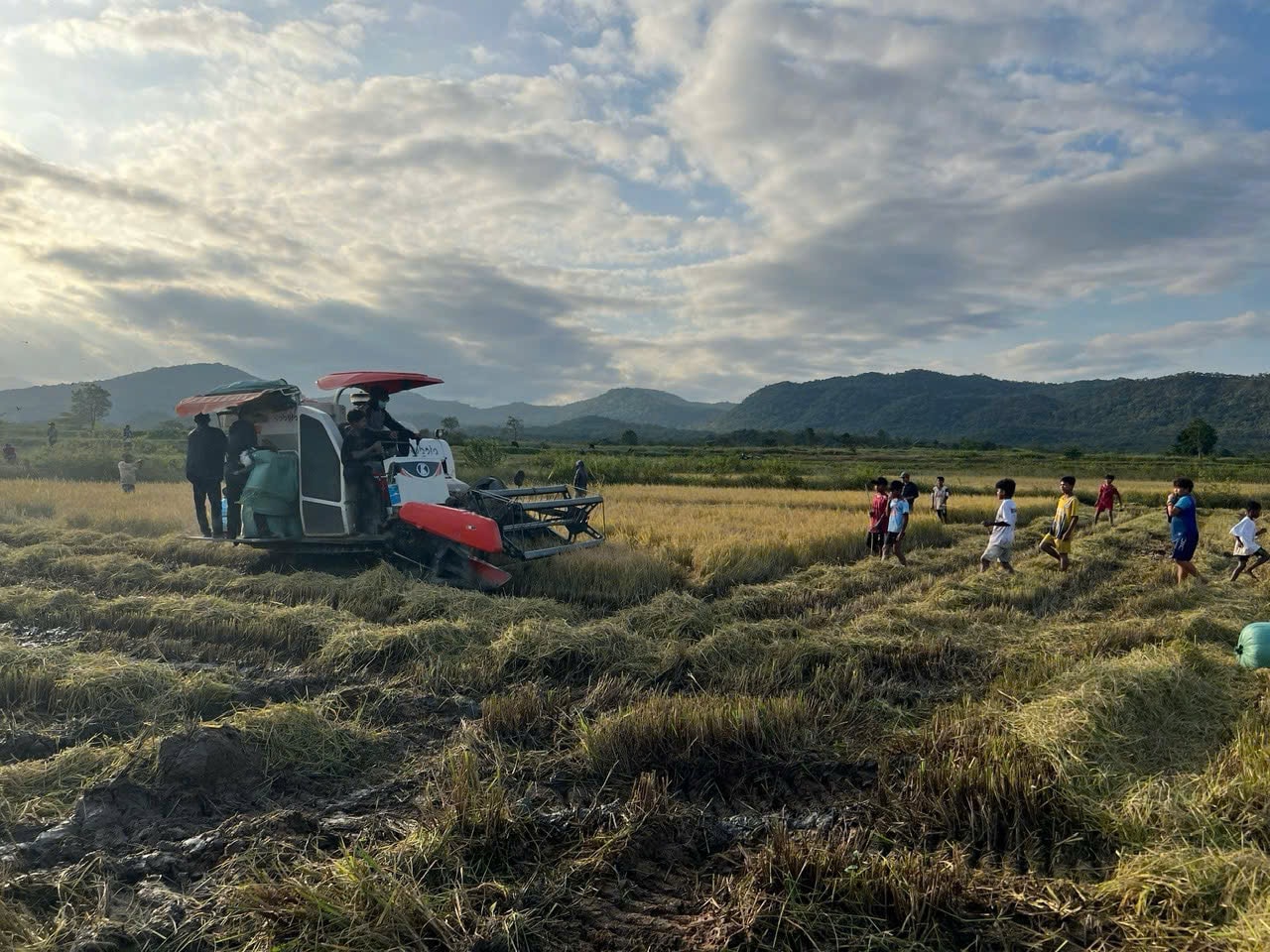
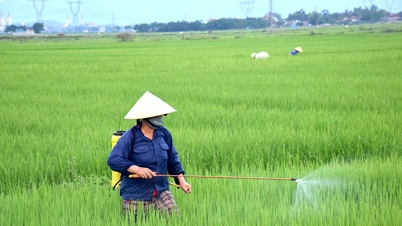
We followed the 42-kilometer Ta Mu - Suoi Mang - Cay Ca canal route and stopped at Km 37 to admire the golden rice fields of Tuy Tinh below. It was harvest season, and the 840-hectare field was bustling with people coming and going, laughing and chatting. The slightly pungent scent of fresh rice permeated the air. It seemed like a good harvest, with some predicting around 6-7 quintals per sao (a unit of land measurement). The price of rice wasn't high, but having rice for Tet (Lunar New Year) made them happy. This was similar to the amusing scene of rice harvesting in Phan Dung, Tuy Phong commune, that we encountered on our trip. Perhaps because it was a holiday, many young people gathered in the rice fields to watch the harvesting machines and straw baling machines. Every time these machines passed by, they would move to watch. Going to the fields instead of the hillside farms showed that this year the Raglai people in Phan Dung cultivated 143 hectares of rice and had a good harvest, with a predicted yield of 4-5 quintals per sao.


Furthermore, in Vinh Hao commune, there are over 170 hectares of rice fields currently being harvested. In the Cay Ca area alone, 927 hectares of rice have already been harvested, thanks to early planting and marking the first harvest of the season in the province. This is the clearest evidence of the Tuy Phong irrigation system's efforts in water storage, distributing water to production areas, and supporting the people in creating a bountiful harvest.
No one thought that the fragile ripening rice plants could survive record-breaking rainfall without damage. And no one thought that a golden harvest of 2,300 hectares of rice in the former Tuy Phong communes could miraculously survive the floods, ensuring that the people in this water-scarce region would have rice to eat during the upcoming Tet holiday. It's an extraordinary stroke of luck. "Every year, this place experiences natural disasters. For years, the disasters have been droughts and crop failures. But this year, it's floods, yet we still have rice to bring home..." This concluding remark from a farmer in the Tuy Tinh fields awakened me to the profound meaning of gain and loss in life.
Source: https://baolamdong.vn/mua-vang-vuot-lu-410116.html