

Visiting temples and pagodas is a beautiful cultural tradition of the Vietnamese people, dating back a long time. Quang Ninh, with over 600 historical and cultural relics, mainly communal houses, temples, pagodas, and shrines, welcomes millions of visitors every year, with the highest number of visitors during the spring season.
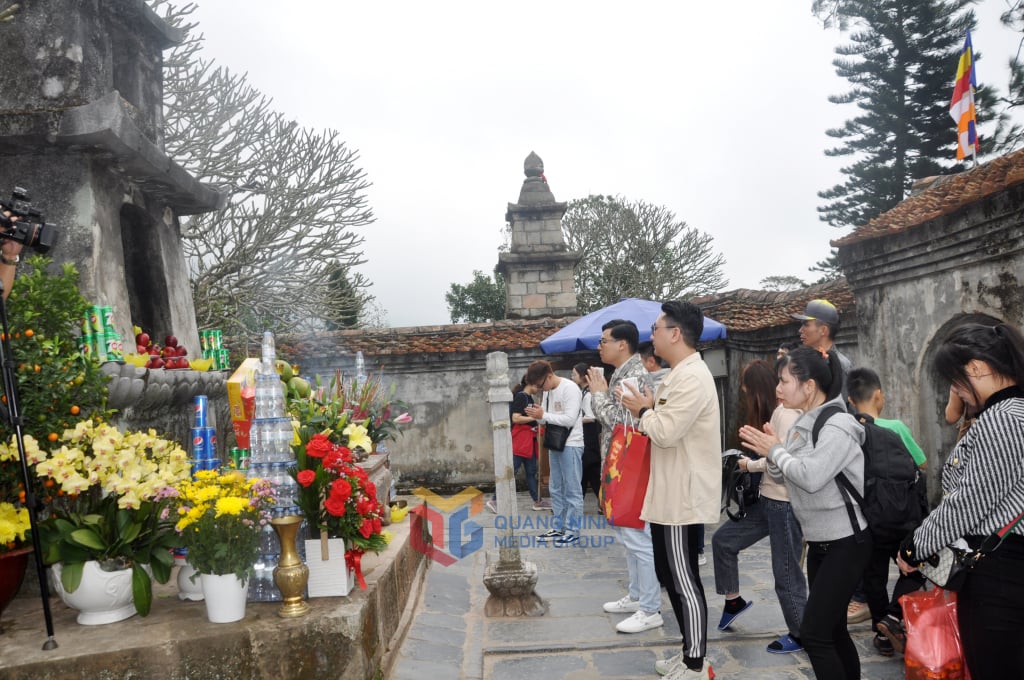
There's a folk saying: "A hundred years of accumulating virtue and practicing asceticism / But if you haven't visited Yen Tu, your spiritual practice is incomplete." It's also said that visiting Yen Tu for three consecutive years brings "reverence and blessings," leading to good fortune. Through research, cultural scholars believe that people who go to temples already have a sincere heart – a mindset of repentance, a desire for goodness, a wish to cast aside life's worries, and a hope for good things like health, luck, and peace. And at the gates of Buddhism, there is no discrimination; everyone is equal, regardless of rank or status...
In recent years, Yen Tu (Uong Bi City) has typically welcomed around 1 million visitors annually. We conducted small surveys among tourists and found that not only the elderly and middle-aged, but also many young people regularly come here to worship every spring. Some are from Quang Ninh, while many others come from neighboring provinces such as Hai Phong, Hanoi , and Hai Duong... And they don't just come every three years; many come for five or seven consecutive years with family, groups of friends, or even alone, unless there are special reasons for them to miss the visit.

Speaking with us, Mr. Le Tien Dung, Head of the Management Board of Yen Tu National Monument and Forest, said: Yen Tu has 10 temples, starting from Trinh Temple, passing through Suoi Tam Temple, Lan Temple, Cam Thuc Temple, Giai Oan Temple, Hoa Yen Temple, Mot Mai Temple, Bao Sai Temple, Van Tieu Temple, and finally reaching Dong Temple at an altitude of 1,068m above sea level. Most locals and tourists visiting Yen Tu know about all the temples here, but due to distance, time constraints, and individual purposes, they may visit all the temples or omit some.
However, the vast majority of pilgrimages pass through points such as the Ancestor Tower - Hoa Yen Pagoda - Dong Pagoda. Hoa Yen is the main pagoda, slightly lower down is the Ancestor Tower, where the relics of Emperor Tran Nhan Tong are enshrined. Dong Pagoda is the highest point, situated on the sacred peak of Yen Tu, unobstructed and facing directly towards the sky. Therefore, the pilgrimage to the Yen Tu pagodas can last several days or reach Dong Pagoda in just half a day.
Visiting temples and pagodas at the beginning of the year is not just a tradition, but deeply ingrained in the Vietnamese psyche. Cua Ong Temple (Cam Pha) is also a historical and cultural site that attracts many tourists annually in the province. Not only local visitors but also those from neighboring provinces come here, especially those whose work is closely related to the river and waterways. Sharing with us, a leader of the temple's management unit said that many people visit Cua Ong Temple with the spirit of "offering prayers at the beginning of the year and giving thanks at the end of the year." Notably, unlike many other temples and pagodas, for many years now, a significant number of people visit Cua Ong Temple right after midnight on New Year's Eve to pray for health, good fortune, and smooth sailing in their work in the new year.
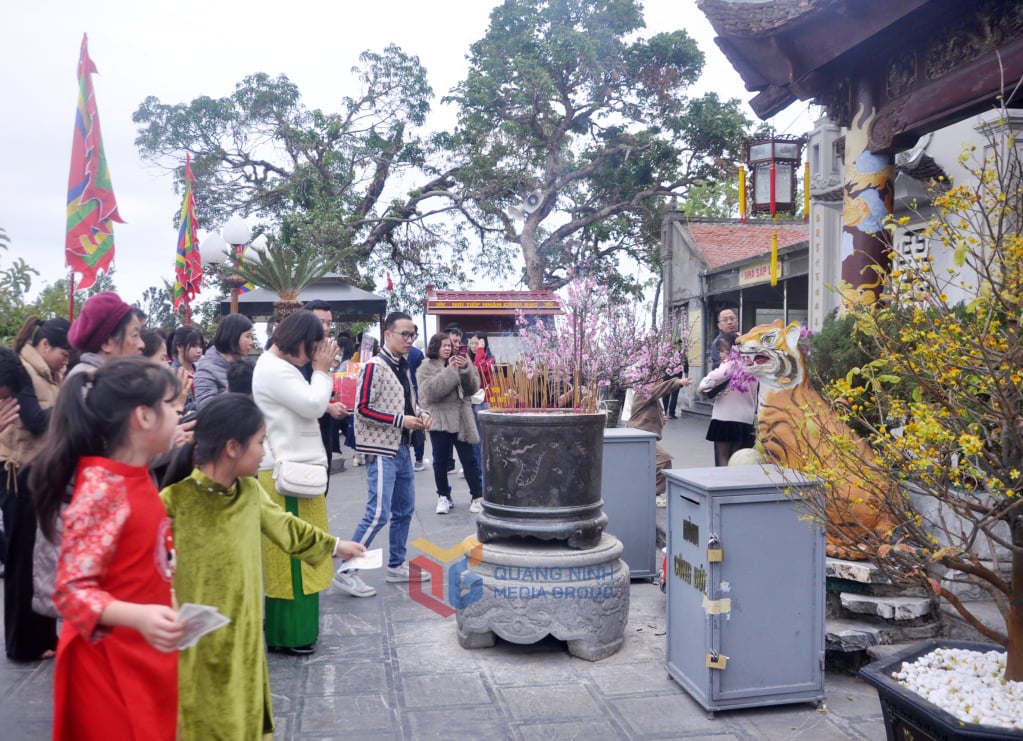
Research into the practice of offering incense and making offerings at temples and pagodas reveals some changes over time. For example, in recent years, temples and pagodas throughout the province have posted signs advising people and tourists not to burn incense inside the temple grounds. Public awareness campaigns have been intensified, significantly changing people's attitudes. As a result, the suffocating smoke from incense inside temples has been eliminated, and safety and fire prevention measures have been improved for ancient structures with many wooden components.
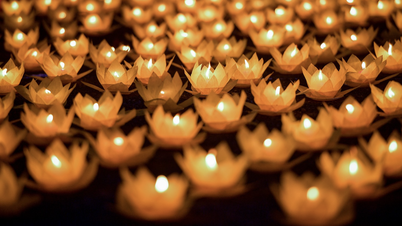
Offering prayers and sacrifices can be done in many different ways. Observations at several large temples and pagodas in the province show that many groups and families prepare elaborate offerings, including incense, flowers, fruits, and various kinds of food, in relatively abundant quantities. Besides that, many people who lack the means to prepare elaborate offerings choose a simpler ceremony, offering incense and releasing offerings directly, believing that the offering depends on each person's sincerity. It's important to note that offerings to Buddhist altars must be vegetarian; meat offerings should be avoided. Temples and shrines are sacred spaces, so when visiting, everyone should dress respectfully, modestly, and simply, and behave cautiously, speaking softly and appropriately.
Source








































![[Photo] Hue: Admire the 2.4 trillion VND sea bridge, the longest in Central Vietnam.](https://vphoto.vietnam.vn/thumb/402x226/vietnam/resource/IMAGE/2026/05/24/1779614018347_anh-man-hinh-2026-05-24-luc-16-13-29.png)




























Comment (0)