(Source: Photo: AFP/VNA)
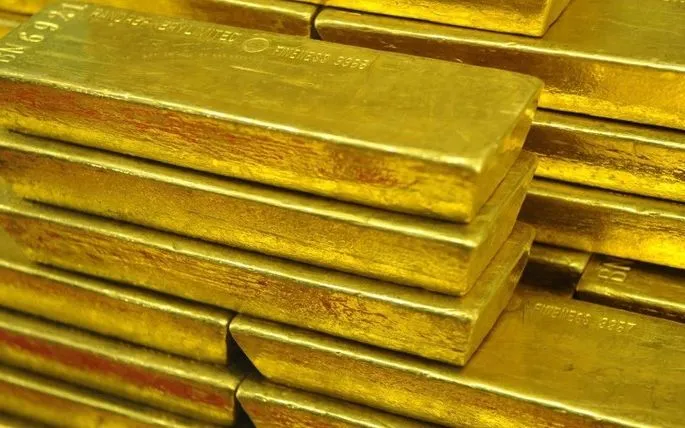
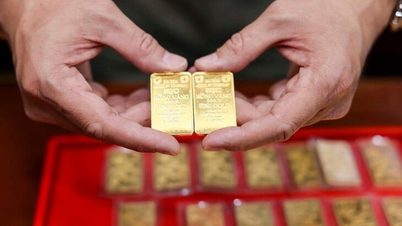
Germany ranks second with 3,350.3 tons; followed by Italy (2,451.9 tons), France (2,437 tons), Russia (2,326.5 tons), and China (2,305.4 tons). Meanwhile, despite being among the top 15 largest economies in the world, South Korea ranks 39th globally in gold reserves, with 104.4 tons by the end of 2025.
Despite economic and geopolitical instability, the Bank of Korea has not purchased additional gold since 2013, while many other countries have actively increased their gold reserves during the same period. South Korea's gold reserves have dropped one place compared to the previous year. If the gold reserves of the International Monetary Fund (IMF) and the European Central Bank (ECB) are included, South Korea's ranking would fall to 41st.

Although South Korea's total foreign exchange reserves reached $430.7 billion at the end of November last year, ranking 9th in the world , gold accounts for only 3.2% of this, placing South Korea near the bottom of the global ranking in terms of the proportion of gold in foreign exchange reserves. Since 2013, South Korea's position in the global gold reserve ranking has steadily declined from 32nd to 39th in 2025. The Bank of Korea stated that the reason for this caution is gold's low liquidity and volatile price compared to other assets such as bonds or stocks.
Nevertheless, the World Gold Council still believes that these figures underscore a fundamental point: physical gold remains central to national strategies, affirming its position as a safe-haven asset during times of currency vulnerability or geopolitical tension.
In 2008, at the height of the financial crisis, the price of gold doubled in less than three years. As part of asset diversification at the time, gold served as a stable asset. When stocks fell, gold helped offset losses and preserve value.



Source: https://vtv.vn/my-du-tru-hon-8000-tan-vang-100260127170809841.htm




















![[Infographic] Many new policies take effect from July 1st](https://vphoto.vietnam.vn/thumb/402x226/vietnam/resource/IMAGE/2026/06/29/1782688947907_cac-quy-inh-chinh-sach-moi-co-hieu-luc-tu-ngay-172026-1-63225357694097902767392-69828806835403898710899.webp)