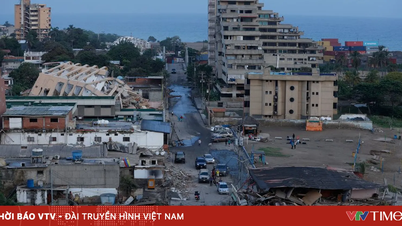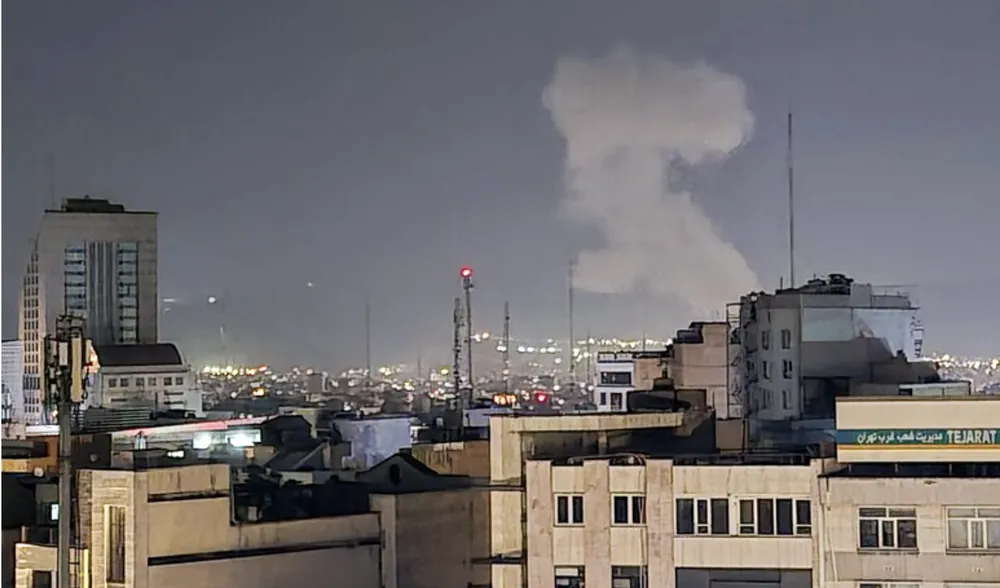
On social media platform X, the US Central Command (CENTCOM) confirmed that US forces have begun conducting self-defense attacks against Iran on orders from President Donald Trump, emphasizing that this is a "proportionate response to Iran's unprovoked aggression."
CENTCOM said the two pilots on board the helicopter were rescued within about two hours of the crash near the coast of Oman.
According to Axios, citing a US official, Washington's airstrikes focused on Iranian radar and air defense systems in the area surrounding the Strait of Hormuz, aiming to weaken Tehran's surveillance and defense capabilities along this strategic waterway.

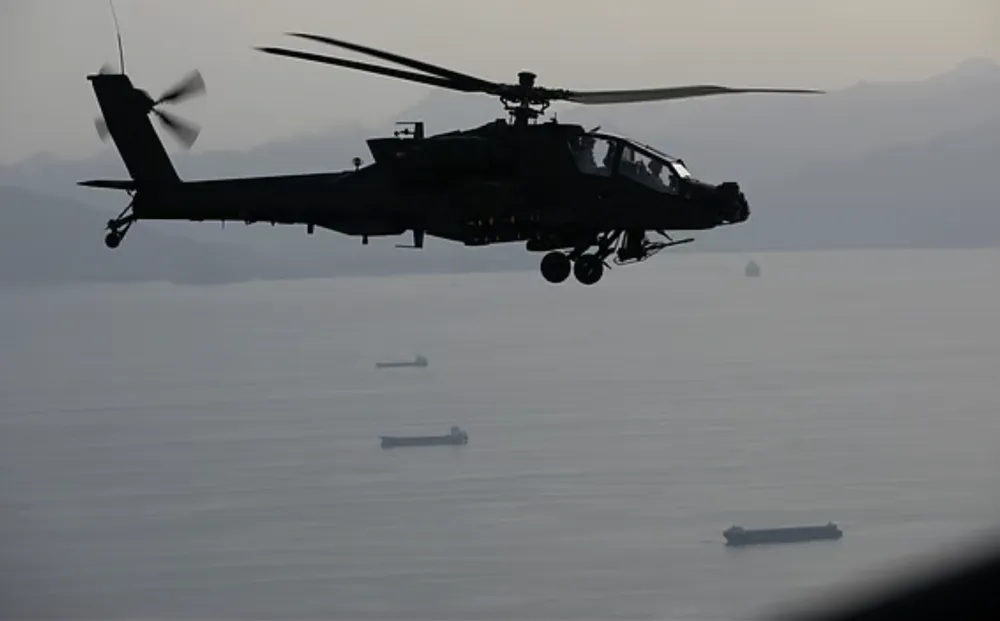
On the Iranian side, state media reported that multiple explosions were recorded in areas east of Hormozgan province in the south of the country. The Fars news agency said the explosions occurred as the US began launching retaliatory airstrikes. Iranian state media confirmed that a flying object struck the Sirik area of Hormozgan province.
On June 9, Foreign Minister Abbas Araghchi declared that Tehran still prioritizes diplomatic solutions, while affirming that the Iranian armed forces are capable of responding to any security challenges. He also left open the possibility that the incident involving the US military helicopter was not intentional on Iran's part, given the constant risk of unintended incidents for foreign forces operating near Iranian territorial waters.
The incident occurred amidst a sensitive phase of US-Iran negotiations. According to the New York Times, the talks had narrowed down to four key nuclear issues: Washington's demand that Iran suspend uranium enrichment activities for at least 15 years; cooperate with the International Atomic Energy Agency (IAEA) to dilute its enriched uranium stockpile; dismantle the three major nuclear facilities at Natanz, Fordo, and Isfahan; and allow international inspections at any time and place in Iran.

Source: https://www.sggp.org.vn/my-tan-cong-tra-dua-iran-post856648.html
![[Image] Ho Chi Minh City: Ma Lang area, Chicken-Rice Market about to change its appearance](https://vphoto.vietnam.vn/thumb/1200x675/vietnam/resource/IMAGE/2026/06/25/1782377698627_ndo_br_m1-jpg.webp)

![[Photo] General Secretary and President To Lam receives Palestinian Ambassador Saadi Salama](https://vphoto.vietnam.vn/thumb/1200x675/vietnam/resource/IMAGE/2026/06/25/1782365384740_a1-bnd-9423-8322-jpg.webp)
![[Image] Schools organize meetings and introduce teaching models to students admitted to grade 10.](https://vphoto.vietnam.vn/thumb/1200x675/vietnam/resource/IMAGE/2026/06/25/1782368077271_ndo_br_z7970052192242-1ec8daeb77a6eed1a4e9f58c564ddd3e-jpg.webp)












![[Video] Weather forecast for tonight and tomorrow, June 26, 2026: Northern Vietnam to end heatwave from tomorrow, Central Vietnam to continue experiencing a heatwave.](https://vphoto.vietnam.vn/thumb/402x226/vietnam/resource/IMAGE/2026/06/25/1782392692278_thumb-dem-png.webp)