


Concerns
Warnings about not placing magnets near televisions or computers have become a familiar memory for many who grew up with early electronic devices.
This misconception persists today, suggesting that magnets can damage equipment. However, in reality, much of this concern stems from outdated technology, and magnets can only cause minor damage to certain devices.
The main concern revolves around the possibility that magnets could dislodge components or erase important data. This was previously true when devices like TVs and hard drives used magnetized components.
But these components are rarely used today. Modern technology is much more resistant to weak magnetic fields, so this concern is no longer significant.
However, while an extremely strong magnet can still damage modern electronic devices, the likelihood of an average person owning or encountering such a magnet is very low.
Magnets used to be a major threat to CRT TVs and hard drives.

In the era of cathode ray tube (CRT) televisions and traditional hard disk drives, magnets were indeed a significant concern.
These devices use magnetized components to store data and display images. CRT TVs use cathode rays to project electrons onto a phosphor-coated glass surface, creating an image through electromagnetic deflection using internal magnets.
Similarly, hard drives also use magnets to record and overwrite data onto a metal disk.
In theory, placing magnets near these devices could distort the screen or corrupt data due to magnetic interference. However, it would require an exceptionally strong magnet, placed directly on the most vulnerable point, to cause permanent damage.
A typical refrigerator magnet will not significantly affect a modern TV or computer because the low-level magnetic field is not strong enough to alter the established electromagnetic current.
Are magnets still dangerous to modern electronic devices?

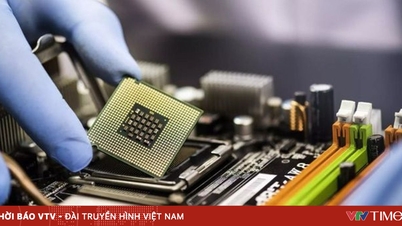
Today, modern TVs and computers, along with electronic devices like phones, use fewer components with strong magnetic properties.
Flat-screen TVs use liquid crystal displays (LCDs) and LEDs, with no magnets or cathode rays. The latest computers have switched to more reliable solid-state drives (SSDs), which don't use magnetic disks for data recording.
Without these magnetic components, the risk of magnets accidentally damaging your electronic devices is even lower.
However, it's important to note that some types of magnets can still pose a danger to modern electronic devices. Specifically, scientific- grade neodymium magnets with a pulling force of at least 450 pounds (approximately 200 kg) are particularly dangerous.
This type of magnet can damage any electronic device, including flash chips in solid-state drives.
But don't worry too much, because the chances of neodymium magnets reaching your electronics are extremely low. They are typically only found in professional equipment such as magnetic resonance imaging (MRI) machines, magnetic cranes, or giant superconducting magnets in fusion reactors.
Unless you happen to walk into a hospital's MRI room, you probably don't need to worry about this.
Source: https://dantri.com.vn/cong-nghe/nam-cham-co-lam-hong-thiet-bi-dien-tu-20251207155728537.htm
![[Photo] General Secretary and President To Lam meets with National Assembly delegates from ethnic minorities.](https://vphoto.vietnam.vn/thumb/1200x675/vietnam/resource/IMAGE/2026/04/20/1776696701056_a1-bnd-8331-3342-jpg.webp)



![[Image] National Assembly discusses the implementation of the socio-economic development plan.](https://vphoto.vietnam.vn/thumb/1200x675/vietnam/resource/IMAGE/2026/04/20/1776696707422_ndo_br_img-20260420-185419-jpg.webp)
































































































Comment (0)