

Mr. Thong sat there, surrounded by stacks of papers, books, and newspapers, his eyes squinting, his fingertips tracing the neatly printed lines. A pencil was tucked behind his ear, ready to be used to quickly pick up any interesting passage or useful information, mark it down, and easily find it later: “Books, newspapers, official documents, and papers—if you take the time to open and read them—are like a smart teacher. They contain all the policies and regulations. If you understand and know, then people will listen; even a rooster needs to learn to crow,” Mr. Thong shared. I had never set foot on the tourist train connecting Hanoi with Thai Nguyen. But, after the enthusiastic introduction from the female officer at the Thai Nguyen Provincial Tourism Information and Promotion Center, I sincerely wanted to ride that very train to the land by the Cau River. The introduction resonated deeply, urging and inviting action that was hard to refuse. Concluding the meeting of the Steering Committee on Science, Technology, Innovation, Digital Transformation and Project 06, Prime Minister Pham Minh Chinh requested the acceleration of national digitalization, the comprehensive development of digital citizens, and the unlimited reduction and simplification of administrative procedures; resolutely shifting from a passive state of receiving and processing administrative procedures to a proactive and positive state of serving the people and businesses. Implementing the Central Government's policy on streamlining the administrative apparatus, the Department of Ethnic Minorities and Religion of Ho Chi Minh City was established and officially began operations on March 1, 2025. "When the fields of ethnicity and religion 'come together,' it will facilitate state management of ethnic and religious affairs, especially in Ho Chi Minh City - where 53 ethnic minority groups live together and millions of followers," said Mr. Nguyen Duy Tan, Director of the Department of Ethnic and Religious Affairs of Ho Chi Minh City. Ho Chi Minh shared: Over the years, from the resources of the National Target Program for Sustainable Poverty Reduction, Vi Xuyen district, Ha Giang province, has focused on creating livelihoods and solving employment problems to help people rise out of poverty sustainably. Not only playing an important role in disseminating laws to the people, in recent times, the influential figures in the highland districts of Quang Nam have continuously increased production, pioneered in transforming the structure of crops and livestock to develop family economies, and supported people in improving their livelihoods. On March 18th, leaders of the Department of Ethnic Minorities and Religions and the Fatherland Front Committee of Thanh Hoa province visited and congratulated the Bishop's Office on the occasion of the Feast of the Patron Saint of the Thanh Hoa Diocese in 2025. Receiving the delegation were Bishop Nguyen Duc Cuong of the Thanh Hoa Diocese and other priests. Located on Pham Ho Phap street, Hoa Thanh town, Tay Ninh province, about 5km southeast of Tay Ninh city and a short distance from... Located approximately 100km west of Ho Chi Minh City, the Tay Ninh Holy See is a place of important religious activities, where Cao Dai followers come on pilgrimage and perform solemn rituals. This is a summary of news from the Ethnic Minorities and Development Newspaper. The morning news on March 18th includes the following noteworthy information: The sacred Khao Le The Linh Hoang Sa ceremony; an ancient temple in Bac Ninh; the potential for community tourism in Bau Ech; and other current events in the ethnic minority and mountainous regions. The Quan The Am Festival is one of Da Nang's major cultural and religious events, attracting a large number of domestic and international tourists. With its rich activities, the festival is not only a place for people to worship and pray for peace but also an opportunity to promote the unique cultural values of the Ngu Hanh Son region. Tuyen Quang province has 121 communes inhabited by ethnic minorities, including 570 particularly disadvantaged villages. According to the Provincial People's Committee report, in the period 2021-2025, from the allocated capital of national target programs, especially National Target Program 1719, the province has supported the investment in the construction of 600 infrastructure projects serving production, trade, and people's lives, of which 80% were invested in developing infrastructure in disadvantaged areas. Mr. Thong sat there, next to a stack of papers, books, and newspapers, his eyes squinting, his fingertips tracing the neatly printed lines of text. He even has a pencil tucked neatly into his ear, so that if he comes across an interesting passage or useful information, he can quickly grab it and mark it for easy reference later: “Books, newspapers, official documents, and papers – if you take the time to open and read them, they’re like a smart teacher. They contain all the policies and regulations. If you understand and know, then people will listen; even a rooster needs to learn to crow,” Mr. Thong shared. Although the People's Committee of Dak Ha District (Kon Tum) issued a decision to fine Mr. Tran Bao Khanh for administrative violations in the field of road traffic, for the act of arbitrarily leveling the ground within the road safety corridor, Mr. Khanh has yet to implement remedial measures, and the illegal construction still exists, even though the 30-day deadline has passed. Is this failure to fully comply with the fine decision a disregard for the law? On the morning of March 18th, in the city... In Ho Chi Minh City, Lieutenant General Le Duc Thai - Member of the Central Committee of the Communist Party of Vietnam, Member of the Central Military Commission, and Commander of the Border Guard Force (BGF) - presided over the conference and presented awards to units with outstanding achievements in the fight against drug crimes. Also attending the conference were Major General Tran Ngoc Huu - Deputy Commander of the BGF; heads of the General Staff; the Political Department; the Department of Drug and Crime Prevention; and representatives of the award-winning units.
Mr. Ly Dai Thong is a respected figure in Nam Dam village, Quan Ba commune, Quan Ba district, Ha Giang province. Over the years, he has made significant contributions to local activities and emulation movements for the development of his village.
For example, in developing household economies , in order to encourage people to change their farming practices and shift the crop structure, he pioneered the development of specialized fruit tree cultivation models with high economic value. Currently, Mr. Ly Dai Thong has 2 hectares of orchards growing peaches, pears, and plums, generating an annual revenue of over 200 million VND. In addition, for many years, Mr. Ly Dai Thong has worked with the local government to research and collect traditional dances and songs of the Dao ethnic group; and together with the people, he has restored and recreated the Dao people's Coming-of-Age Ceremony to perform for tourists.
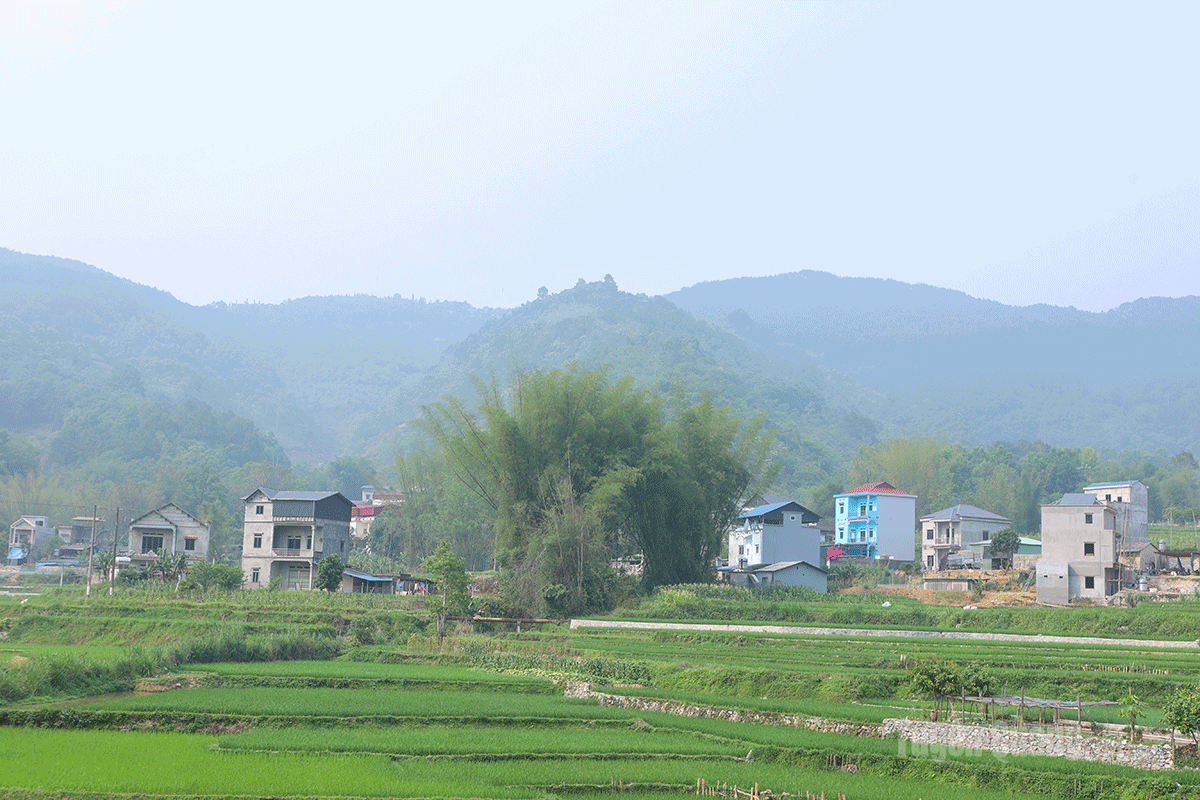
At dawn, I arrived back in Nặm Đăm. A cool breeze swept down from the mountaintops into the valley. The sky behind the eastern mountain range glowed red. The first rays of sunlight crossed the valley, casting alternating streaks of light and shadow on the western mountain peaks like a curtain… The last time I visited, Nặm Đăm was in the midst of winter; the peach and plum trees had long since shed their leaves, leaving only their bare branches, trembling in the biting wind. This time, returning, it was still springtime, with pure white plum blossoms and vibrant pink peach blossoms painting the roadside with fresh colors.
Long ago, not only the Dao people in Nam Dam but also many other ethnic groups in the Ha Giang rocky plateau were only familiar with the traditional farming methods of "fire-starting" farming, using knots for calculations, and employing rituals to cure illnesses, thus their lives were very difficult. The Quan Ba district government at that time was determined that, in order to build a progressive life, the first priority was to solve the problem of "stable housing."
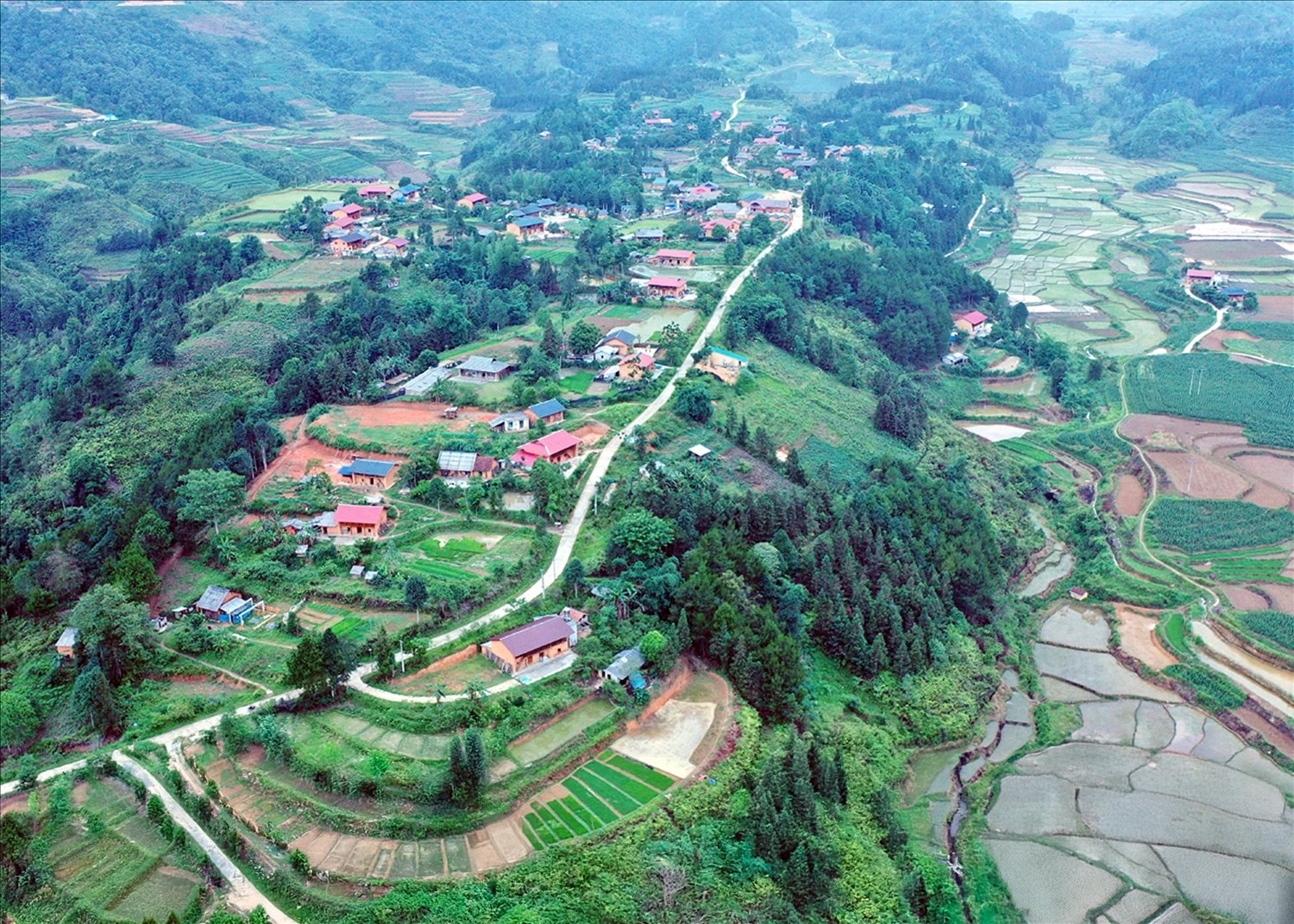
Then, in 1992, the Dao ethnic people, who had lived on the high mountain slopes around the area, unanimously decided to descend from the mountains and establish a village right in the Nam Dam valley – a flat, fertile land suitable for specialized crop cultivation and economic development.
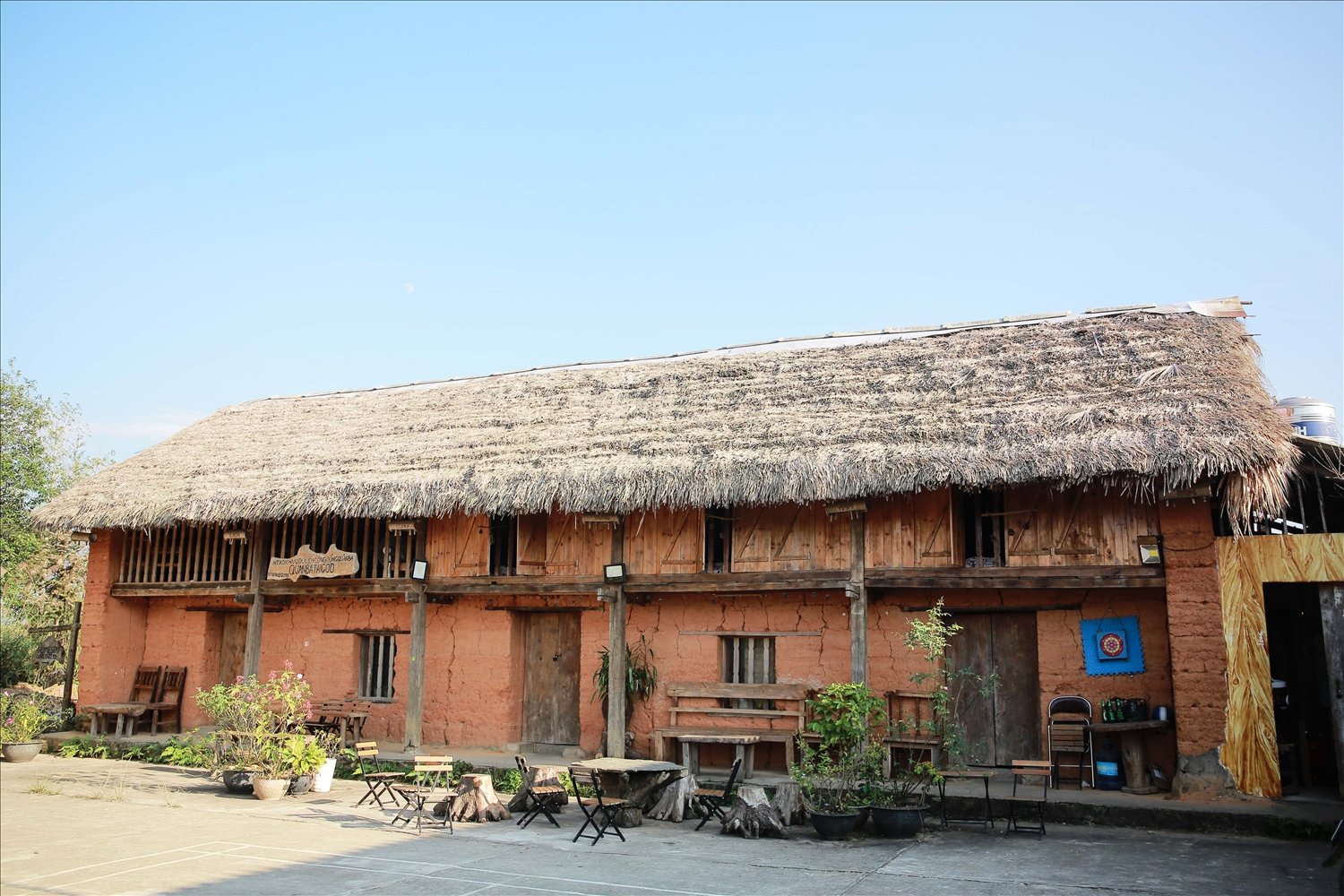
The baggage that many generations of Dao people brought down from the mountains that year was not only wealth, but also their cultural identity and pride in the unique cultural characteristics of their ethnic group. This explains why, just 20 years after settling in the valley, Nam Dam was one of the first places in Quan Ba district to develop community tourism.
Starting with just a few households, the Nặm Đăm Community Tourism Village now has 39 households offering homestay services, meeting the standards to accommodate 600 guests per day and night. Nặm Đăm has become one of the most vibrant tourist destinations on the Happiness Road leading to the Stone Plateau. The average annual income of each tourism-related household ranges from 200 to 300 million VND.
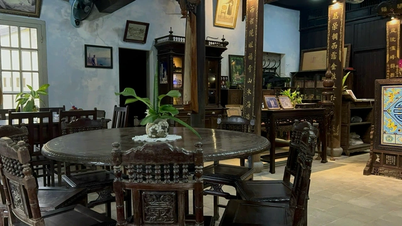
The house of Mr. Ly Dai Thong, a respected figure in Nam Dam village, Quan Ba commune, was built with new materials but in the traditional style of the Dao people, so it still feels very familiar and simple, just like when I first visited. However, the red couplets pasted on either side of the entrance have been replaced for the recent Tet holiday. The rice and corn from the fields have been brought down, filling the walkway by the porch.
In the dim firelight, the smoke from the kitchen rose softly and gently like morning mist. Mr. Thong sat there, beside a stack of papers, books, and newspapers, his eyes squinting, his fingertips tracing the neatly printed lines. A pencil was tucked behind his ear, so that if he came across an interesting passage or piece of information he needed, he could quickly grab it and mark it for easy reference later. “Books, newspapers, official documents, and papers—if you take the time to open and read them—are like a wise teacher. They contain all the policies and regulations. If you understand and know them, then people will listen to you; even a rooster needs to learn to crow,” he explained to me!
Then he smiled kindly, stood up abruptly: "Luùng! Are you tired from the long journey? Of course I'm tired, but it's alright. To be able to walk a long distance and still remember the way home is like the Dao people, and it's in line with the Dao people's way of thinking."
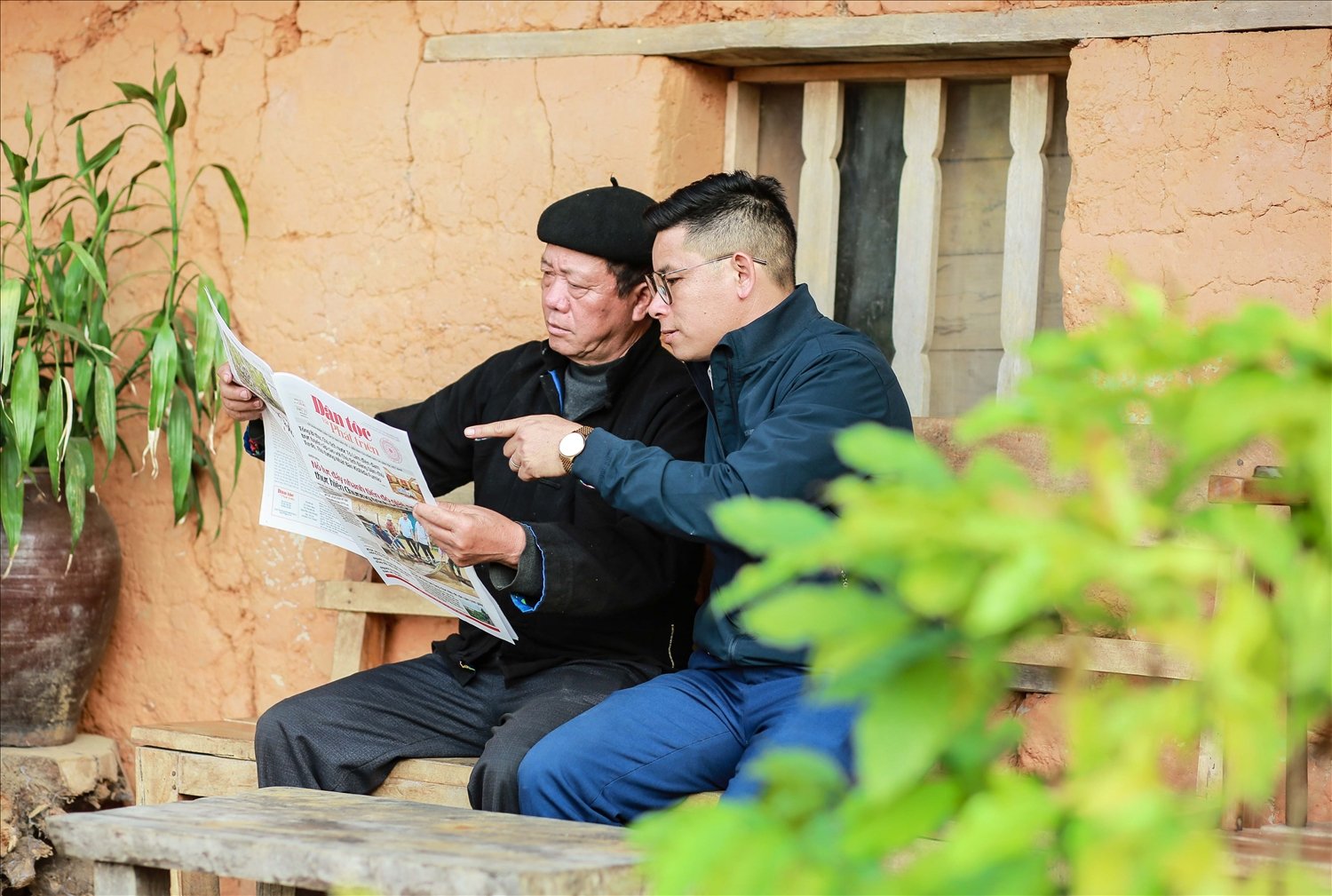
Before I could reply, he enthusiastically said, "Look, the article you wrote last time about my dad's model of growing 2 hectares of pears, plums, and peaches (Mr. Thong's affectionate way of addressing the reporter), my dad still has the copy he was given. And the copy you gave to Mr. Danh (the head of Nam Dam village - Ly Ta Danh), he put it in the community library at the commune's cultural center! Mr. Danh told my dad that since he's a respected person and a successful businessman, everyone should read, know, and learn from it," which was quite amusing.
Then, Mr. Thong nodded again: "The dozens of hectares of fruit trees cultivated by many households in the village are already providing a stable annual income. Soon, each hectare of fruit trees will bring in an additional several hundred million dong. Before, we only thought about 'settling down,' but now we've achieved stability and 'established livelihoods.'"
That's how the Dao people here are; they only "show off" what they've already accomplished, what they already possess with their hardworking, diligent hands, and never speculate or make assumptions! And among the Dao people, no matter where they are, they always find a place to settle down and live.
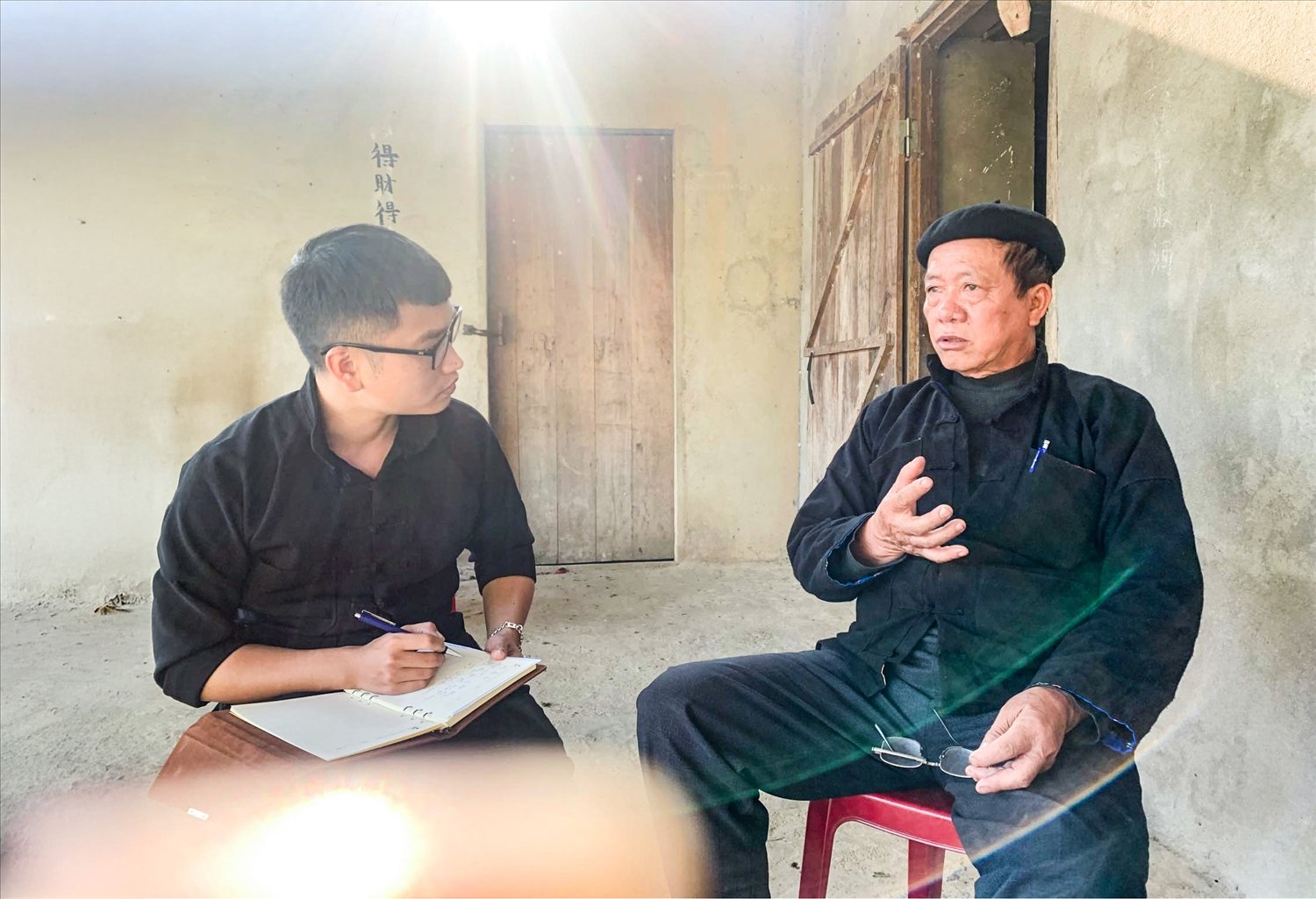
My father and I chatted, mostly about village affairs, about how our people had overcome hardship and risen out of poverty. Suddenly remembering a story from nearly two years ago, he recounted: "I read in the newspaper 'Ethnic Groups and Development' a story about the Dao people preserving their traditional herbal medicine. That's right, among the ethnic groups, the Dao are known as masters of natural medicinal herbs from the forest. They use their inherited experience and methods to gather leaves, process them, grind them, apply them topically, or drink them… to cure many diseases. The medical knowledge they've gathered has been compiled into remedies passed down through generations. My father, along with official Danh, encouraged Mr. Den (Ly Ta Den – the eldest son of Mr. Ly Dai Thong) to establish the Nam Dam Medicinal Herb Cooperative. Initially, that cooperative has been operating effectively!"
Around noon, the sun cast a golden glow over the stream. I bid farewell to the respected elder of Nặm Đăm village and set off to continue my work trip. He gave me a tube of steaming sticky rice, its warm aroma wafting through my fingers. “The road from here to Mèo Vạc is long; if you get hungry along the way, you can rest anywhere and eat,” he said, then added, “When you get there, if you see any good tourism models or successful economic developments, remember to write an article. Then, at community gatherings, everyone will pass around that newspaper to read, learn from, and be encouraged to develop their own businesses for the better.”
Source: https://baodantoc.vn/nam-dam-ngay-tro-lai-1742107286239.htm
![[Photo] National Assembly Chairman Tran Thanh Man working with the Standing Committee of the National Assembly's Ethnic Council](https://vphoto.vietnam.vn/thumb/1200x675/vietnam/resource/IMAGE/2026/05/21/1779337435930_ndo_br_1-jpg.webp)


![[Image] "Journey of Hope" promotes the organ and tissue donation movement in Vietnam.](https://vphoto.vietnam.vn/thumb/1200x675/vietnam/resource/IMAGE/2026/05/20/1779294400833_1-8910-jpg.webp)

































































Comment (0)