

Kinhtedothi - On the afternoon of February 13th, during the discussion in the National Assembly hall on the draft Law on the Promulgation of Legal Normative Documents, National Assembly deputies stated that many new provisions in the draft will contribute to improving the quality of promulgated legal normative documents.
Consulting with stakeholders is extremely important.
Regarding the inclusion of regulations on policy consultation with affected agencies and entities, the National Assembly's Ethnic Council and Committees during the drafting of the Law, National Assembly representative Nguyen Thi Viet Nga (from the Hai Duong Provincial National Assembly Delegation) stated that this is a very necessary regulation. The early participation of the National Assembly's Ethnic Council and Committees will contribute to perfecting the draft from the initial stages of the Government's document preparation; demonstrating the National Assembly's early involvement and responsibility in the law-making process. In particular, consulting with affected entities is extremely important, and also serves as a form of public awareness campaign for the people and those directly impacted by the new policies and viewpoints to be enacted.
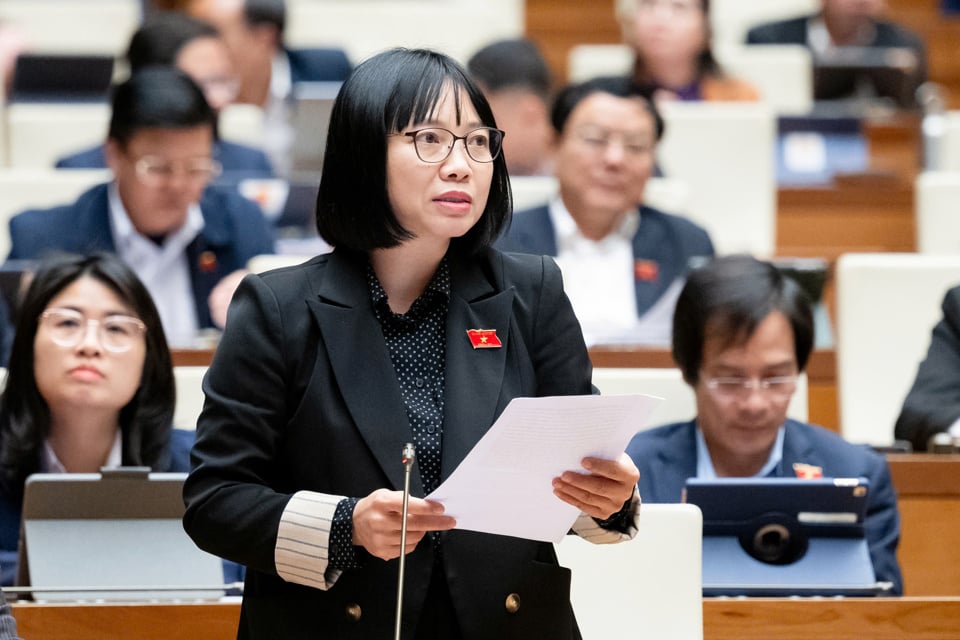
Agreeing with the proposal to abolish the power of commune-level governments to issue legal normative documents, the delegates argued that, currently, although granted this power in the Law, most commune-level governments issue very few normative documents, and in many localities, commune-level governments do not issue any normative documents at all.
Agreeing with many aspects of the draft Law, Representative Nguyen Thi Viet Nga suggested that the regulations on the procedures for reviewing and approving draft laws and resolutions of the National Assembly should be reconsidered. Article 40 of the draft Law stipulates that the procedures for reviewing and approving draft laws and resolutions of the National Assembly are essentially within one session.
According to Representative Nguyen Thi Viet Nga, the reality shows that in recent years, many draft laws, despite having undergone a very thorough drafting process and consultation, still receive many differing opinions when submitted to the National Assembly for consideration, creating heated debates in the parliamentary chamber and attracting a great deal of attention from voters.
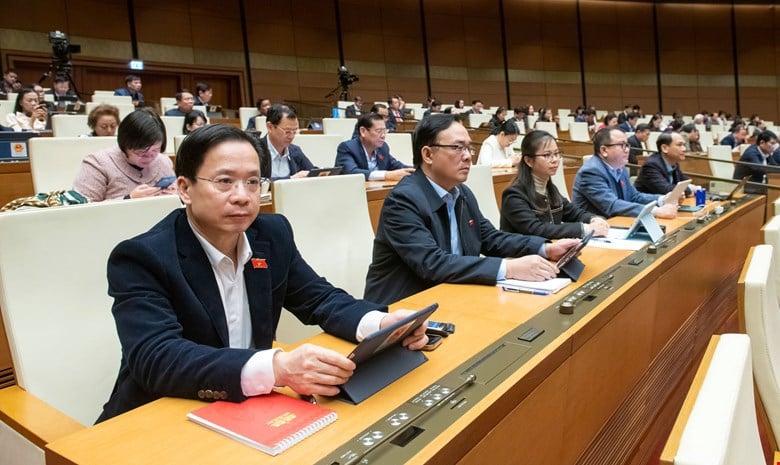
During the discussions and reviews at National Assembly sessions, many high-quality critical opinions were raised, and many major issues were brought to light. These were then incorporated into the draft laws, leading to revisions and improvements that ensured higher quality and feasibility upon their adoption. In fact, many provisions were significantly altered after National Assembly discussions, even differing entirely from the government 's original viewpoint.
"Thoroughly reviewing draft laws over two or more sessions is a necessary precaution in the law-making process. Especially when our goal is to create laws that are stable and highly predictable, the process of commenting on and reviewing drafts must be even more thorough," the representative stated.
Therefore, Representative Nguyen Thi Viet Nga proposed maintaining the current normal process of considering and passing laws in the National Assembly, which is two sessions. For certain necessary cases, we already have regulations on drafting laws using simplified procedures.
Supplement the consultation process early on, right from the policy-making stage.
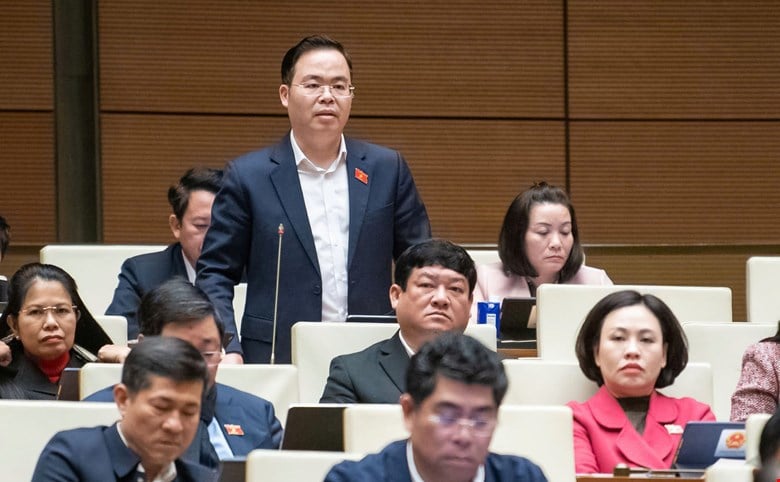
Regarding the National Assembly's consideration and approval of draft laws and resolutions in one session, instead of two sessions as before, except in some special cases, National Assembly representative Tran Van Khai (from the Ha Nam Provincial National Assembly Delegation) believes that this is a very significant and groundbreaking change, aimed at accelerating the pace of lawmaking, in line with the requirements of legislative and administrative reform, and strictly implementing the Party and State leadership's policy and the directives of National Assembly Chairman Tran Thanh Man in renewing thinking in the National Assembly's legislative work.
According to National Assembly representative Tran Van Khai, the streamlined legislative process (passed within one session) stipulated in the draft law, if approved by the National Assembly at this extraordinary session, will create four challenges, and we must have effective solutions to address these challenges.
Specifically, to address the challenge of legislative quality potentially decreasing due to shortened timelines, a rigorous review process must be established before submission to the National Assembly; and the role of the Law and Justice Committee and other National Assembly bodies in scrutinizing draft legislation must be strengthened. Regarding the challenge of insufficient time for public consultation and feedback, an early consultation process should be added, starting from the policy-making stage; and mandatory workshops and extensive consultations should be conducted for at least 60 days.
Regarding the challenges that put significant pressure on legislative bodies, it is necessary to strengthen the financial and human resources capacity of agencies responsible for drafting, reviewing, and scrutinizing laws; and to develop technical support mechanisms such as the application of artificial intelligence (AI) in legal data analysis. Concerning the risk of inconsistent and synchronous legal systems, it is necessary to build a linked database between different laws to avoid conflicts and overlaps; the Ministry of Justice should be primarily responsible for reviewing draft laws before submission to the National Assembly.

Delegates also proposed clearly defining the criteria for applying the one-session process; strengthening the responsibility of drafting and reviewing agencies, with the Ministry of Justice bearing primary responsibility for reviewing and assessing impacts; applying technology in legislation, using big data to analyze and compare draft laws, ensuring the consistency of the legal system; strengthening post-enactment oversight, and establishing mechanisms for timely adjustments if errors are detected in implementation.
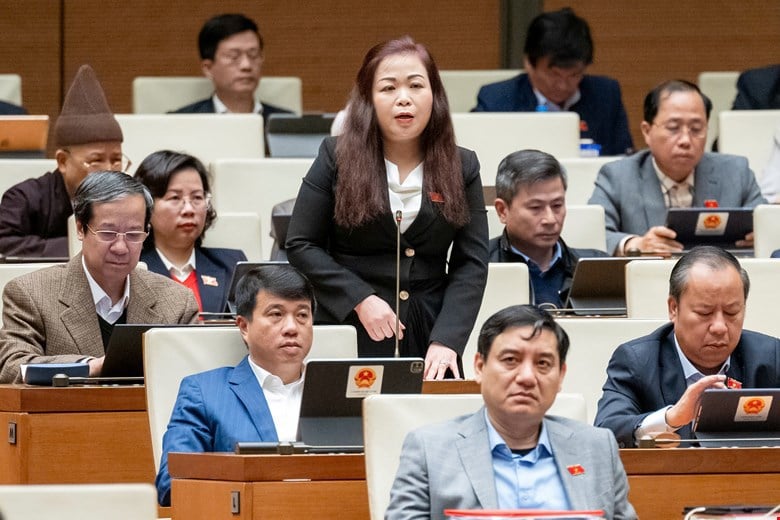
Meanwhile, National Assembly representative Vu Thi Luu Mai (Hanoi City National Assembly Delegation) proposed adding provisions to the Law on Promulgation of Legal Documents regarding responsibility and impact assessment when issuing decrees. She also suggested emphasizing the importance of soliciting broad public opinion when issuing policies in broad-scope decrees.
"The Law on the Promulgation of Legal Normative Documents is of particular importance in creating a tool to form an effective and efficient system. Based on the current drafts, I believe there are many issues that need careful consideration to further improve it, so that when we promulgate it, we will have an effective legal tool to build a legal system that serves to perfect the socialist rule of law state in accordance with the Party's guiding spirit," said National Assembly representative Vu Thi Luu Mai.
Source: https://kinhtedothi.vn/db-quoc-hoi-nang-chat-luong-cac-van-ban-quy-pham-phap-luat-duoc-ban-hanh.html





















































![[Video] Sunset at Lap An Lagoon – Where the sun sets over the fishing nets](https://vphoto.vietnam.vn/thumb/1200x675/vietnam/resource/IMAGE/2026/05/31/1780192137701_beach-landscape-sea-water-nature-grass-745871-pxhere-com.jpeg)







































Comment (0)