|
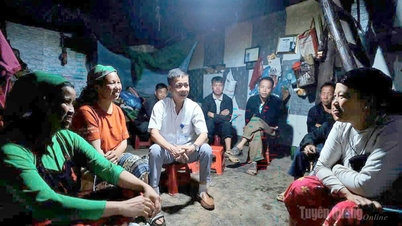
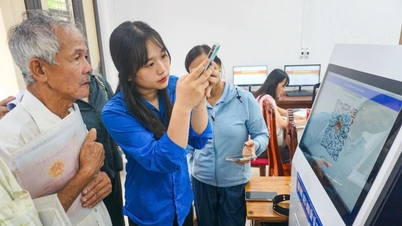
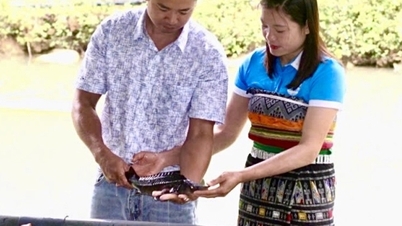
| Doctors in Bach Ngoc commune are disseminating knowledge about disease prevention to the local people. |
New expectations
Tuyen Quang is one of the leading localities nationwide in re-establishing commune and ward health stations, completing the reorganization and putting them into operation according to the new model from January 1, 2026. Each health station in Tuyen Quang includes a main health station, branch stations, and a regional polyclinic to provide primary healthcare services to the local population.
This decentralization is expected to breathe new life into the system, empowering local authorities to be more proactive in investing and managing healthcare, bringing services closer to the people. Following the reorganization of administrative units into a two-tiered government model, the appearance of commune health stations in Tuyen Quang has undergone significant changes.
In Linh Ho commune – a newly formed commune created by merging three old communes – there is one main health station and two branch stations with a large population, but currently only two general practitioners. Furthermore, some stations that were previously regional polyclinics have had to return or are not yet authorized to operate due to changes in function according to the commune health station regulations, resulting in wasted infrastructure and difficulties for patients. The need for infrastructure autonomy after the merger requires the commune-level government to make efforts to secure funding to upgrade the old and cramped health station buildings.
Images of doctors wading through streams and crossing forests to reach homes in remote areas to provide healthcare guidance are no longer uncommon. Receiving a package of medicine from the doctor, Mrs. Phan Thi Vai, 60 years old, from Ngoc Quang village, Linh Ho commune, happily shared: “I suffer from chronic joint pain; it hurts whenever the weather changes. Now, going to the commune health station near my house, the doctors examine me and give me medicine very enthusiastically. Now everyone feels more at ease when they are sick.”

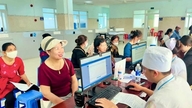
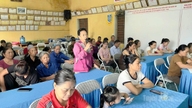
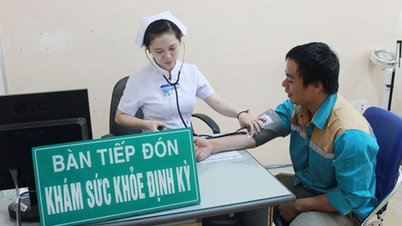
Following the reorganization, professional activities and medical examination and treatment services have been maintained smoothly, ensuring convenient access to basic healthcare services for the people. Tuyen Quang province has 101 commune/ward health stations and 26 regional polyclinics, along with other stations under the regional health centers. On average, these stations receive thousands of patients each month. A shortage of personnel and modern medical equipment are the challenges currently faced by commune health stations.
Difficulties that need to be overcome.
Despite initial positive signs, the new model still faces transitional challenges. Dr. Nguyen Thi Luan, Director of the Lung Cu Commune Health Station, said: "Currently, with a staff of 15 permanent employees, including 2 doctors, we are making every effort to provide healthcare for over 14,000 people in the area. Although the workload is considerable, with over 30 patients examined daily, the staff, doctors, and nurses remain dedicated to their work. From vaccinations and disease prevention to the distribution of health insurance medications, with direct and close guidance from the local government, administrative procedures are streamlined, helping the station maintain the effectiveness of national health programs and truly become a solid 'fortress' protecting people's health at the grassroots level."
Dr. Dang Thi Tho, Deputy Director of Binh An Commune Health Station, said: “The decentralization has helped the station gain more personnel, but it still lacks specialist doctors, machinery, and equipment for professional work. Especially since transitioning to a public service unit under the Commune People's Committee, the station has legal personality, its own headquarters, its own seal, and its own bank account, but it is currently lacking administrative and accounting staff. To ensure smooth operation, filling these positions is an urgent requirement instead of focusing solely on professional work as before.”
Decentralized management means that commune-level authorities have increased responsibility for the infrastructure and operational conditions of health stations. This also poses a significant challenge, as many stations that were previously small-scale and scattered now have to meet the healthcare needs of a larger population after administrative unit reorganization. Although only operational for nearly three months, localities have proactively balanced their budgets and submitted proposals to competent authorities to upgrade station buildings and purchase equipment to meet healthcare needs in the new phase.
Distinguished physician, Specialist Doctor II Do Thi My, Deputy Director of the Department of Health, affirmed: “The Tuyen Quang Department of Health continues to focus on advising on policies, training and improving the skills of medical staff, while ensuring the adequate supply of medicines and timely technical support. The Department of Health has developed a plan to support medical personnel at the commune level to ensure that healthcare services at the grassroots level are not interrupted, and that people have access to quality and convenient healthcare services. The rotation of medical staff, specifically doctors, is implemented from regional general hospitals and regional health centers to support commune health stations for a period of 12 months. In the long term, based on the investment, repair, and upgrading needs of facilities and equipment of the units and the actual situation, the Provincial People's Committee directs the Department of Health, the Department of Finance, and relevant units to compile funding needs and submit them to the Provincial People's Committee and the Department of Finance for budget appraisal in the period.” 2026 - 2030. The Provincial People's Committee assigns the People's Committees of communes and wards to preside over and coordinate with relevant departments and units to continue assessing the current situation and summarizing the needs of the health stations; report and propose to competent authorities investment, repair, and upgrading of facilities and provision of necessary equipment for health stations after merger, meeting the needs for medical examination and treatment in the coming period.”



Text and photos: Phi Anh
Source: https://baotuyenquang.com.vn/xa-hoi/y-te/202606/nang-tam-chat-luong-y-te-co-so-aad31ce/