Digital classrooms in border regions.
In recent years, along with the development of telecommunications infrastructure, smartphones have gradually become popular in border communes. However, for many people, especially ethnic minorities, accessing and using digital platforms still faces many difficulties.
Based on this reality, the Party Committee and the Command of the Provincial Border Guard have implemented the model "Border Guards - accompanying digital transformation in border areas". With the motto "Respect the people, be close to the people, understand the people, learn from the people, be responsible to the people, listen to what the people say, speak in a way the people understand, and act in a way the people trust," officers and soldiers of border guard units have directly gone down to villages and hamlets to guide people in accessing digital technology through practical actions.
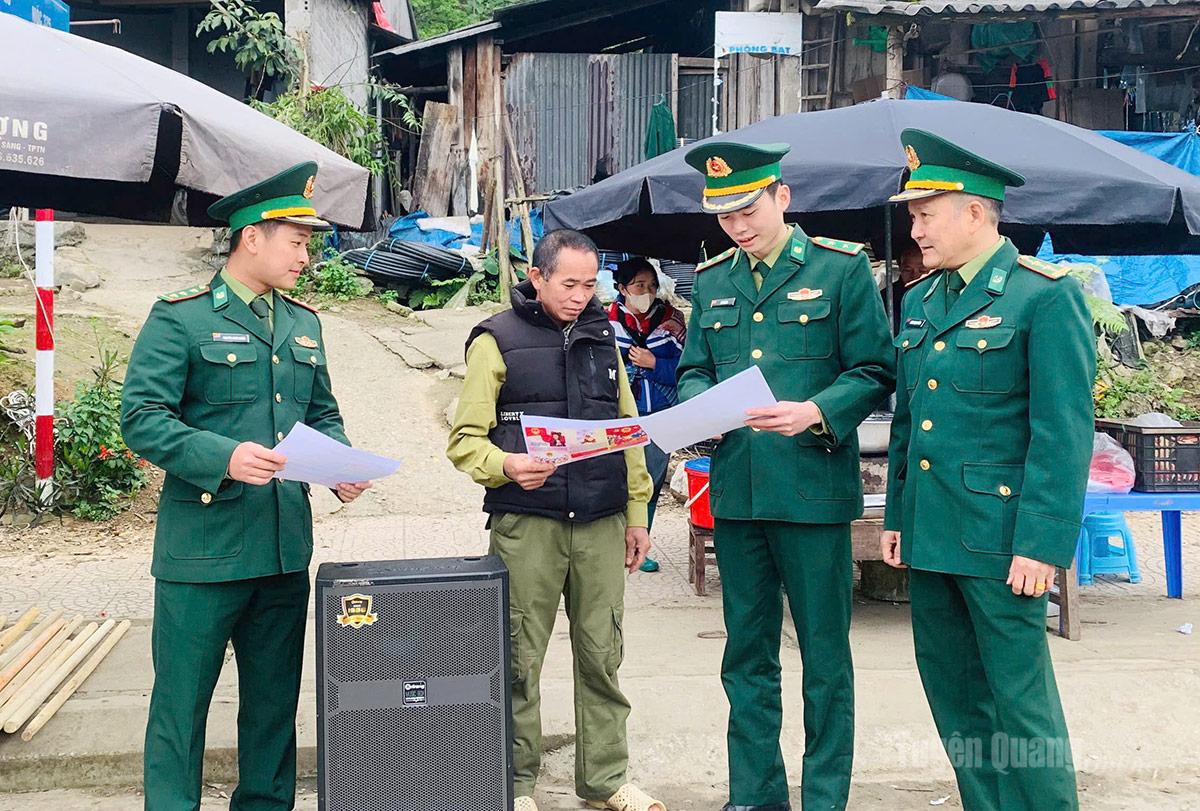 |
| Officers from Nghia Thuan Border Guard Station are disseminating information and guiding local people on how to access and use digital services. |
In border communes, the sight of border guards holding phones, patiently guiding people through the steps of installing applications, creating accounts, or logging into online public services has become familiar. These "digital classes," without blackboards or chalk, always attract a large number of participants.
After a period of implementation, Border Guard units in the province have established 24 Digital Transformation Teams with 240 members. These teams have provided guidance to over 1,250 people on safe smartphone and internet usage; successfully assisted in the installation of 2,223 online public service accounts and VNeID; guided 598 people in "digital literacy"; assisted in creating 246 email accounts; and provided information and guidance to 372 people on listing their products on e-commerce platforms.
Beyond simply providing guidance on technology usage, border guards have also collaborated with local authorities to install 539 QR codes from the digital data repository in 17 border communes. By scanning these codes, residents can easily access information on administrative procedures, Party and State policies, and other necessary informational materials.


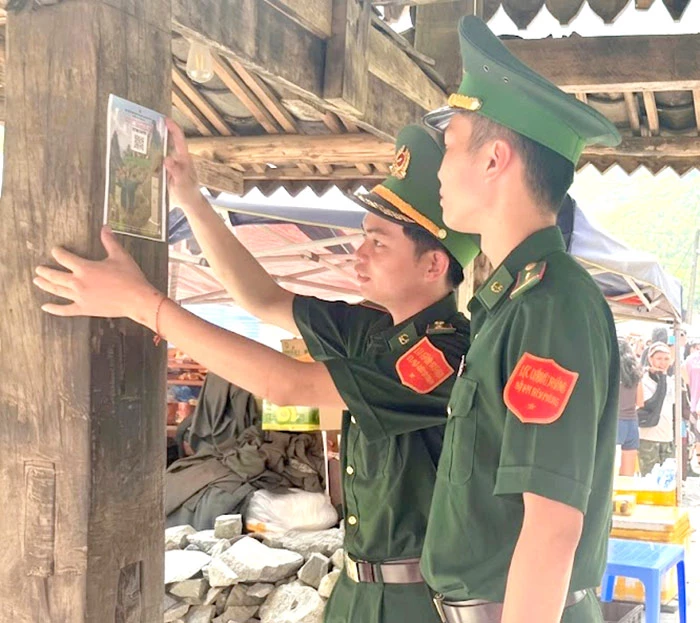 |
| QR codes for reporting crimes have been deployed at local markets, facilitating citizens' participation in protecting border security. |
Strengthening the people's bonds in the border regions of the Fatherland.
Besides assisting people in accessing digital platforms, border guard units are also actively promoting and guiding the use of the "Email Box for Receiving Crime Reports and Denunciations". This creates another convenient information channel, helping people proactively report security and order issues, illegal immigration, or other violations of the law in border areas.
Lieutenant Colonel Nguy Ton Tung, Political Officer of Nghia Thuan Border Guard Station, said: “Digital transformation is not only a task for socio-economic development but also contributes to improving the efficiency of state management and ensuring national defense and security in border areas. Through this model, officers and soldiers of the unit help people access technology while strengthening the bond between the military and the people. When people understand and skillfully use digital platforms, receiving information, reporting on the local situation, or carrying out administrative procedures becomes much more convenient.”
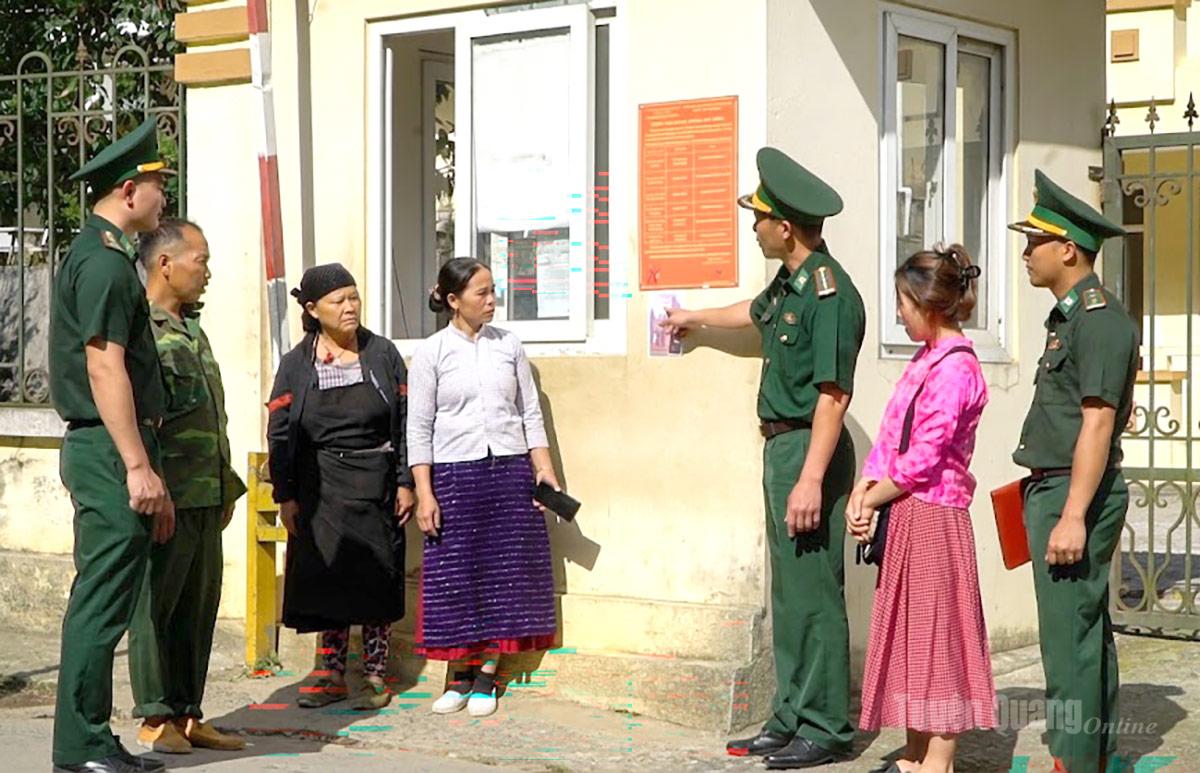 |
| Officers at the Pho Bang Border Control Station guide residents on how to report crimes using QR codes. |
Following the principle of "three close ties, four shared activities," border guards are always present at the grassroots level, eating, living, working, and speaking the local ethnic languages with the people. This closeness has made the dissemination of information and guidance on digital transformation easier and more effective.
From guidance sessions at village cultural centers, conversations in the cornfields, or visits by border guards to the area, digital literacy is gradually spreading to every household. The gap between remote areas and the digital world is narrowing. Many households, after receiving guidance, have learned to use social media to promote local agricultural products and reach customers outside the area. Some distinctive products of the border region are gradually being listed on e-commerce platforms, opening up opportunities for economic development and increasing income for the people.



The digital transformation journey in border areas still faces many challenges. However, with a sense of responsibility, dedication, and closeness to the people, the soldiers in green uniforms are contributing to bringing digital technology to every village and household in the border regions of the Fatherland. This is not only a political task but also a vivid testament to the image of the Border Guard always accompanying the people, wholeheartedly working for the peaceful life and development of the border areas.
Text and photos: Thanh Thủy
Source: https://baotuyenquang.com.vn/an-ninh-quoc-phong/202606/vung-bien-cuong-manh-chuyen-doi-so-6d21294/





![[Photo] "Hanoi Lotus Festival" honors the lotus flower that has been associated with Vietnam for thousands of years.](https://vphoto.vietnam.vn/thumb/1200x675/vietnam/resource/IMAGE/2026/06/27/1782516943048_sen-ha-noi-2026-minh-duy-1-jpg.webp)