

| Cooperation in implementing comprehensive export services. Conditions for export services to enjoy a 0% tax rate. |
Associate Professor Dr. Dinh Trong Thinh – an economic expert – had an exchange with a reporter from the Industry and Trade Newspaper regarding this issue.
The Ministry of Finance has proposed a 10% value-added tax (VAT) on exported services in the draft amended VAT Law. What are your comments on this?
Article 9.1 of the draft amended VAT Law proposes taxing most export services, eliminating the previous 0% tax rate. The only export service sectors that will still enjoy a 0% tax rate are international transportation, leasing of transport vehicles outside Vietnam, and some related services. Other service sectors will be subject to the corresponding tax rate (essentially 10%).
 |
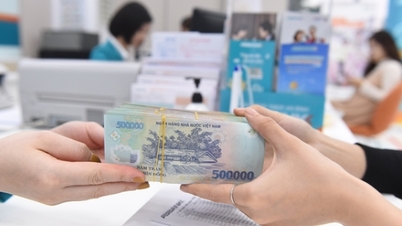
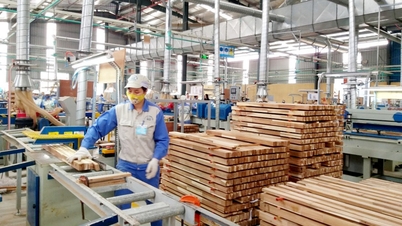
| The proposal to impose VAT on exported services is considered to have more disadvantages than advantages (Illustrative image). |
The reason for this amendment is that, in the past, tax authorities have had difficulty distinguishing between revenue from services exported and revenue from services consumed domestically.
In my opinion, this is inappropriate because Vietnam's orientation is to prioritize exports. Currently, there is a surplus in trade, but the export of services is in deficit, even significantly so. Therefore, if we want to boost the export of services, we absolutely cannot impose taxes.
On the other hand, the argument that it's impossible to distinguish between revenue from exported services and revenue from services consumed domestically is even more unacceptable. Authorities shouldn't tax everything simply because of the difficulty in differentiating between the two.
Not to mention that the service sector is one of the important areas from which we can change the structure of the economy, which we currently aspire to, by increasing the proportion of service and industrial exports in Vietnam's total merchandise export value. This means that service exports must take the lead.
However, with the export of services still relatively small, proposing a VAT tax means we are hindering, or in other words, using a "brake" to halt the export of services. This contradicts the desire to restructure the economy.
Clearly, from a practical standpoint, applying value-added tax to exported services is unreasonable.
Furthermore, imposing VAT on exported services would lead to double taxation, making Vietnamese service exports more expensive due to double VAT (both in Vietnam and in the importing country). This is unfair and discourages domestic businesses from expanding into exports.
Tax inspection and auditing is the responsibility of state agencies; if difficulties arise, they must be overcome through technical measures and probabilistic checks. No matter how difficult, goods must be classified and separated to avoid double taxation on the same segment or product.
The tax-based management tool for export services that you mentioned is clearly unreasonable. So what would be the solution, sir?
In my opinion, this is not too difficult, because when exporting any product or service, money must be transferred through a bank. Not to mention that export and import activities all involve contracts.
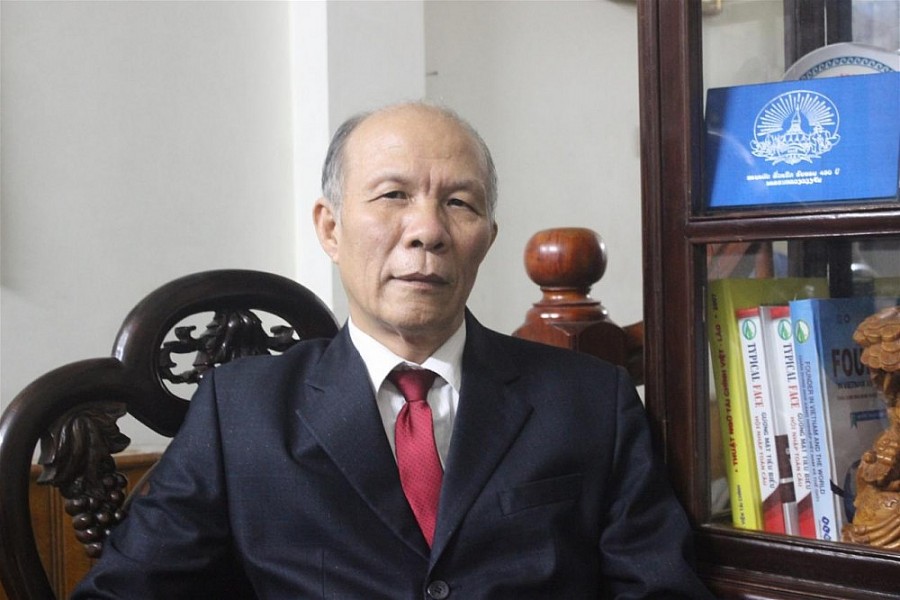 |
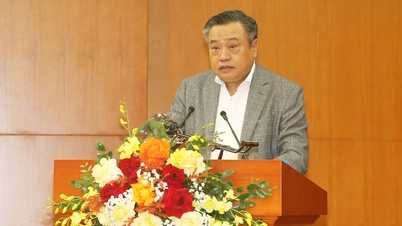
| Assoc. Prof. Dr. Dinh Trong Thinh - Economic expert |
The crucial issue is managing this flow of money from the banks. The tax authorities need to work closely with the banking sector. Accordingly, any money flowing into and out of the country that exceeds certain limits must be reported. And the banks must monitor this.
Previously, countries had taxes on exported goods, but now no country taxes exports, except for items related to natural resources, minerals, and non-renewable materials. We must encourage exports, not restrict them.
How do you assess Vietnam's potential for exporting services?
According to World Bank data, global services exports have increased from over $400 billion in the early 1980s to over $7.21 trillion in 2022. Notably, since 2003, the average growth rate of global services exports has been over 6.5%.
Among export service categories, international transport services (which enjoy a 0% tax rate in the Draft) account for a large proportion, but this proportion is decreasing, from 30% in 1982 to 17% in 2020 (before Covid), and is being replaced by telecommunications and information technology (ICT) services. Global ICT service export growth has averaged 12.3% from 2004 to the present, with the rate accelerating since Covid.
Currently, service exports are a sector with enormous growth potential. In 2023, Vietnam's service export turnover reached approximately US$20 billion, with an average growth rate of about 11% per year, higher than GDP growth. Furthermore, service export activities typically do not require large capital investments, making them suitable for a capital-constrained economy like Vietnam.
Clearly, service exports are one of the strongest points of Vietnamese businesses. Especially in today's digital economy, exporting financial and accounting services is a significant strength. If we know how to unlock this potential, organize, find sources, and cooperate, our service exports will flourish in the coming period.
However, a 10% VAT rate on exports would make it difficult for Vietnamese service providers to compete with competitors from other countries. This would reduce the competitiveness of Vietnamese businesses, leading Vietnamese investors to seek opportunities to invest abroad. This not only results in a brain drain but also prevents the earning of foreign currency.
Thank you, sir!
Source





























































































Comment (0)