 |
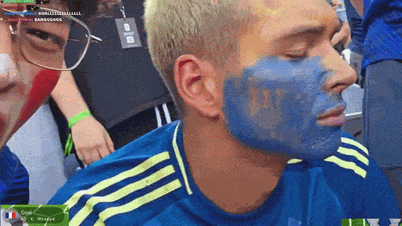
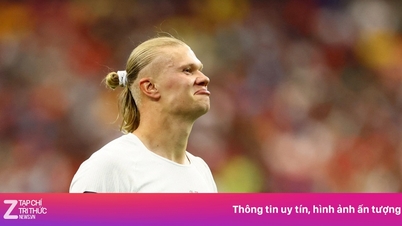
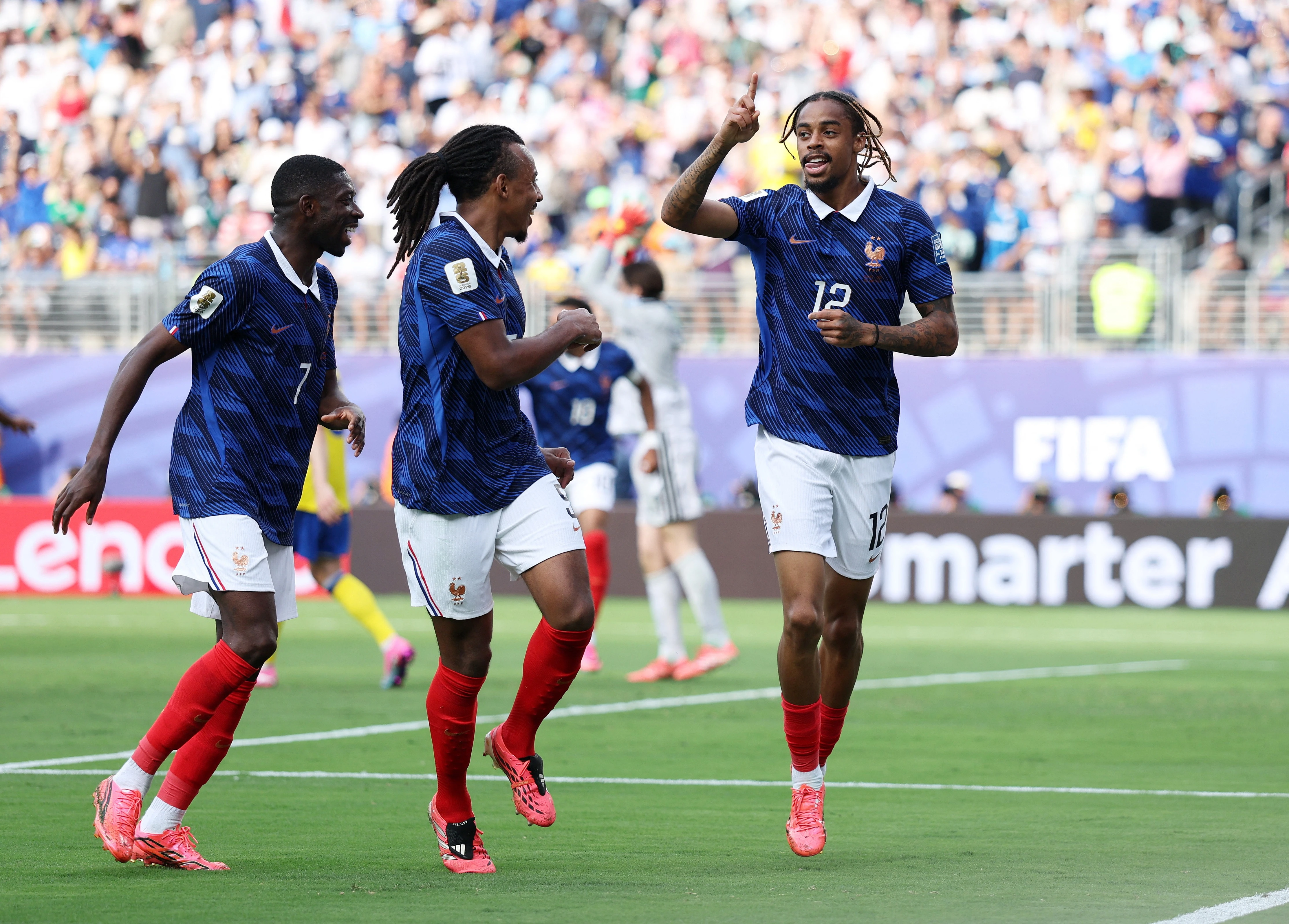
Player Bradley Barcola celebrates after scoring France's second goal in the match against Sweden. Photo: Reuters . |
The match between France and Sweden on the morning of July 1st ended with a 3-0 victory for the French team. This win demonstrates the foundation of a top European team, forged over many years on the world's biggest stage. However, to achieve this current success, France has spent decades competing against stronger nations to improve the quality of its players.
The first tentative steps of the French national team
In the summer of 1930, when the first World Cup was held in Uruguay, France's Les Bleus were one of four European teams to undertake the transatlantic crossing after a nearly two-week journey on the ship Conte Verde. In the opening match against Mexico, Lucien Laurent scored the first goal in World Cup history, beginning a special relationship between French football and the world's biggest tournament.
In his book Les 100 histoires de la Coupe du monde de football , author Mustapha Kessous describes it as the moment "the French wrote the first line of World Cup history," even though the team was soon eliminated. Since then, France has gradually become a nation that always knows how to leave its mark in every era of the world's biggest football tournament.
 |
The book *L es 100 histoires de la Coupe du monde de football* tells the story of 100 years of French football history. Photo: Les Librares. |
What's remarkable is that this success isn't just due to luck. It's nurtured by a football foundation with a depth rarely seen in Europe.
From youth training systems and local academies to a recruitment network spanning the entire territory and overseas, French football has consistently produced generations of players with their own unique identity. This is the foundation that allows Les Bleus to continuously regenerate after each successful cycle.

French football exploded at the 1958 World Cup with the duo of Raymond Kopa and Just Fontaine. In just one World Cup, Fontaine scored 13 goals. The book describes this as "an almost unbelievable achievement," because since then no striker has been able to reach that number in the same final tournament.
If 1958 marked the emergence of a goal-scoring machine, the 1980s ushered France into an era of artistic football. Under the guidance of coach Michel Hidalgo, the "Carré magique" with Michel Platini, Alain Giresse, Jean Tigana, and Luis Fernandez transformed Les Bleus into one of the most captivating teams in the world.
Although the bitter defeat to West Germany in the 1982 World Cup semi-final in Seville is still considered "the darkest night for French football," it was precisely those failures that forged the resilience of a footballing nation that knows how to rise after adversity. Four years later, the victory over Brazil on penalties in Guadalajara became one of the most classic matches in World Cup history.
The pinnacle of France's connection with the World Cup came in the summer of 1998, when the tournament returned to French soil after six decades. Winning the title on home soil was a moment when an entire training system was rewarded. Players like Zinedine Zidane, Didier Deschamps, Lilian Thuram, Marcel Desailly, and Thierry Henry were all products of a football system that had been systematically built up for many years.
The next generation of French football players is full of potential.
In his book Va-Va-Voom: The Modern History of French Football , journalist Tom Williams argues that one of the revolutionary decisions was the introduction of the youth training model at Clairefontaine.
According to Tom Williams, when Michel Platini realized that French players, while possessing good physical fitness, tactical awareness, and discipline, lacked the technical finesse to reach the top, Gérard Houllier decided to completely change the training philosophy. Instead of only training players aged 15 to 18, Clairefontaine recruited children from the age of 12, spending years perfecting basic skills such as ball control, passing, movement, and handling in tight spaces.
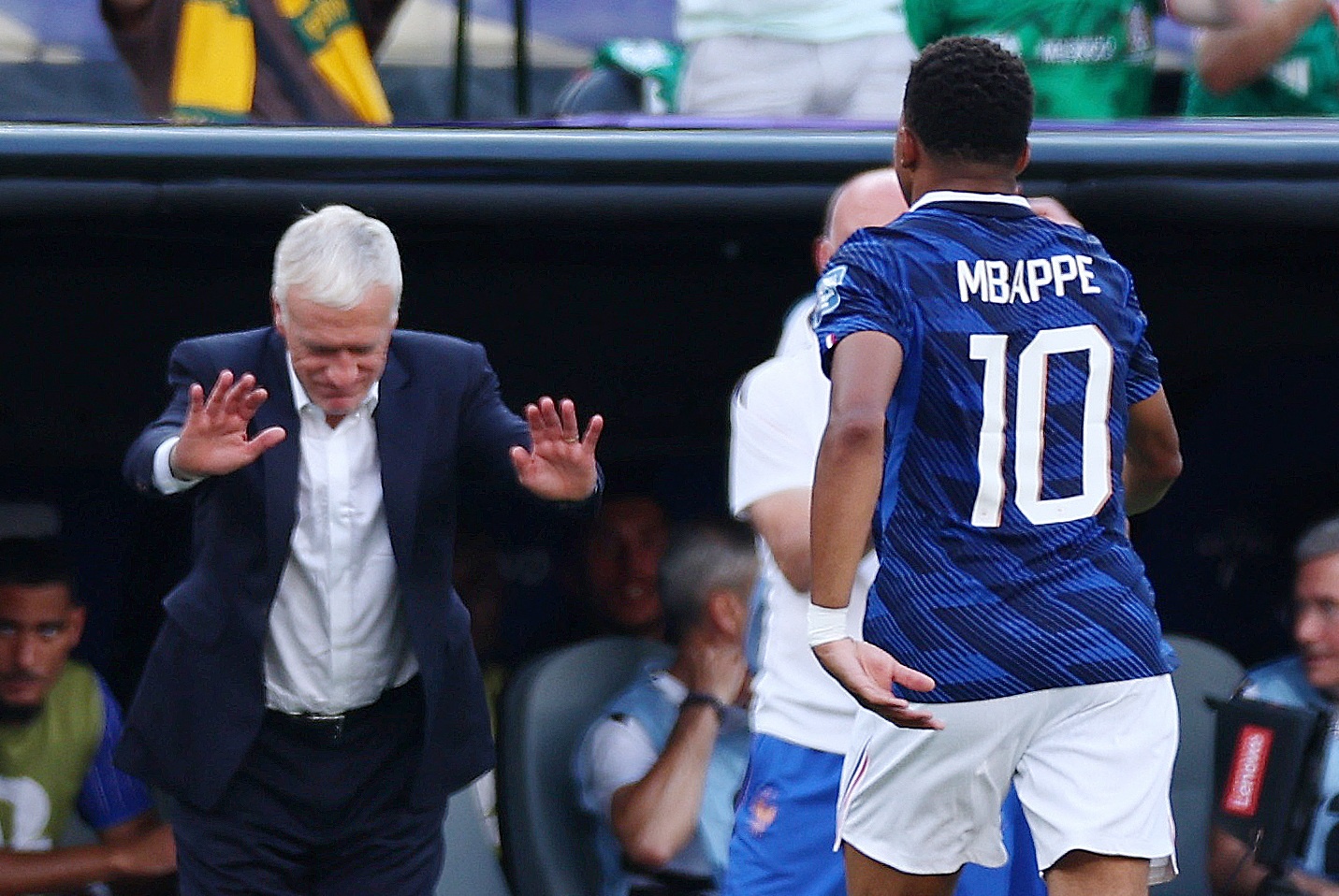 |
A moment between two generations of French football at the 2026 World Cup: Coach Didier Deschamps' action as captain Mbappe left the field during the match against Sweden on July 1st. |
Journalist Tom Williams commented that this decision "gave French football a head start on the rest of the world." It's no coincidence that from that academy emerged players like Thierry Henry, Nicolas Anelka, William Gallas, and then a host of subsequent generations, transforming France into one of the world's leading exporters of football players.



It can be said that French football has always known how to reinvent itself with successive generations. After the shock of being eliminated in the group stage in 2002 and the Knysna crisis in 2010, they once again rebuilt themselves to reach the top of the world at the 2018 World Cup.
As of the 2026 World Cup, France will have participated in 17 finals, winning twice, reaching the final four times, and consistently appearing in the last eight World Cups. After their match against Sweden, France will advance to the Round of 16 under more pressure in a challenging bracket. Nevertheless, fans still look to the team with great hope.
Source: https://znews.vn/nen-tang-bong-da-phap-khang-dinh-qua-tung-mua-world-cup-post1664952.html
![[Image] National conference summarizing one year of operation of the overall organizational model of the political system, the three-tiered government model.](https://vphoto.vietnam.vn/thumb/1200x675/vietnam/resource/IMAGE/2026/07/01/1782882811691_ndo_br_1-jpg.webp)