

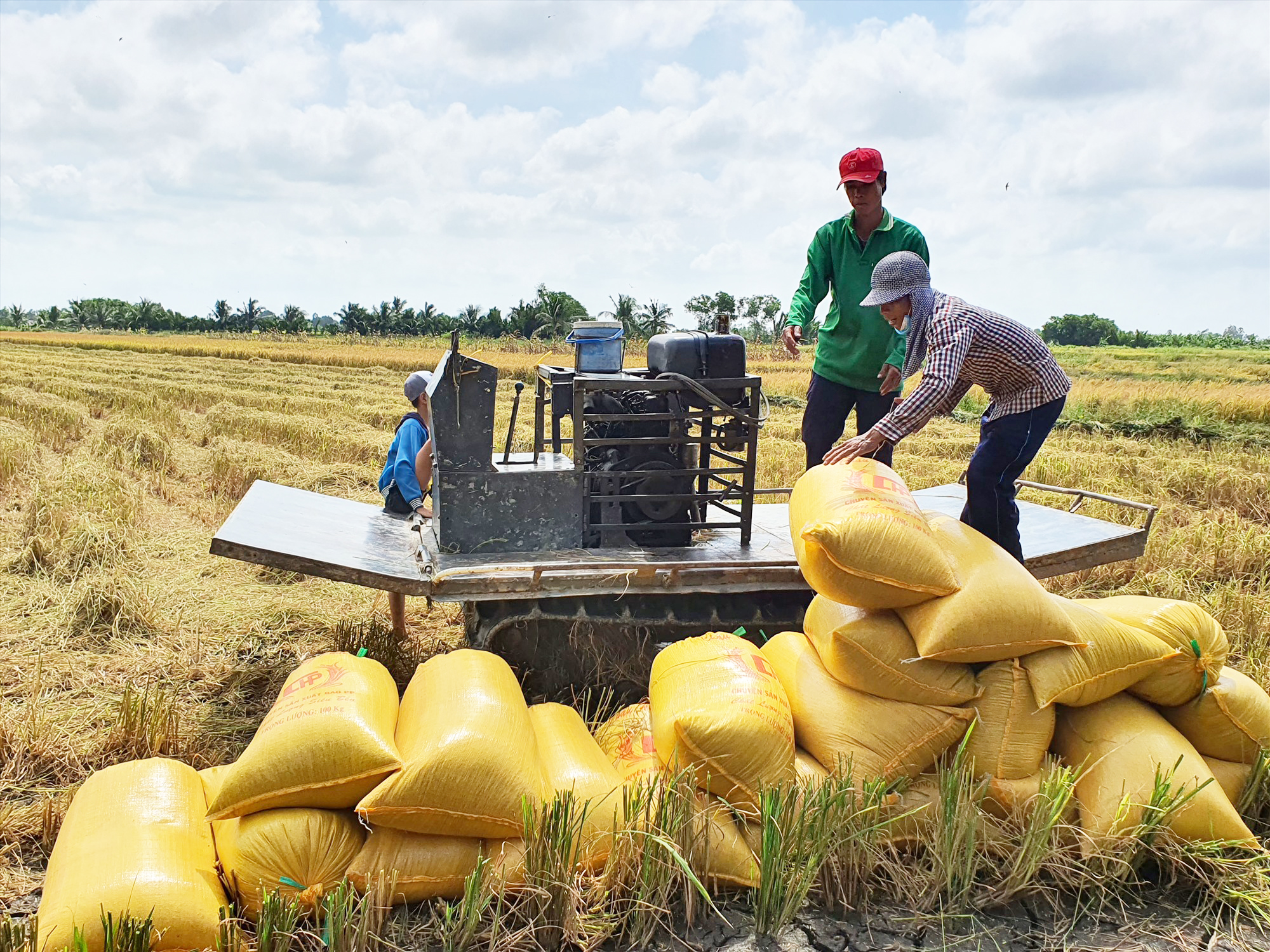
Northern traders complain about difficulties importing rice from the South.
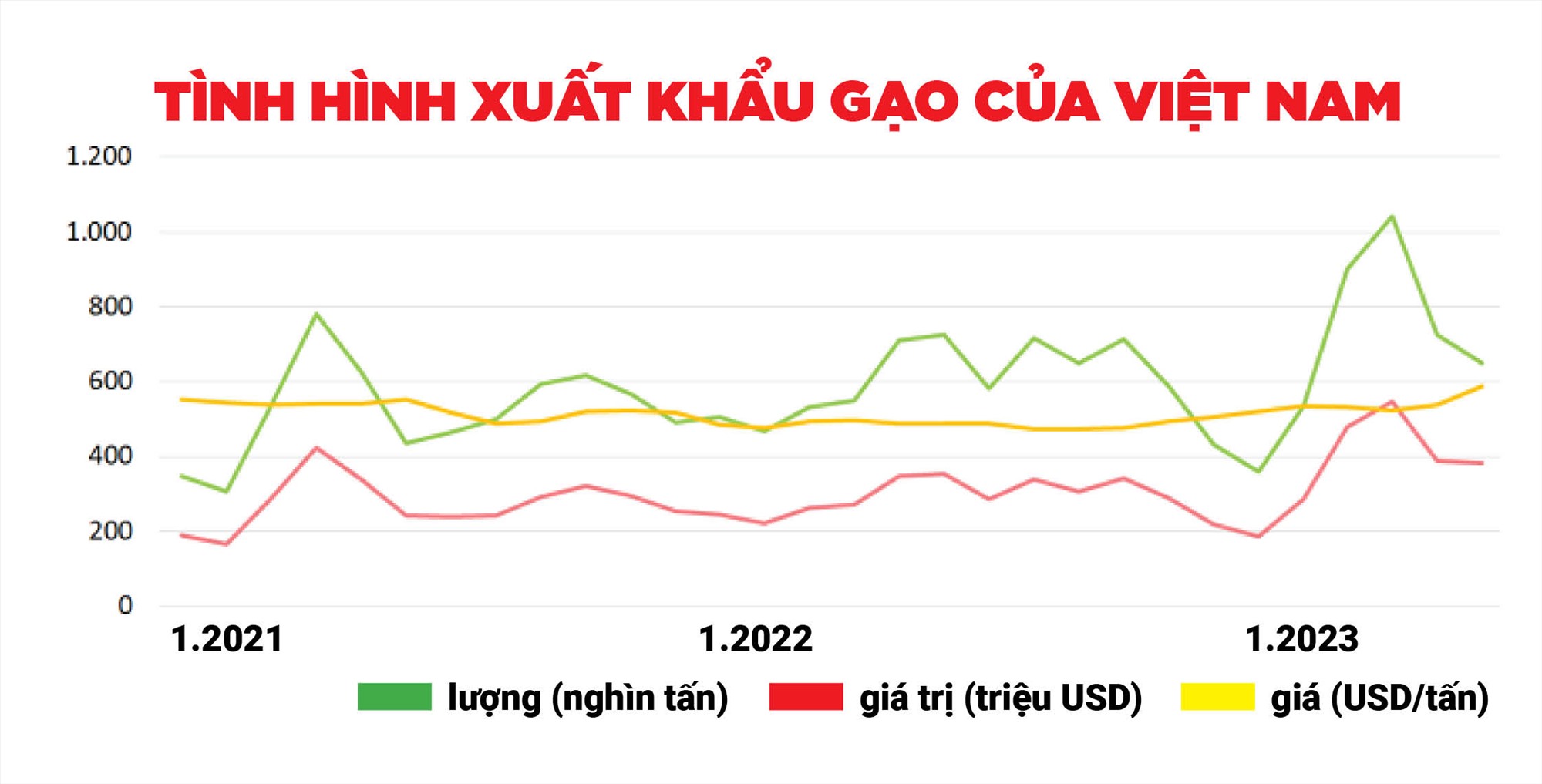
Data from the Vietnam Food Association as of August 9, 2023 shows that the export price of 5% broken rice from Vietnam has increased to US$618/ton, lower than Thai rice (US$641/ton) but higher than Indian rice (US$493/ton) and Pakistani rice (US$533/ton). Notably, the price of 25% broken rice from Vietnam has also reached US$598/ton, far surpassing regional competitors such as India (US$473/ton), Pakistan (US$498/ton), and Thailand (US$579/ton).
Domestically, rice prices as of August 10, 2023, continued to be adjusted upwards in many provinces and cities. The price of finished rice in many places increased by 100 VND/kg to 14,300 VND/kg.
Having been a rice distributor for 13 years, this is the first time Ms. Le Thi Phuc ( Hanoi ) has seen rice prices increase so dramatically. She said that, so far, rice prices have risen by 35% compared to the same period last year.
"There was a time when I called my partner in the South to order rice. Initially, they quoted 15,000 VND/kg, but just 30 minutes later, they reported that the price had increased to 15,500 VND/kg, or even higher. Meanwhile, I don't dare raise the price for regular customers for fear of losing them. Currently, I'm losing 70,000 VND per hundred kilograms of rice," Ms. Phuc said.
According to Ms. Phuc, not only have rice prices increased, but importing rice from the South to Hanoi is also proving very difficult.
"Two days ago, I transferred 300 million VND for rice to a partner in Dong Thap , but then the partner canceled the order and returned the money to me," Ms. Phuc said.
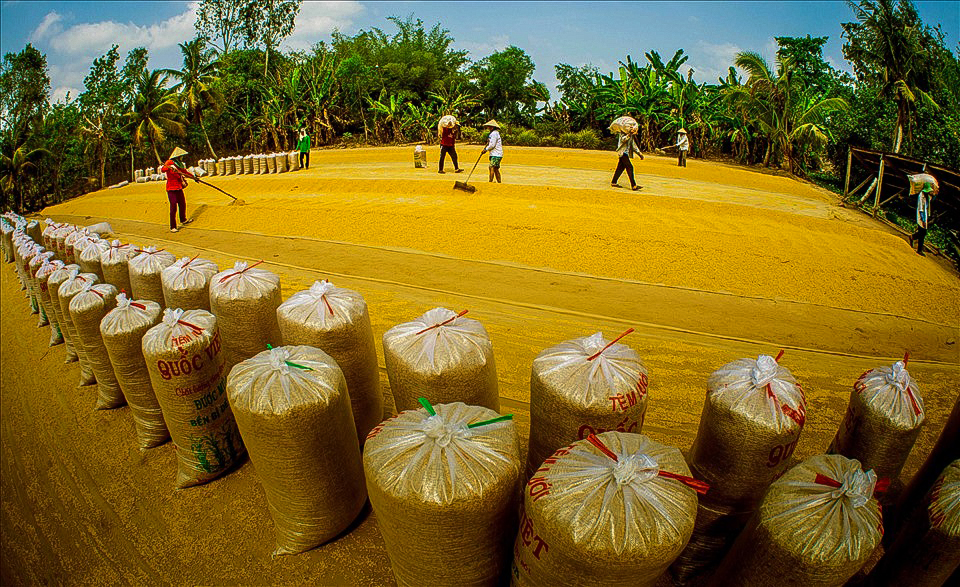
The race among rice brokers.
Meanwhile, in the South, according to the Lao Dong Newspaper, the rice purchasing market is currently booming in several provinces and cities in the Mekong Delta such as Hau Giang, Soc Trang , and Bac Lieu...
After much hesitation in finalizing the price, Mr. Nguyen Van That (Long My district, Hau Giang province) received a deposit from a trader three days ago at a price of 7,100 VND/kg.
According to Mr. Nguyen Van Con (Long My district, Hau Giang province): "About 5 days ago, traders were buying OM18 rice at 7,000 VND/kg, but now it has risen to 7,200 - 7,400 VND/kg, which is 200 - 400 VND/kg higher than the price previously set by businesses."
According to this farmer, most people in the area had already received deposits in advance, so even if traders offered higher prices, they wouldn't be able to sell.
Mr. Bay Thi, a rice trader from Long My district, Hau Giang province, said: "Currently, there are at least 5-6 rice brokers in the area. The other day, I was robbed of an opportunity by one of them. They arrived first and offered farmers 7,000 VND/kg, I arrived later and offered 7,100 VND/kg, but the farmers still didn't sell because they had already received a deposit." This trader is currently buying rice at prices ranging from 7,100 to 7,400 VND/kg, depending on the variety.
Seize the opportunity, but prioritize domestic consumption.
Given the continuously rising export rice prices, many are concerned that chasing export demand for profit could lead to an imbalance between supply and demand in the rice industry, affecting food security.
Mr. Nguyen Nhu Cuong, Director of the Department of Crop Production (Ministry of Agriculture and Rural Development), believes that such a situation is highly unlikely because the government and state prioritize domestic consumption and exports in a very planned and meticulous manner.
In addition, the current rice supply remains abundant in the North Central region, the Red River Delta, the South Central Delta, Thai Binh, the northern mountainous and midland regions, the Southeast region, and the Mekong Delta.
Regarding ensuring domestic food security, Mr. Cuong affirmed that when balancing the consumption needs for 100 million people, processing needs, and seed needs, the proportions have been significantly increased. For example, if Vietnamese people consume about 7.5 kg of rice per month, this figure would increase to 9 kg per month.
Mr. Cuong believes that the current difficulties in rice procurement for businesses stem from a lack of regional production linkages. Another challenge for businesses is the potential lack of funds and reluctance to purchase at this time due to high prices, rather than a shortage of supply.
On behalf of the Ministry of Industry and Trade, Mr. Tran Quoc Toan, Deputy Director of the Import-Export Department, stated: "We have requested rice exporters to strictly adhere to the regulations on regular and ad hoc reporting, properly implement the minimum inventory circulation process, and regularly update market information."
According to information from the Ministry of Industry and Trade, the ministry continues to direct market management forces in several localities to effectively inspect and monitor the buying and selling of rice in the market, and any hoarding or speculation will be strictly dealt with according to regulations.
Traders and businesses face the risk of heavy losses due to buying high and selling low.
Ms. Huynh Thi Bich Huyen - Chairwoman of the Board of Directors of Ngoc Quang Phat Import-Export Joint Stock Company (Thot Not district, Can Tho city) - commented: The increase in export rice prices is welcome, but it also creates difficulties for exporters. The reason is that paddy prices are soaring, increasing daily; just yesterday they were bought at 6,500 VND/kg, now it's 7,400 VND/kg, and even increasing by 200-500 VND/kg every day, making procurement difficult.
"I think we need a floor price or an extension of the export timeframe so that businesses have time to gather enough paddy to produce rice for export. On the other hand, the possibility of rice prices continuing to rise while existing contracts cannot be negotiated for price increases will cause businesses to incur losses," Ms. Huyen said.
Mr. Nguyen Viet Anh, General Director of Phuong Dong Foodstuff Co., Ltd. (Lai Vung district, Dong Thap province), shared that farmers are happy when they sell rice at high prices. However, reselling it multiple times causes the price to increase significantly, making it difficult for businesses to obtain the goods for delivery and affecting contract fulfillment. Businesses have to renegotiate prices, but this is not easy. "This is a serious issue, beyond the control of businesses, therefore, businesses like ours hope that the authorities will take measures to stabilize the market," Mr. Viet Anh shared. Bich Ngoc - Phong Linh
Source


![[Photo] Prime Minister Pham Minh Chinh presides over a meeting on private sector economic development.](/_next/image?url=https%3A%2F%2Fvphoto.vietnam.vn%2Fthumb%2F1200x675%2Fvietnam%2Fresource%2FIMAGE%2F2025%2F12%2F20%2F1766237501876_thiet-ke-chua-co-ten-40-png.webp&w=3840&q=75)


![[Photo] Prime Minister Pham Minh Chinh presides over the conference announcing the establishment of the International Finance Centre in Vietnam.](/_next/image?url=https%3A%2F%2Fvphoto.vietnam.vn%2Fthumb%2F1200x675%2Fvietnam%2Fresource%2FIMAGE%2F2025%2F12%2F21%2F1766309817714_ndo_br_dsc-3400-jpg.webp&w=3840&q=75)










































































Comment (0)