The warning was issued in the Global Climate Change Index (IGCC) report published on June 11 in the scientific journal Earth System Science Data .
A study conducted by more than 70 scientists from 56 organizations in 17 countries shows that human-induced warming will reach 1.37°C by 2025, approaching the 1.5°C threshold set by the international community to avoid the most serious impacts of climate change.
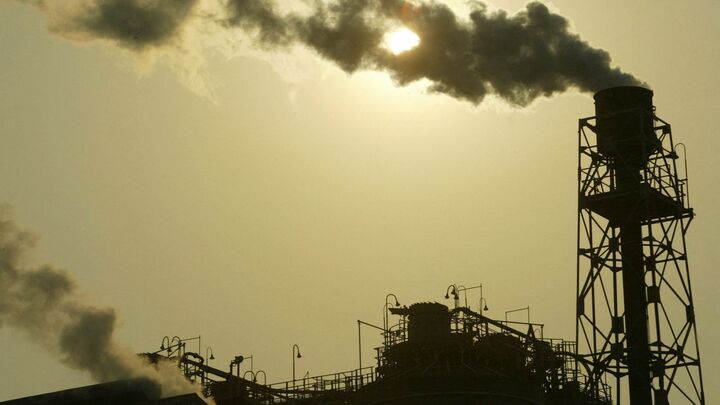
The world will exceed the 1.5°C global warming target by 2030 if current emission levels are maintained. (Photo: Reuters)
According to the research team, the maximum amount of CO₂ the world can still emit to maintain the 1.5°C target is only about 130 billion tons from the beginning of 2026. At the current emission rate, this "carbon budget" will be exhausted around 2030.
"Our research shows that greenhouse gas emissions have reached historically high levels, primarily due to the burning of fossil fuels," said William Lamb, a senior researcher at the Potsdam Institute for Climate Impact Research (Germany).
The carbon budget is the maximum total amount of greenhouse gases (primarily CO₂) that humanity can emit into the atmosphere while keeping global temperatures from exceeding the targets (e.g., an increase of 1.5°C or 2°C) set out in the Paris Agreement on climate change.
In 2024, global greenhouse gas emissions reached a record high of 56.8 billion tons of CO₂ equivalent. Concentrations of the three main greenhouse gases – CO₂, methane, and nitrous oxide – have all continued to rise since 2019. Atmospheric CO₂ concentrations alone have now reached 425.6 parts per million (ppm).
Matt Palmer, an expert at the UK Met Office, argues that the root cause is simple: the world is emitting more greenhouse gases than ever before, trapping more and more heat in the atmosphere and disrupting the climate system.
The report also notes that Earth's energy imbalance – the difference between the amount of heat absorbed from the Sun and the amount of heat radiated back into space – has more than doubled in recent decades and is now at its highest level ever.



This means the planet is accumulating heat at the fastest rate since modern measurements began.
"The energy imbalance is rapidly increasing, leading to changes across the entire climate system, from warming oceans and continents, melting permafrost, ice loss, to rising sea levels," said Karina Von Schuckmann of the Mercator Ocean International Research Institute (France).
The oceans are absorbing much of the Earth's excess heat. By 2025, global sea levels will have risen a total of 23 cm compared to 1901, and the rate of rise continues to accelerate.
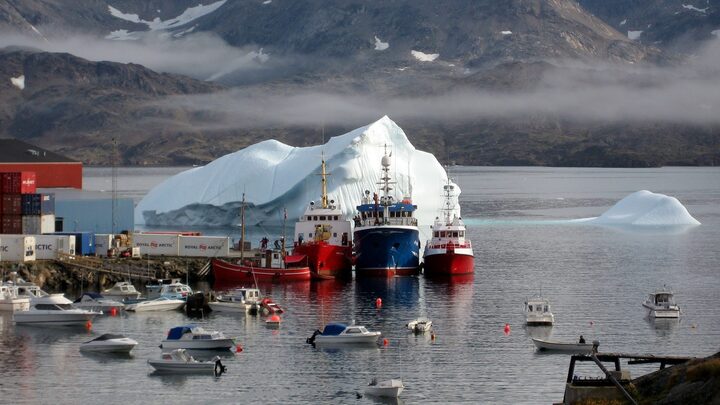
Sea levels are rising due to current ice melt caused by climate change. (Image: Woods Hole)
This year's report, for the first time, includes an index for ocean heatwaves. The results show that the number of days experiencing this phenomenon globally has more than tripled between 1991 and 2025.
In 2025 alone, the world is expected to experience 65 days of ocean heatwaves, damaging marine ecosystems, threatening fisheries resources, and disrupting natural climate regulation mechanisms.
On land, average peak temperatures over the past decade have been nearly 0.5°C higher than in the previous decade, contributing to an increase in extreme heat waves globally.
"Much of the warming over the last decade has been due to human activity," said Samantha Burgess of the European Union's Copernicus Climate Change Agency. "Impacts on livelihoods and ecosystems have appeared around the world and will continue to increase as temperatures rise."
However, scientists believe there is still an opportunity to limit the rate of warming if countries accelerate their energy transition.



According to William Lamb, investing in renewable energy and electrification not only helps reduce emissions but also contributes to building a cleaner, more stable, and safer energy system.
In addition to climate warnings, the research team also expressed concern about the risk of a data shortage for monitoring global climate change. Budget cuts for environmental monitoring programs in some countries could weaken the capacity to assess and predict future climate change.
"Without this data, future climate assessments will become far more difficult at a time when the world needs urgent action," warns Chris Smith of the International Institute for Applied Systems Analysis (IIASA).
Source: https://vtcnews.vn/ngan-sach-carbon-cua-the-gioi-sap-can-kiet-ar1023154.html


![[Photo] Overview of the renovation and upgrading of the Ho Chi Minh Museum - Ho Chi Minh City Branch](https://vphoto.vietnam.vn/thumb/1200x675/vietnam/resource/IMAGE/2026/06/24/1782287051250_ndo_br_01-jpg.webp)
![[Photo] Opening Ceremony of the 13th National Congress of the Ho Chi Minh Communist Youth Union](https://vphoto.vietnam.vn/thumb/1200x675/vietnam/resource/IMAGE/2026/06/24/1782286753905_ndo_br_1-8510-jpg.webp)
![[Image] Paris's oldest bridge goes viral after transforming into a giant cave.](https://vphoto.vietnam.vn/thumb/1200x675/vietnam/resource/IMAGE/2026/06/24/1782283441197_ndo_br_dsc05314-jpg.webp)