

The ancient Hung Lo communal house was built around the late 17th and early 18th centuries, during the reign of King Le Hy Tong. Fortunately, despite centuries of historical upheaval, the Hung Lo communal house complex has been preserved almost intact, with many structures built from precious woods such as teak, ironwood, rosewood, and ebony. The communal house still houses many ancient artifacts such as incense burners, lamps, and cranes made of finely carved ceramic and bronze.
 |
Hung Lo ancient communal house. |
 |
| Visitors come to admire the scenery at Hung Lo communal house during the spring festival. |
If the communal house is the heart and center of the community, then the ancient houses are the highlight of the heritage, transporting visitors back in time a hundred years.
Right behind Hung Lo communal house is the ancient house of 77-year-old Mrs. Vu Thi Ha, owner of Ha Thanh homestay. According to her, there are currently 49 ancient houses in the village, some of which have been partially renovated and restored due to age. To this day, Mrs. Ha doesn't know the exact year her family's house was built, only that it has existed since her ancestors' time, for over a hundred years. The house remains largely intact, except for a few details that have been replaced, such as the floor tiles and some damaged pillars and beams from the historic floods of 1971 and 1986.
 |
| The old house of Mrs. Vu Thi Ha's family. |
Over the years, the pillars, rafters, and window sills, though showing signs of termite damage, have remained sturdy and polished after treatment, reflecting the passage of time. In the center of the house hangs a horizontal plaque inscribed "Virtue and Morality," meaning to cultivate and nurture the tree of virtue, signifying that cultivating virtue is the foundation for the family's prosperity. Four wooden pillars on either side of the central section are adorned with two pairs of couplets, and in the center sits a large wooden bed covered with a floral mat. Outside, an elegant set of mother-of-pearl inlaid tables and chairs is arranged. In front of the house are ancient trees over 100 years old, their delicate fragrance wafting through the air, imbuing the space with a sense of solemnity and antiquity. Even in hot weather, stepping onto the porch offers a refreshing contrast to the outdoors.
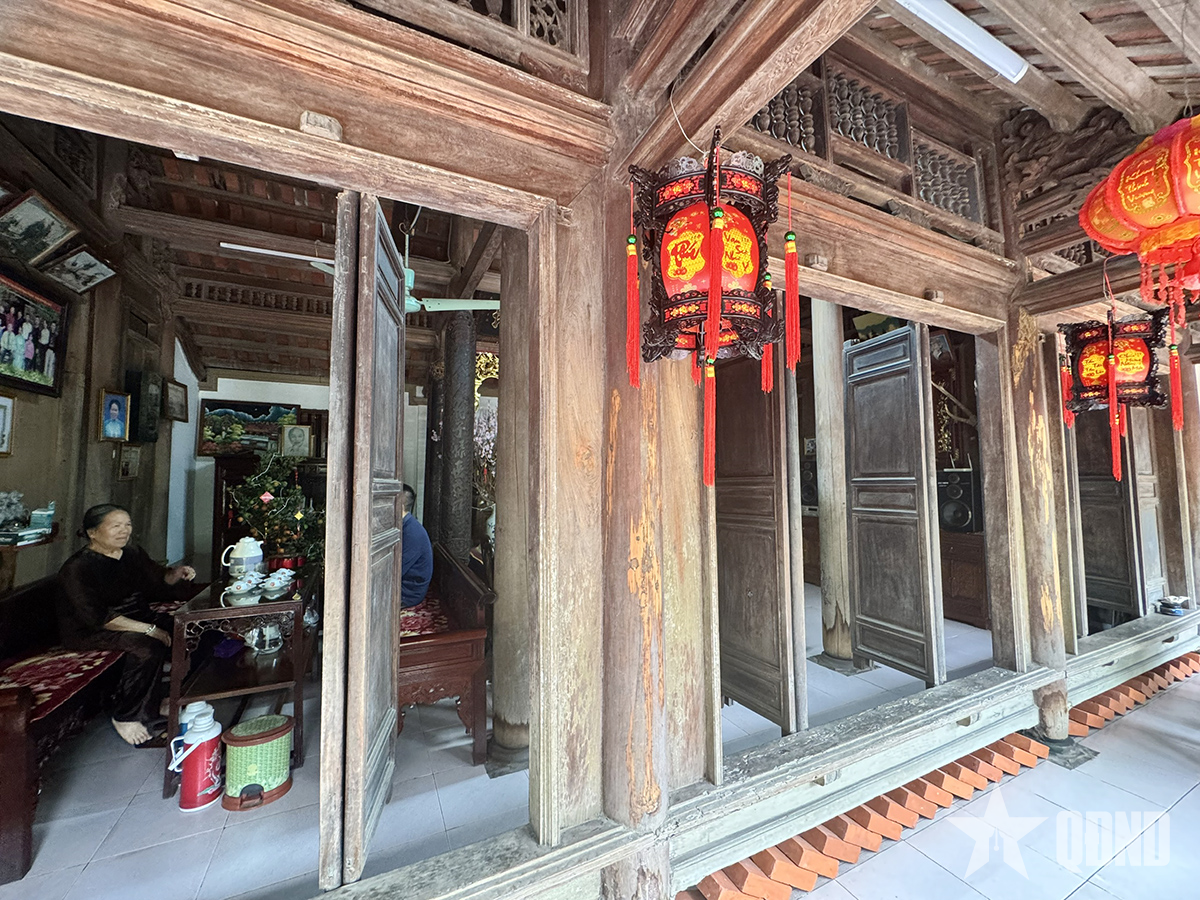 |
| The pillars, beams, and rafters bear the marks of time. |
Since the local community tourism program was implemented, Mrs. Ha's family built an additional row of houses next to the old house, fully equipped with modern amenities, clean, and self-contained, meeting the standards for welcoming tourists. "Visitors come here regularly all year round. Last year, on the second day of Tet (Lunar New Year), a large group of tourists came to visit, and I had to mobilize my children and grandchildren to prepare five trays of food to entertain them. Many Western tourists come; they really like traditional Vietnamese dishes like fried spring rolls and bamboo shoot and vermicelli soup, so cooking is quick!" Mrs. Ha said.
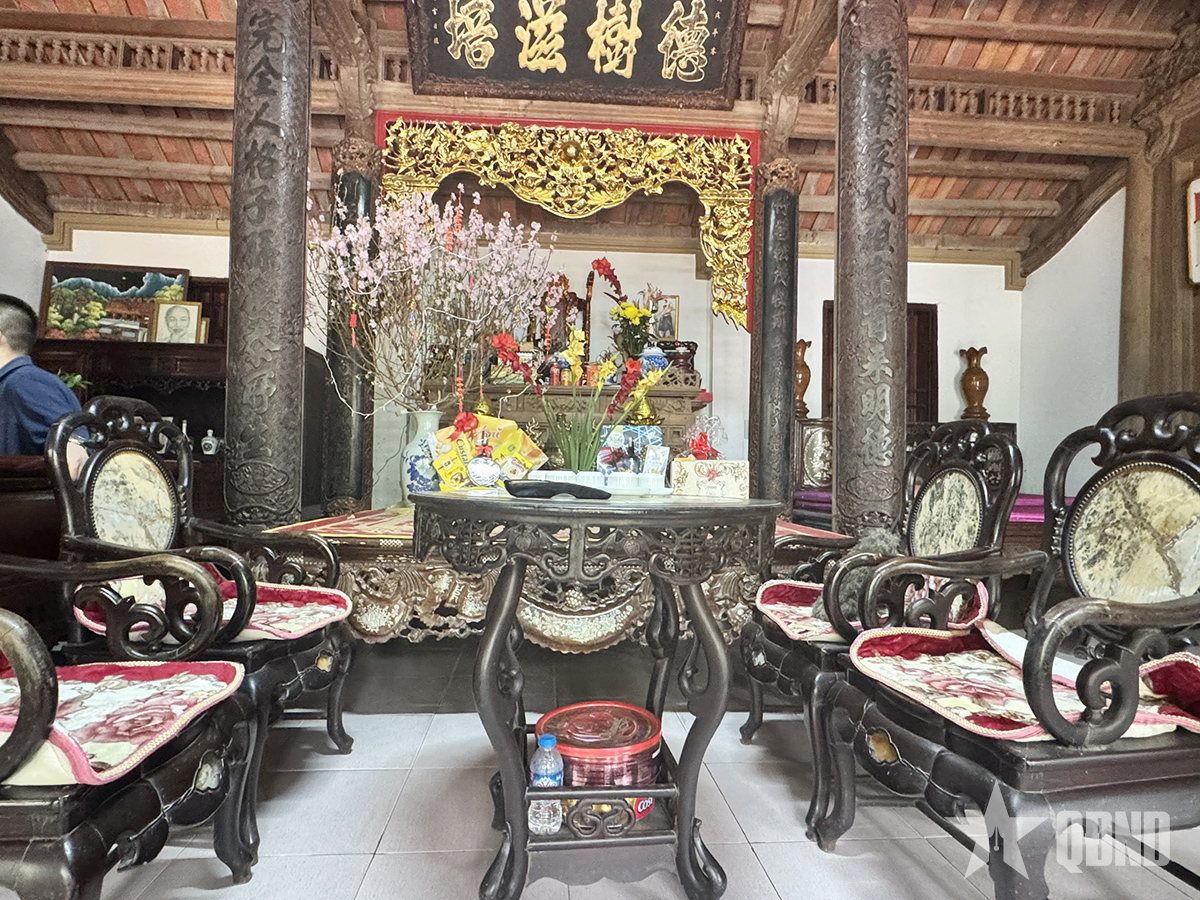 |
| The interior space is decorated in a traditional style. |
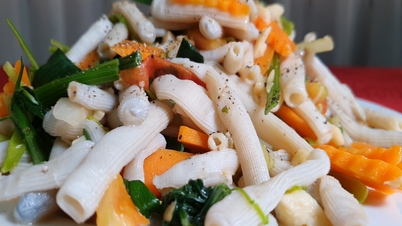
Besides its long-standing cultural heritage deeply rooted in Vietnamese culture, Hung Lo has also revived several traditional crafts such as making banh chung (rice cakes), noodles, rice crackers, and banh duc (rice cakes), providing visitors with a richer experience of rural life.
 |
| Ms. Vu Thi Ha, owner of Ha Thanh homestay in Hung Lo ancient village. |
 |
The ancient village of Hung Lo, along with Hung Temple and Tay Thien Pagoda, forms a unique complex of cultural and historical relics in Phu Tho province, where visitors can reconnect with their roots and experience the rich cultural values of the nation.
Source: https://www.qdnd.vn/van-hoa/doi-song/ngay-xuan-tham-lang-co-hung-lo-1028326



![[Photo] General Secretary and President To Lam presides over a meeting on preparations for the review of one year of operation of the three-tiered government system.](https://vphoto.vietnam.vn/thumb/1200x675/vietnam/resource/IMAGE/2026/06/02/1780391821195_a1-bnd-4595-9717-jpg.webp)











































































Comment (0)