

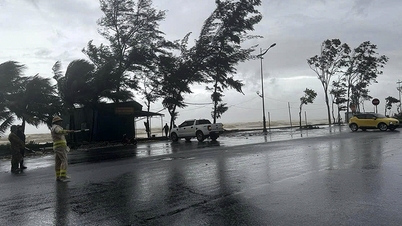
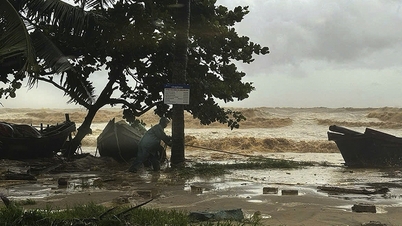
According to the National Center for Hydro-Meteorological Forecasting, the tropical depression has strengthened into Typhoon No. 5; at 11:00 AM on October 18th, the typhoon's center was located at approximately 16.9 degrees North latitude and 109.3 degrees East longitude, about 150 km east of the Quang Tri - Quang Ngai coastline, with wind speeds of level 8, gusting to level 11; forecast for the next 24 hours, it will move at a speed of 10 km/h and has the potential to strengthen to level 8-9, gusting to level 12.
To proactively respond to storms and heavy rains, the Provincial Steering Committee for Disaster Prevention, Search and Rescue and Civil Defense requests the Steering Committees for Disaster Prevention, Search and Rescue and Civil Defense of districts, towns, and Vinh City; and relevant departments and agencies to implement the following:
1. For sea routes:
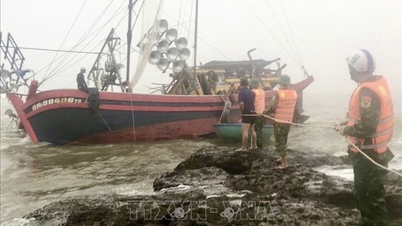
Closely monitor the storm's development; continue to count vessels operating at sea, and by all means inform the owners and captains of vessels operating at sea about the storm's location, direction of movement, and development so that they can proactively take precautions, evacuate, or avoid moving into the dangerous area (Dangerous area in the next 24 hours: from 15 - 21 degrees North latitude, west of longitude 111.5; in the next 48 hours: north of latitude 16, west of longitude 110, and will be adjusted in future forecast bulletins), to prevent complacency that could cause damage to people and vessels due to the storm.

The Border Guard Command will strictly manage vessels and boats going out to sea; inspect and guide vessels at anchorage areas. They will proactively implement measures to ensure the safety of people, fish cages, and aquaculture areas at sea and along the coast. Depending on the storm's development, the Border Guard Command will proactively advise on prohibiting maritime activities.
Prepare rescue and relief forces and equipment to promptly handle any emergency situation.
2. For mainland areas:
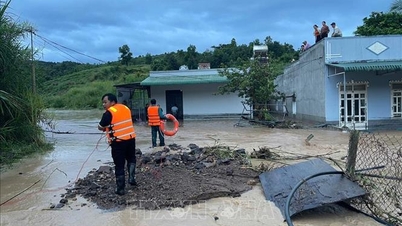
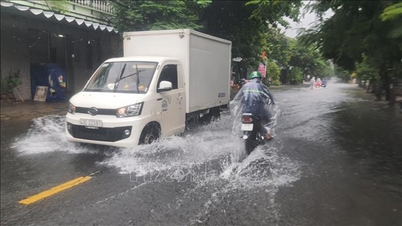
Closely monitor developments related to heavy rain, floods, inundation, flash floods, and landslides, and promptly and fully inform all levels of government and the public so that they can proactively prevent, respond to, and minimize damage.
Deploy rapid response teams to inspect and survey residential areas along rivers and streams, and low-lying areas, in order to proactively organize the relocation and evacuation of people in areas at high risk of deep flooding, flash floods, and landslides.
Organize forces to be ready to control and guide traffic, erect warning signs, especially at underpasses, overflows, and areas with deep flooding and strong currents; proactively deploy forces, materials, and equipment to address incidents and ensure smooth traffic flow on main transportation routes when heavy rain occurs.

Directing efforts to ensure the safety of critical or unfinished coastal dykes. Implementing measures to drain water and prevent flooding in urban areas and industrial zones.
Inspect, review, and operate reservoirs and downstream areas safely, especially small hydropower reservoirs and critical irrigation reservoirs; deploy standing forces to be ready to handle any potential situations.
3. The Northern Central Region Meteorological and Hydrological Station: Closely monitor and enhance forecast and warning bulletins, providing timely information on the development of storms, heavy rains, floods, and the risk of flash floods and landslides to proactively implement response measures.
4. The Department of Agriculture and Rural Development directs the work of ensuring the safety of fishing vessels and aquaculture; the safety of dikes, reservoirs, and irrigation dams, especially critical and under-construction projects; and the protection of agricultural production.
5. The Department of Industry and Trade directs the work of ensuring the safety of hydroelectric reservoirs and dams and downstream areas, especially small hydroelectric plants; and is ready to promptly restore the power system in case of incidents.
6. The Department of Transport directs the work of ensuring the safety of transport vessels; directs the timely rectification of incidents and ensures traffic flow on the main routes.
7. Departments and agencies, according to their assigned functions and duties, shall direct measures to prepare for and respond to adverse situations. They shall have forces and resources ready for rescue and relief operations when required.
8. The provincial Radio and Television Station, Nghe An Newspaper, Ben Thuy Coastal Information Station, and other mass media outlets should increase the broadcast time and promptly report on the developments of the storm and heavy rain to all levels of government, owners of vessels operating at sea, and the public so that they can proactively prevent and respond to the situation…
Source


![[Photo] Prime Minister Pham Minh Chinh presides over a meeting on private sector economic development.](/_next/image?url=https%3A%2F%2Fvphoto.vietnam.vn%2Fthumb%2F1200x675%2Fvietnam%2Fresource%2FIMAGE%2F2025%2F12%2F20%2F1766237501876_thiet-ke-chua-co-ten-40-png.webp&w=3840&q=75)


![[Photo] Prime Minister Pham Minh Chinh presides over the conference announcing the establishment of the International Finance Centre in Vietnam.](/_next/image?url=https%3A%2F%2Fvphoto.vietnam.vn%2Fthumb%2F1200x675%2Fvietnam%2Fresource%2FIMAGE%2F2025%2F12%2F21%2F1766309817714_ndo_br_dsc-3400-jpg.webp&w=3840&q=75)
















































































Comment (0)