

The press has been at the forefront, accompanying the historical process of the revolution, contributing to promoting the country's renewal and development.
Development stages
For the past 99 years, Vietnamese journalists have had every right to be proud of the revolutionary press founded and nurtured by President Ho Chi Minh , with its glorious tradition and worthy contributions to the cause of building and defending the Fatherland.
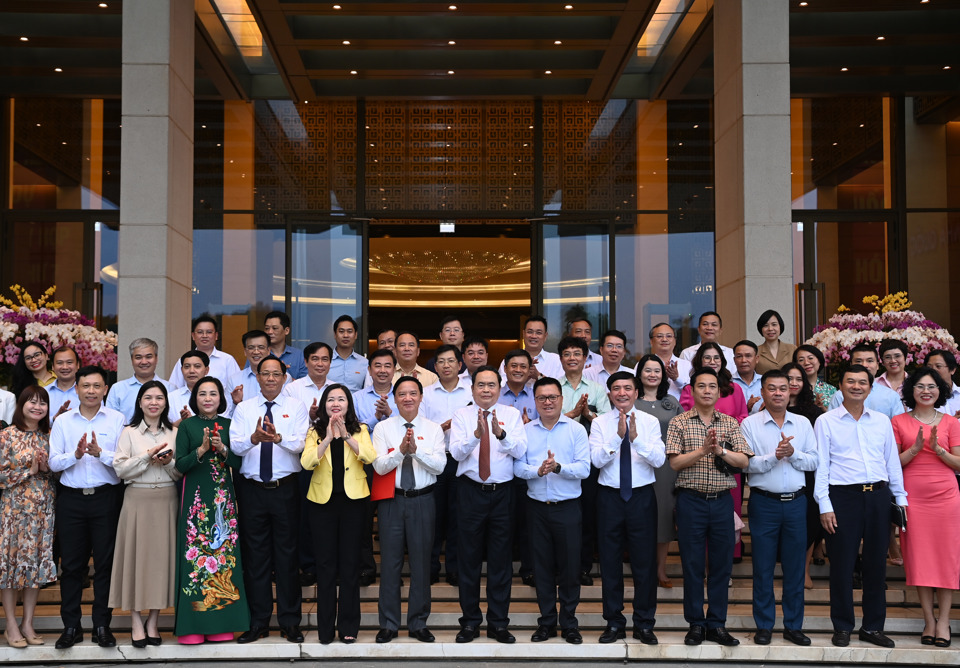
According to historical documents, the revolutionary press in Vietnam was born with a historical milestone: the newspaper Thanh Nien (Youth), founded by leader Nguyen Ai Quoc, published its first issue on June 21, 1925, leaving an indelible mark on the history of the Vietnamese nation.
After Thanh Nien newspaper, leader Nguyen Ai Quoc established other newspapers and monthly magazines such as Kong Nong (1926), Linh Cach Menh (1927), Bua Liem (1929)... to propagate and educate patriotism, awaken the spirit of solidarity, alliance, and revolution among the people.
With the emergence of numerous other newspapers and magazines, the revolutionary press of Vietnam affirmed its role as the voice of the Party, the State, and political, social, and professional organizations; as a reliable forum for the people; and as a sharp weapon against hostile forces of the revolution, fighting against corruption and protecting the interests of the people.
During the resistance war against French colonialism, a series of newspapers and magazines were successively published, such as: Cuu Quoc, Nhan Dan, Thong Tan Xa, Giai Phong, Quan Doi Nhan Dan, Tap Chi Cong San, Van Nghe, Tien Phong, Lao Dong, Voice of Vietnam Radio…
During the resistance war against American imperialism, the revolutionary press in Vietnam made remarkable progress. In addition to existing media outlets, numerous newspapers, magazines, radio stations, and broadcasting channels were established from the central level, through various sectors and organizations, down to the city, provincial, and district levels. Several foreign-language newspapers were published to introduce Vietnam to the international community, contributing to the diplomatic struggle.
On May 20, 1957, the President of the Democratic Republic of Vietnam promulgated Law No. 100/SL/L.002 - the first Press Law in our country. Chapter I of the Law affirms the responsibility of the press and revolutionary journalists: under our regime, the press, whether belonging to a government agency, political party, people's organization, or private individual, is a tool of the people's struggle, must serve the interests of the Fatherland and the people, protect the people's democratic regime, and support the government of the Democratic Republic of Vietnam.
From that first legal document, on December 28, 1989, the National Assembly of the Socialist Republic of Vietnam passed a new Press Law, which came into effect on January 2, 1990, replacing the 1957 Press Law with new provisions that were more in line with the realities of the press.
On June 12, 1999, at its 5th session, the 10th National Assembly passed the Law amending and supplementing several articles of the Press Law. Subsequently, on April 5, 2016, at its 11th session, the 13th National Assembly passed the 2016 Press Law, which came into effect on January 1, 2017, creating a legal framework for the remarkable development of journalistic activities.
Another important milestone was on February 5, 1985, when the Central Party Secretariat issued Decision No. 52-QD/TW designating the date of the first issue of Thanh Nien newspaper (June 21, 1925) as Vietnam Press Day, aiming to enhance the role and social responsibility of the press, strengthen the relationship between the press and the public, and reinforce the Party's leadership over the press.
Also in that year, for the first time, the national press organized a ceremony to celebrate Vietnam Press Day and the 60th anniversary of the first issue of Thanh Nien newspaper. This was a holiday not only for the press but also for the entire nation, because journalism is the undertaking of the whole people.
On June 21, 2000, to commemorate the 75th anniversary of Vietnamese Journalism Day, at the request of the Vietnam Journalists Association, the Politburo of the Central Committee of the Communist Party of Vietnam agreed to rename Vietnamese Journalism Day as Vietnamese Revolutionary Journalism Day.
For the past 99 years, the revolutionary press of Vietnam has truly served as a bridge between the Party and the people, and between the people and the Party, fulfilling President Ho Chi Minh's teachings: "The task of the press is to serve the people, to serve the revolution, to be a bridge expressing the Party's will and the people's aspirations, to strengthen national unity, and to be a tool for 'supporting righteousness and eliminating evil'."

From its early days, the Vietnamese press has experienced rapid and robust development in both quantity and quality, forming a nationwide system of news agencies, newspapers, radio, and television. With a meaningful, proud, and glorious mission, yet one that is also incredibly challenging and arduous, over the past 99 years, journalists have overcome all difficulties, made sacrifices, and been present on all fronts, truly becoming "the secretaries of the times."
Asserting our position in the flow of information
It can be affirmed that the revolutionary press of Vietnam has delved deeply into the realities of life, reflecting the most pressing issues of society and making increasingly important contributions to the country's renewal and development. More than anyone else, the team of journalists is always clearly aware of their role and responsibility, equipped with firm political principles, sharp professional skills, and impeccable professional ethics.
Over 41,000 journalists nationwide are working tirelessly, demonstrating their pioneering spirit and courage in the face of challenges to report on breaking news and socio-economic issues.
Many journalists, with their sharp intellect, keen insight, dedication, and immersion in reality, and their sensitivity to current events, have produced many groundbreaking works that strongly combat stagnation and conservatism; defending and promoting good practices, innovative models, and breakthroughs in thinking...
The development of the press not only helps people satisfy their cultural needs, expand and cultivate knowledge, but also serves as a reliable forum to express the will, feelings, and legitimate aspirations of all strata of the people, contributing opinions to the Party and the State in solving problems arising in the process of building and developing the country.
The press has discovered, promoted, and encouraged the widespread adoption of exemplary models and new initiatives; it serves as a tool to protect social interests and the rights of citizens, especially in checking and monitoring the implementation of state policies and laws.
From traditional print newspapers, the number of publications, radio and television programs, and journalistic technologies has increased dramatically, better meeting the information needs of the people.
With the rapid development of various forms of media, there were times when it seemed as though journalism had fallen behind, but thankfully, the role of mainstream media, including newspapers, remains very large and important.
Furthermore, while social media provides all kinds of information, good and bad, true and false, and unverifiable, the press has become a pillar of public opinion. Mainstream journalists are effective filters and "immune" to harmful and toxic news; they uphold responsibility, select information, verify its authenticity, and effectively guide public opinion, building a healthy information environment.
To create a compelling and socially impactful piece of work, journalists must be dedicated, going to the heart of the matter to understand and accurately reflect the truth. In doing so, despite facing numerous difficulties and dangers, it is not only a source of pride but also a social responsibility for journalists.
With the responsibility of guiding information and propaganda, and leading public opinion through official information, the press has always been trusted by the people and is increasingly turned to by them to express their legitimate opinions and aspirations, contributing to the resolution of the country's problems.
Beyond its role in propaganda, the press also demonstrates social responsibility by participating in social and charitable activities, supporting those affected by natural disasters, and assisting localities and individuals facing difficulties due to natural disasters and epidemics. It acts as a bridge to contribute to promoting social welfare, which is also an advantage of the press.
Keeping up with the trends of the times
As many have noted, since its inception, the revolutionary Vietnamese press has embraced and absorbed progressive trends in world journalism, combining them with the unique characteristics of Vietnamese culture and people. Faced with the ever-evolving flow of information, the press cannot be complacent with what it has achieved, but continues to innovate to adapt.
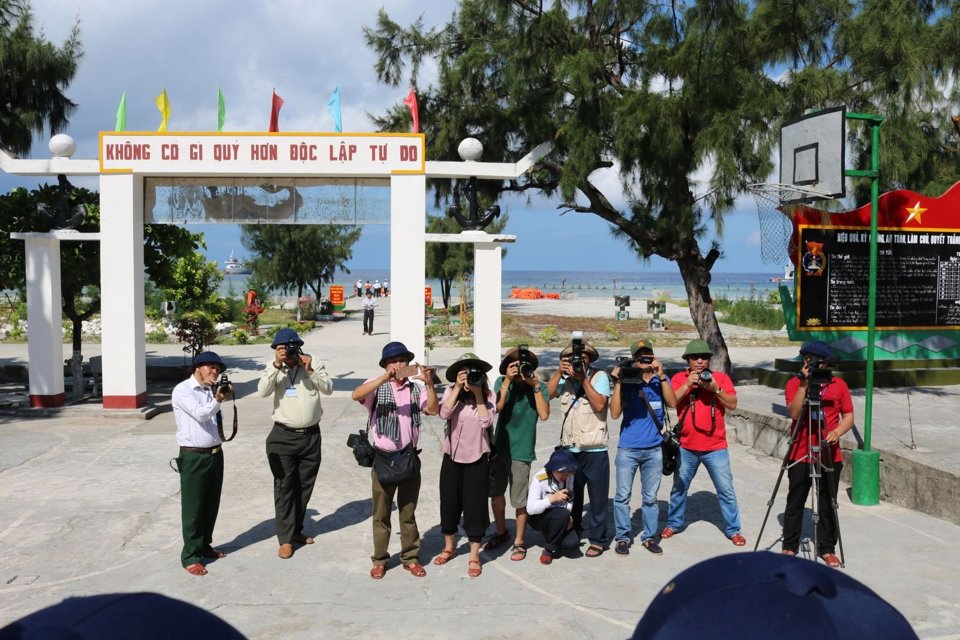
In this context, media outlets have actively innovated to gain sufficient strength and competitiveness with new forms and methods of communication, social media, etc., in order to attract and meet the demands of readers, promptly report news, and guide public opinion.
The press has successfully applied scientific and technological advancements to its operations, combining tradition and modernity, and making full use of various forms to create media campaigns with truly impressive impact. Multi-platform, multi-media journalism, and data-driven journalism with digital tools such as artificial intelligence (AI) and blockchain technology have developed.
Modern journalism increasingly integrates multimedia with diverse forms of expression such as infographics, megastories, long-form articles, and e-magazines, allowing readers to read, listen, watch, and interact with the content, becoming a strength of modern journalism.
Faced with these challenges, journalists themselves are gradually changing to meet the urgent demands for skills and technology. Their tools of the trade are no longer just a notebook and pen or a laptop. Many journalists now use their smartphones as a "miniature newsroom."
The rapid development of communication technology, in the "race" for information, requires newspapers to compete. Competition is for development and attracting readers. This must be healthy competition through delivering the fastest, most accurate, truthful, objective, and engaging news.
Therefore, although technological advancements have facilitated the work of journalists, they cannot replace the heart, mind, will, and integrity of those who work in journalism. It is this very quality that has enabled journalism to stand firm, affirm its role as the master of information flow, and create consensus and trust among the public.
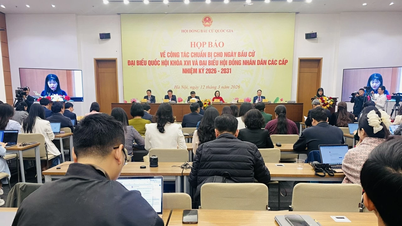
At the 2024 National Press Conference, Head of the Central Propaganda Department Nguyen Trong Nghia stated that the continuous development of multi-platform, multi-media, and data-driven journalism has created both opportunities and challenges for press agencies and journalists.
The press needs to proactively and unitedly find solutions to enhance its competitiveness, protect copyrights, combat fake news, and push back against harmful, misleading, and distorted information, so that official journalistic information becomes the most important mainstream information flow in the digital space, contributing to building a healthy information society, serving every reader and viewer, and serving the cause of national construction and defense.
Proud of its glorious tradition, remarkable development, and immense contributions over the past 99 years, today's journalists are continuing to overcome all difficulties and challenges to build a "revolutionary, professional, humane, and modern press and media," further affirming the position and role of journalism in all aspects of the country's economic and social life.
Source: https://kinhtedothi.vn/nghe-bao-nghe-cao-quy.html






























































































Comment (0)