

Telling cultural stories through experiences at traditional craft villages.
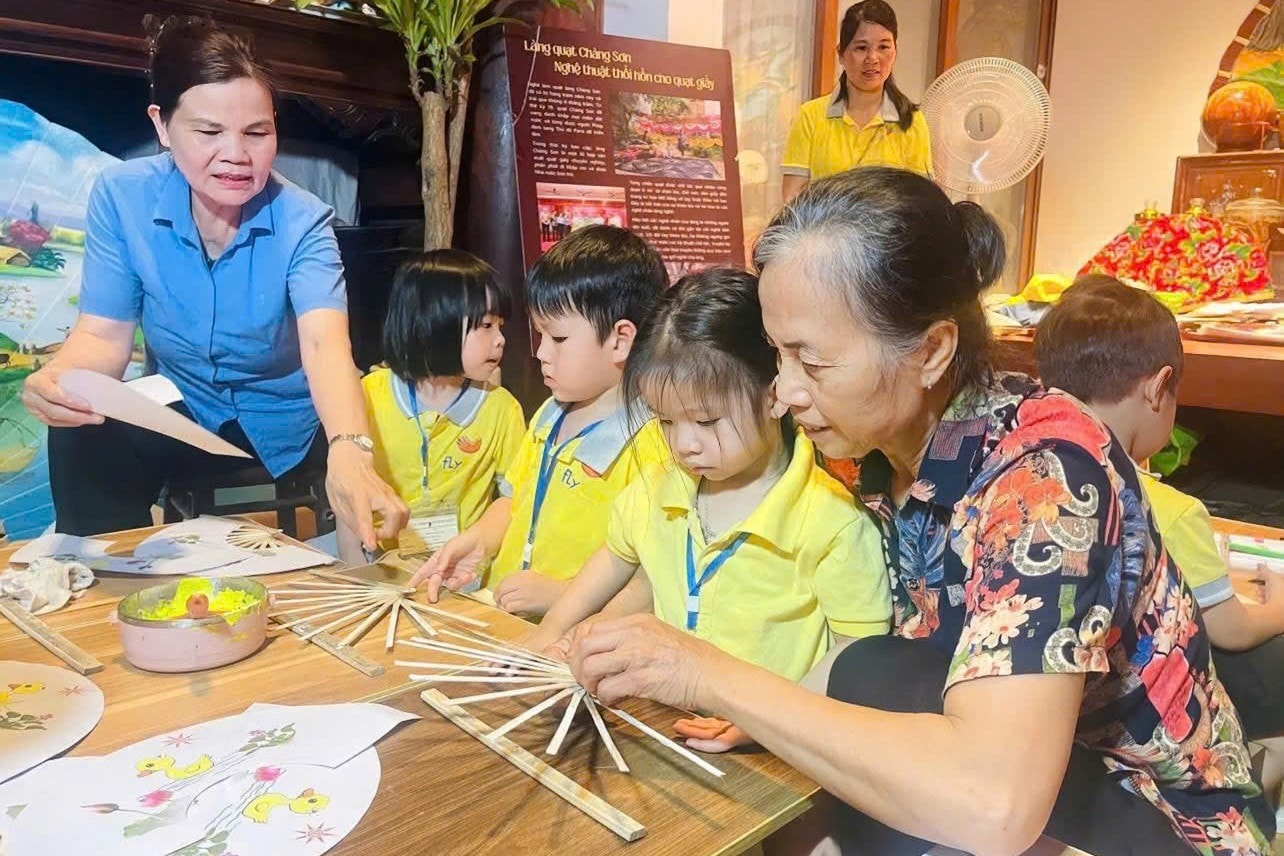
Every weekend, the approximately 130m² house of artisan Nguyen Thi Tuan (Tay Phuong commune, Hanoi ) is filled with the lively chatter and laughter of young visitors seeking hands-on experiences. Colorful paper fans hang throughout the space, serving both as products and as a backdrop for a unique craft workshop.
Few would have thought that, more than 10 years ago, the fan-making craft in Chang Son was in danger of disappearing. The advent of electric fans caused many families to abandon the craft, and the village's traditional space gradually thinned out.
Born into a family with a tradition of making fans, Ms. Tuan witnessed that difficult period and decided to return to the craft when she was over 50 years old. "If I don't do it, maybe in a few decades no one will know how to make paper fans anymore," Ms. Tuan shared.
But her approach to preserving the craft didn't stop at production. From 2016, she began thinking about "opening up"—bringing the craft closer to the public. In 2022, the experience space officially opened its doors to visitors.
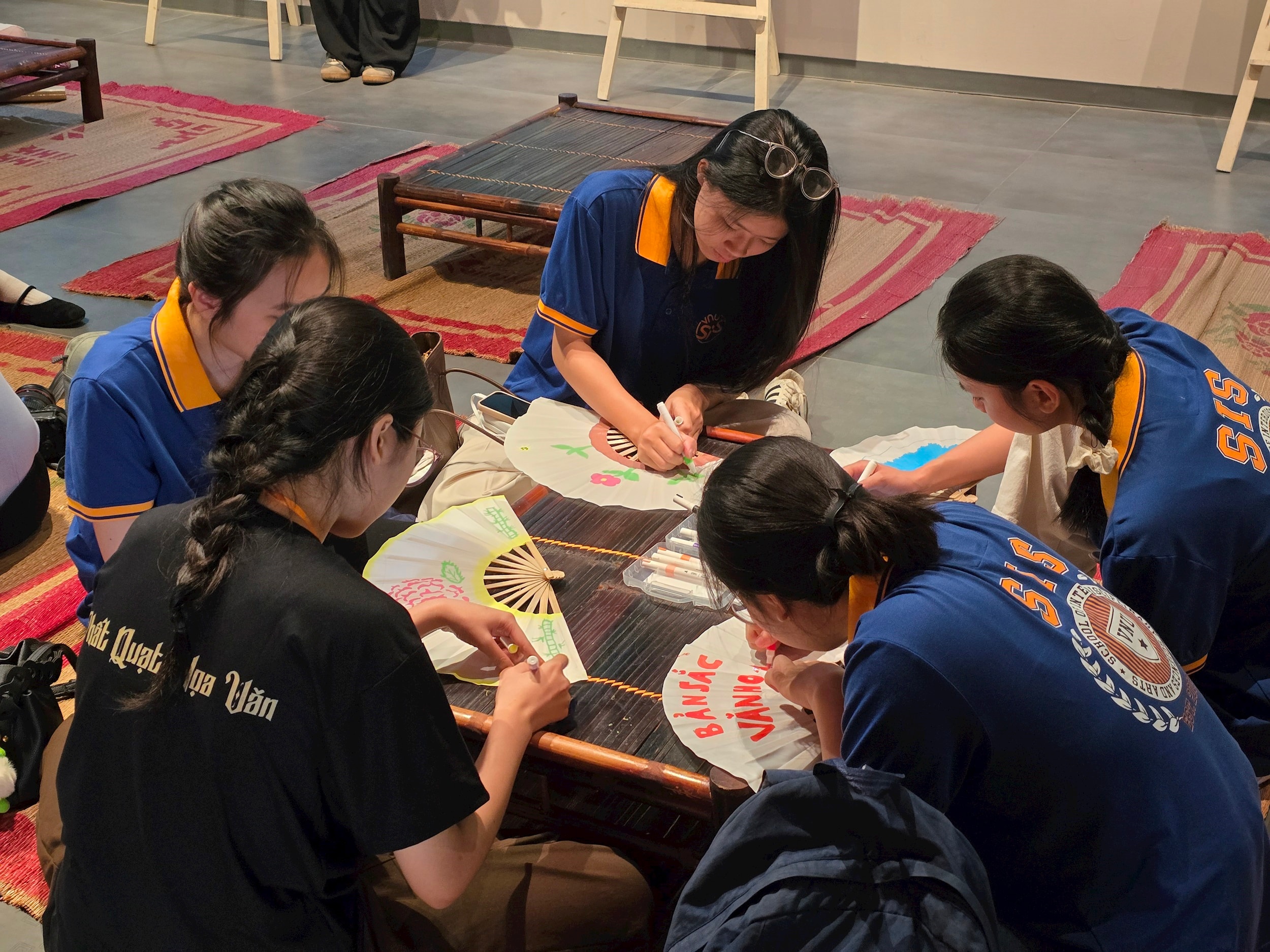
When it first opened, the experience space welcomed many different groups of visitors, from international tourists to students. Upon arrival, visitors could directly participate in the fan-making process: fan-making (gluing paper onto a bamboo frame), folding fans, and decorating. Through these hands-on activities, visitors could feel the distinctive atmosphere of traditional craft villages.
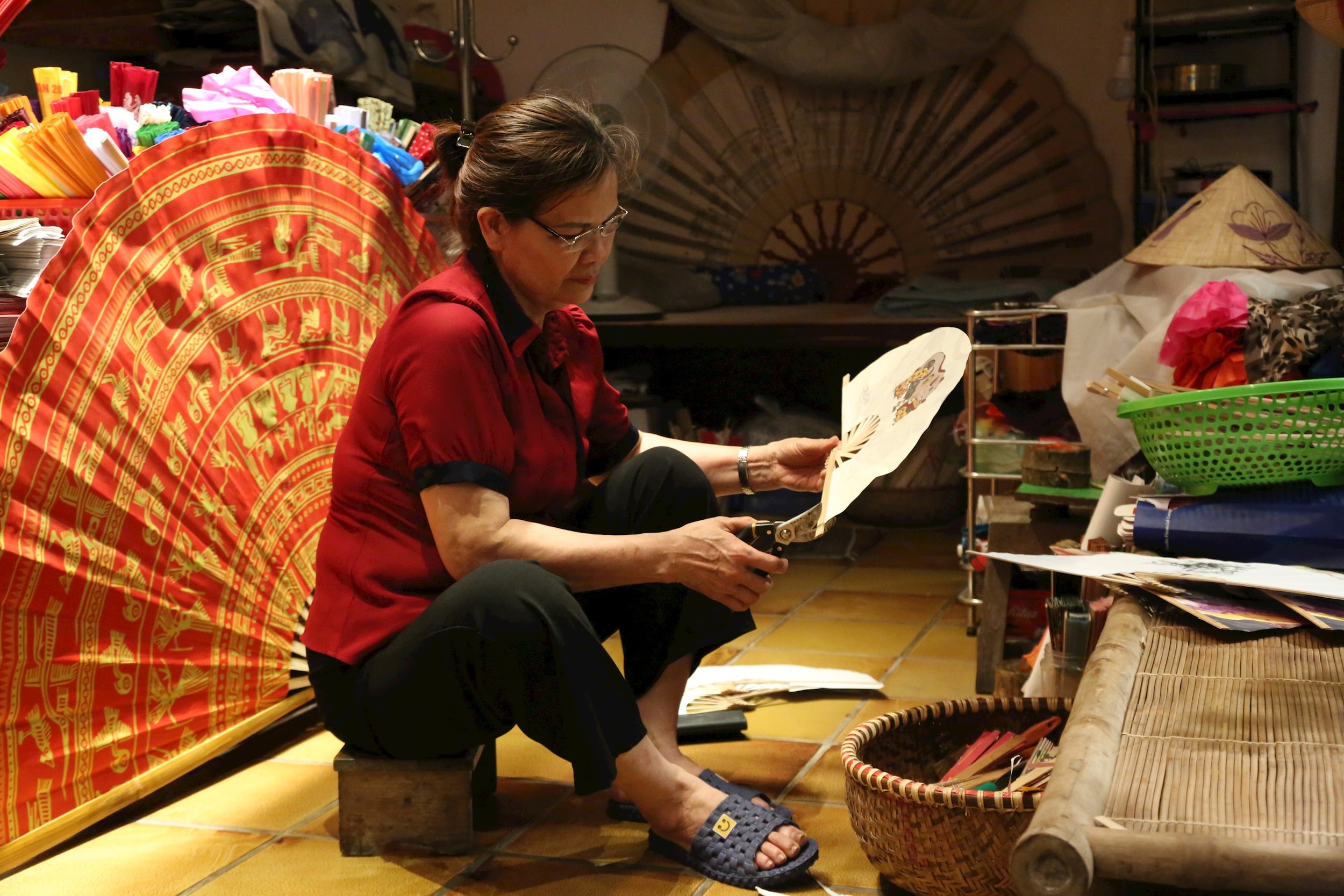
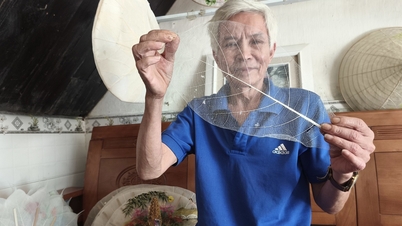
According to Ms. Tuan, in the past, a fan had 18 ribs, and when held, people could feel the effort of the craftsman. Today, even though it only has 9 ribs, the spiritual value remains, allowing users to appreciate the craftsmanship.
It is the "storytelling" element that gives depth to the experience. Tourists not only create a product, but also understand the history, customs, and aesthetics associated with the fan – a seemingly simple object that contains many layers of culture.
During peak seasons, Mrs. Tuan's small house can accommodate around 200 guests at a time. Due to limited space, she only accepts about 30 guests at a time. On busy days, activities are held in the village square or cultural center to ensure everyone can participate. Despite the limited scale, these experiences leave a lasting impression on visitors. Many tourists return multiple times, bringing back materials to organize workshops abroad.
From preserving traditional crafts to developing tourism .
The story of "preserving the craft by opening up" is not unique to Chang Son fan-making village; it's happening in many other craft villages in Hanoi as well.
In Phu Vinh rattan weaving village, People's Artisan Nguyen Van Tinh, Chairman of the Phu Nghia Rattan Association (Hanoi), has also chosen to bring the craft closer to tourists. His family's workshop is not only a place for making goods, but also a place to welcome visitors for tours and experiences.
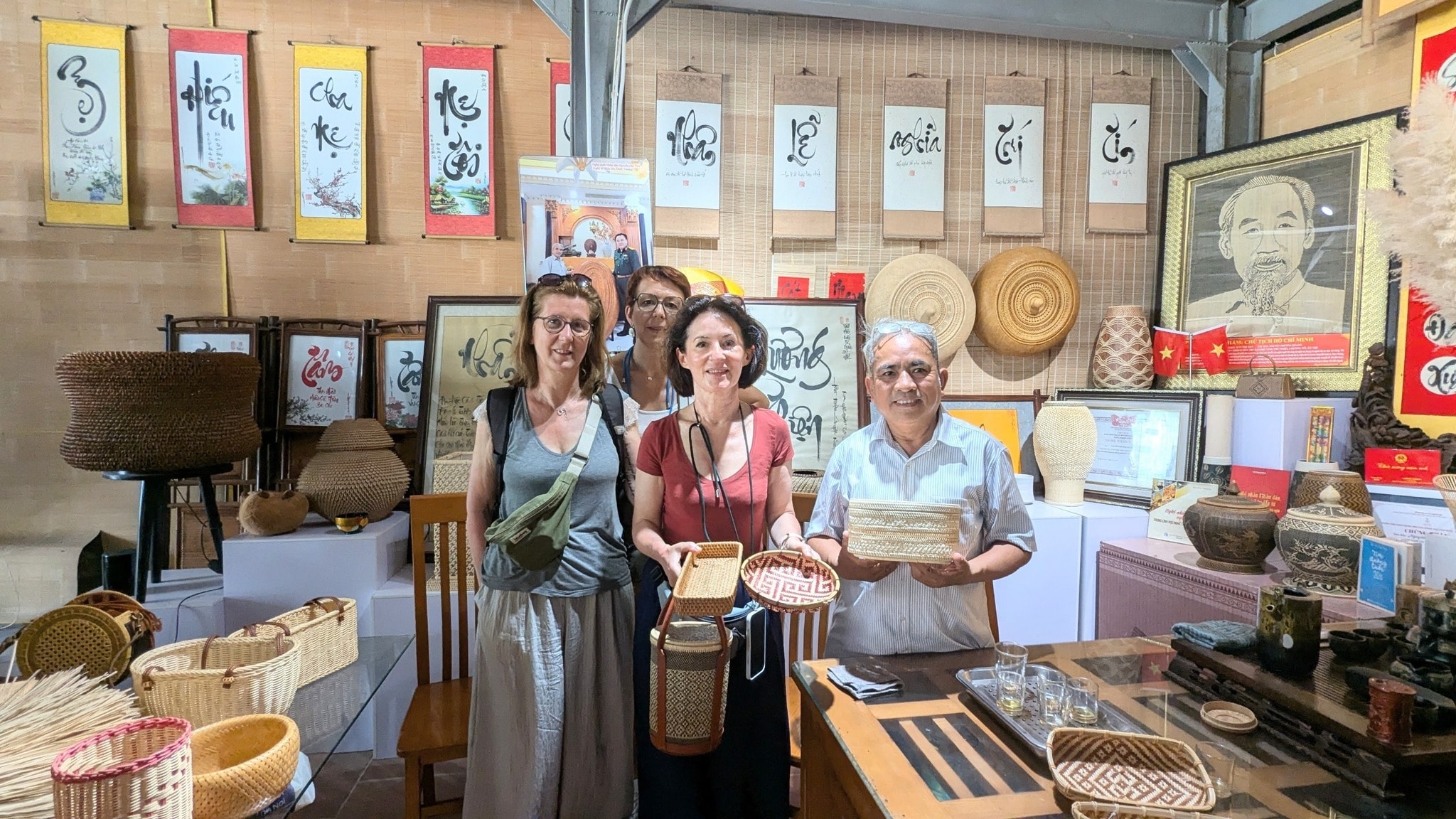
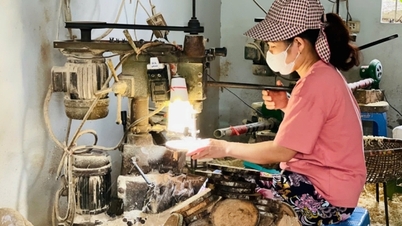
In that space, bundles of rattan and bamboo are no longer raw materials but become storytelling tools. Visitors are guided step-by-step through the weaving process, listening to stories about the history of the craft village and the ups and downs as handcrafted products compete with plastic and industrial goods.
Faced with this pressure, artisans in Phu Vinh rattan and bamboo weaving village have chosen a flexible approach: preserving traditional techniques while innovating designs and leveraging green consumer trends to develop environmentally friendly products. Many of their products have been exported to demanding markets such as the UK, the US, and Japan.
Notably, experiential tourism is creating additional outlets for the craft village. On weekends, the workshop of artisan Nguyen Van Tinh's family can welcome 5-7 groups of visitors. Compared to a few years ago, the number of visitors has increased significantly, showing the appeal of this model.
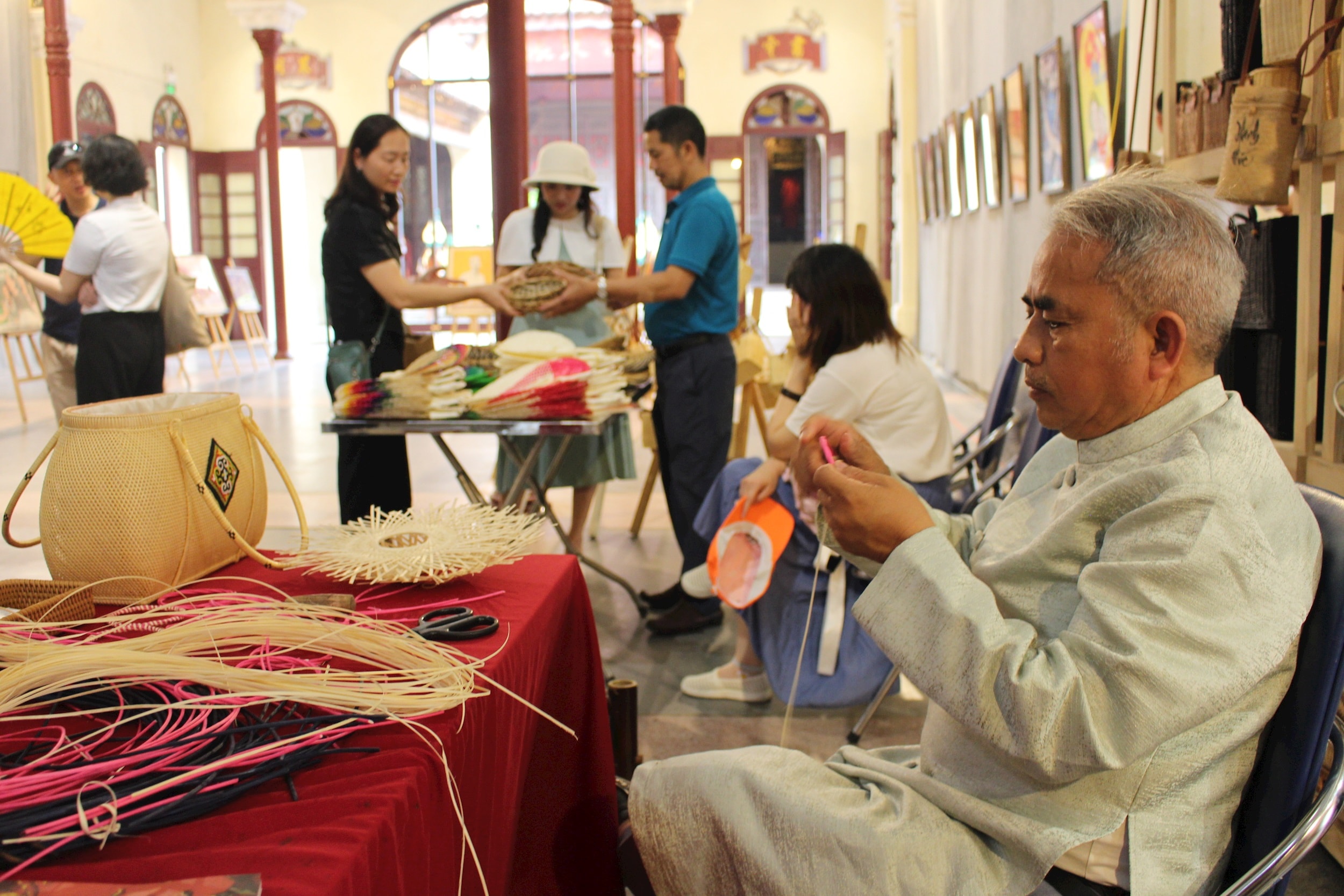
Beyond individual households, some artisans propose developing tourism in a more integrated manner: Each family becomes a focal point, creating a diverse network of experiences within the village. This would allow visitors to explore not just one workshop but an entire vibrant cultural space. Besides promoting tourism at his workshop, artisan Nguyen Van Tinh is frequently invited by schools to teach experiential classes. This opens the door for experiential tourism in the craft village through educational institutions.
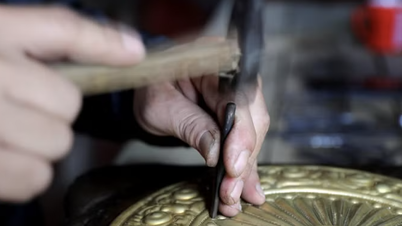
However, the transition from "working in the craft" to "working in tourism" is not simple, from welcoming guests and providing guidance to promotion. Many people have been involved in the craft for decades, mastering core techniques, but still lack the necessary documentation to be recognized as artisans.
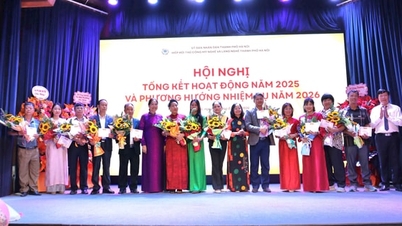
In response to the need to promote the value of traditional craft village heritage and to implement Resolution No. 80-NQ/TW of the Politburo on the development of Vietnamese culture, the Standing Committee of the Hanoi City Party Committee issued Action Program No. 08-CTr/TU on March 17, 2026, which emphasizes: developing cultural industries in conjunction with heritage preservation; honoring and supporting artisans; and linking traditional crafts with the development of tourism products and services. This is considered a timely and concrete step, creating a policy framework for craft villages to transform from a traditional production model to a cultural economic model.
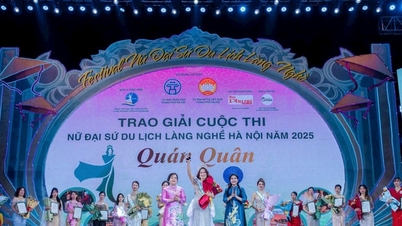
Within that overall orientation, craft village tourism is increasingly positioned as a supporting activity, gradually becoming a pillar in exploiting heritage values. Craft village tourism routes in the outskirts of Hanoi are beginning to take shape, creating a foundation for practical models like Chang Son and Phu Vinh to develop.
However, according to artisan Nguyen Van Tinh, craft village tourism still faces many difficulties: It has not been clearly positioned as a unique tourism product; there is a lack of connection with travel agencies and the tourism ecosystem; digital communication activities are limited; storytelling and branding skills do not meet requirements. In addition, infrastructure is not synchronized, while the mindset for tourism development in some areas remains largely spontaneous.
To make craft village tourism a true driving force for the cultural industry, according to Mr. Nguyen Van Tinh, it is necessary to focus on synchronized solutions such as: recognizing tourism destinations at the city level; training artisans who are not only skilled in their craft but also proficient in tourism, communication, storytelling, and experience design; strengthening connections with travel businesses; and promoting communication support and brand building on digital platforms and in the international market.
At the same time, perfecting flexible financial mechanisms, providing capital support, creating creative spaces, and encouraging models that combine art, tourism, and education will be crucial conditions for craft villages to thrive. When policies pave the way, bottlenecks are removed, and artisans continue to be the creative force, Hanoi's craft village tourism will have more opportunities for significant transformation, spreading traditional values sustainably in contemporary life.
Source: https://hanoimoi.vn/nghe-nhan-ha-noi-thap-lua-du-lich-trai-nghiem-lang-nghe-750487.html


































































Comment (0)