

In the early 1960s, the revolutionary situation in South Vietnam underwent pivotal changes. After the Đồng Khởi movement (1960) spread throughout the country, shaking the puppet regime to its very foundations, the US-puppet regime's "denounce communism, eliminate communism" strategy officially failed.
To salvage the situation, the US imperialists quickly shifted to the "Special War" strategy. In this new strategy, the enemy used the "strategic hamlet" system as its backbone, relentlessly pursuing the scheme of gathering the population, establishing a "white zone" to control the countryside, completely isolating revolutionary forces from the people, and suppressing patriotic movements.
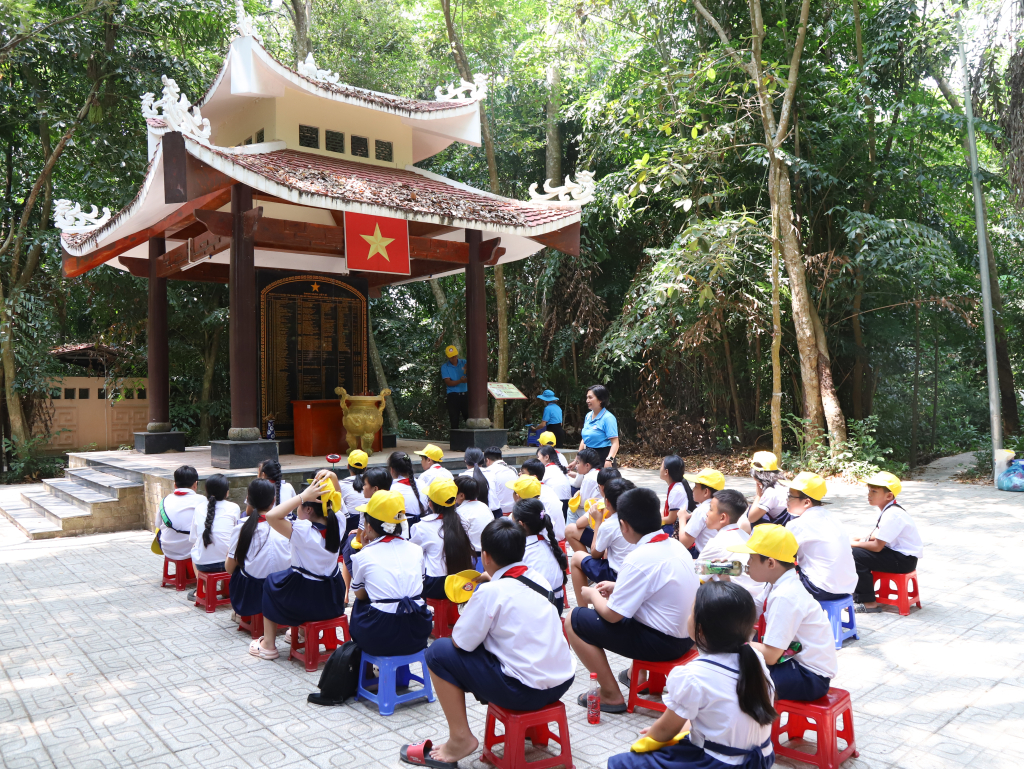
Given this critical situation, the need to build, consolidate, and expand revolutionary bases to serve as footholds for armed forces and command centers became more urgent than ever. In August 1961, the Tay Ninh Provincial Party Committee decided to separate Phu Khuong district to establish the Toa Thanh district base.
This event is seen as a milestone that promptly fulfills the burning aspirations of numerous cadres, Party members, and the people after many years of steadfastly holding onto the land and maintaining the clandestine movement. From the very beginning of its establishment, the Toa Thanh District Party Committee had a keen strategic vision when it advocated for the establishment of a system of interconnected bases.
This system ensured both secrecy and flexibility in directing mass movements, while also being ready to organize combat on the spot and quickly mobilize in the face of continuous sweeps and encirclements from the enemy.
Throughout the long years of facing relentless bombing and shelling, despite having to relocate the base several times to preserve forces, the District Party Committee consistently maintained two key strategic outposts to provide close support and reinforcement to each other. The first outpost, situated in the rugged terrain of Mount Ba Den, controlled and covered the entire northwestern region of Toa Thanh District. The second outpost, Nam Trai Base, was located within a dense 16-hectare forest, serving as a "forward base" in the district's basin.
At the Nam Trai base, a unique people's war strategy was formed. The entire base was surrounded by a dense network of trenches, booby traps, combat fortifications, and booby traps and landmines. Guerrilla forces from the villages and hamlets coordinated closely with local district troops to create a proactive defensive formation linked to offensive operations, ready to repel enemy attacks from multiple directions and ensure the safety of the central command.
The most significant challenge for the Holy See District Party Committee at that time was operating within the heart of the Cao Dai religious region – an area with extremely complex political , social, and psychological characteristics. This was where the US-backed regime constantly concentrated its efforts, employing every sophisticated tactic from bribery to exploiting religious pretexts to divide national unity and turn it into their safe rear base.
Faced with this situation, the District Party Committee of the Holy See determined that, alongside the armed struggle, the work of mobilizing Cao Dai followers was a strategic task of vital importance. From this harsh reality, a team of dedicated Cao Dai mobilization cadres was established.
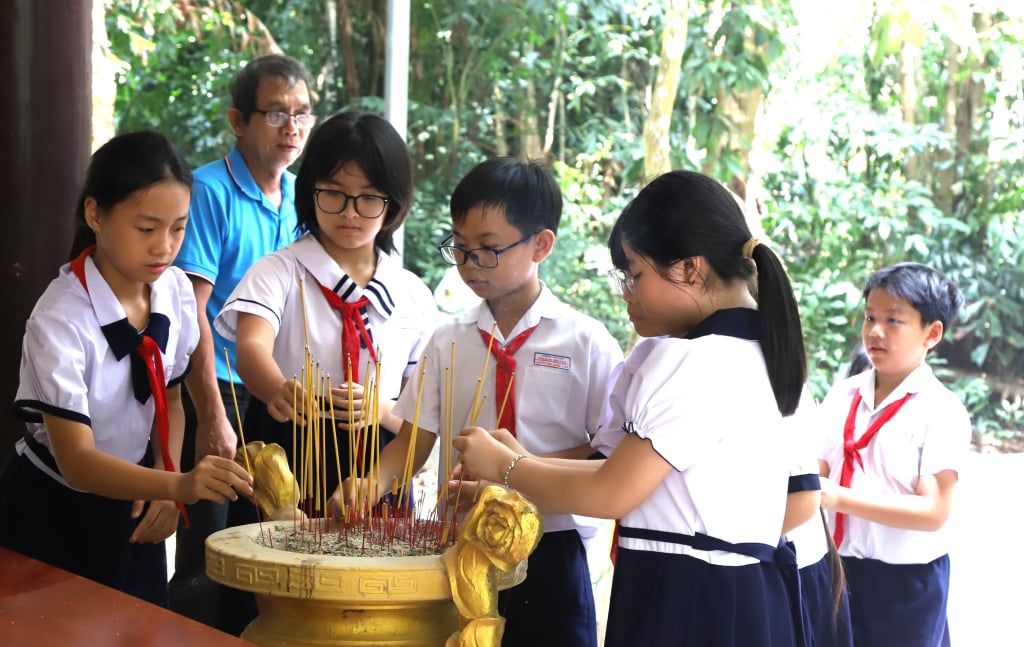
Following the motto "stay close to the grassroots, stay close to the people's hearts," revolutionary cadres, undeterred by danger, secretly infiltrated every religious village and every family in the community. They not only propagated the policies and guidelines of the Party and the National Liberation Front of South Vietnam, but also patiently and skillfully explained to the people and believers the true nature and dark schemes of the enemy who exploited religious faith to serve their war of aggression.
Thanks to perseverance and sincerity, the revolution awakened the patriotism and national spirit deep within each villager. From there, it gradually mobilized the people to rise up in solidarity with the armed forces to fight for peace, national independence, and national reunification. The people were the strongest "fortress," supplying food, medicine, and hiding cadres right under the noses of enemy outposts.
It can be affirmed that the history of the formation, existence, and development of the Hoa Thanh District Party Committee base - the Nam Trai base - is an epic of loyalty, unwavering will, and the spirit of enduring hardship of the people and soldiers of Hoa Thanh. From a land heavily burdened by a massive military apparatus and complex political and religious conspiracies, it transformed into a solid base, making a worthy contribution to the liberation of the South and the reunification of the Fatherland.
To acknowledge these immense historical values, on September 27, 1999, the Chairman of the People's Committee of Tay Ninh province recognized the Toa Thanh District Party Committee base as a provincial-level historical and cultural relic.
More than half a century has passed, and today the Nam Trai forest no longer resounds with the sounds of bombs and bullets, but the traces of a time of tenacious struggle remain deeply imprinted on every inch of land. These traces are a source of gratitude, silently reminding generations of the value of peace, independence, and patriotism forged in the hearts of the people themselves.
Source: https://baotayninh.vn/can-cu-nam-trai-mat-xich-cua-ngay-thong-nhat-147493.html
![[Image] Close-up view of the interchange connecting the two expressways and Long Thanh Airport.](https://vphoto.vietnam.vn/thumb/1200x675/vietnam/resource/IMAGE/2026/05/25/1779703378210_ndo_br_z7863716673926-224453a31600126cce10622af6290afd-4549-jpg.webp)




![[Image] Hanoi's urban life under the challenge of a "scorching hot" environment](https://vphoto.vietnam.vn/thumb/1200x675/vietnam/resource/IMAGE/2026/05/25/1779706979265_nang-nong-t5-2026-minh-duy-7-4636-jpg.webp)








































































Comment (0)