

Over the past year, the news ecosystem has witnessed several major shifts: a decline in social media traffic as Facebook and Netflix reduced their prioritization of news, changes in Google's algorithms, not to mention regulations on privacy and artificial intelligence. All these developments have further encouraged publishers to think more about time on-site, data, audience, and especially paid subscriptions.
However, charging for news content has never been easy. It's not simply a matter of blocking readers from accessing the news and requiring them to pay. Some newspapers have become "experts" in this area and are doing very well with their subscription fees, experiencing positive annual growth rates.
Increase "calls" and decrease "revenue".
The Guardian of the United Kingdom is a remarkable story of turning defeat into victory in the world of journalism. In 2016, The Guardian was still mired in losses, around $89 million per year. Despite the 200-year-old newspaper attracting a large readership and winning the Pulitzer Prize in 2014, that success did not translate into money.
However, by the end of 2017, its prospects had changed completely. Efforts to restart reader revenue had paid off. The number of paying subscribers to The Guardian increased from 12,000 to over 300,000 in just one year. In 2021, the newspaper announced it had reached 1 million members. In 2022, The Guardian announced its best financial results since 2008, and Guardian Media's annual revenue increased by 13% to £255.8 million.
This achievement is all the more remarkable considering The Guardian does not charge users a subscription fee. Since 1936, the Scott Trust has overseen the newspaper to ensure its independence in reporting. The newspaper states that it has no wealthy shareholders or owners, only “the determination and passion to deliver high-impact journalism, always free from political and commercial influence.”
Instead of charging a fee, The Guardian asks readers to donate. After reading an article on the website, readers see how many articles they've read so far this year. It's a subtle reminder that you're receiving value from the newspaper. The more articles you read, the greater the sense of obligation to contribute.
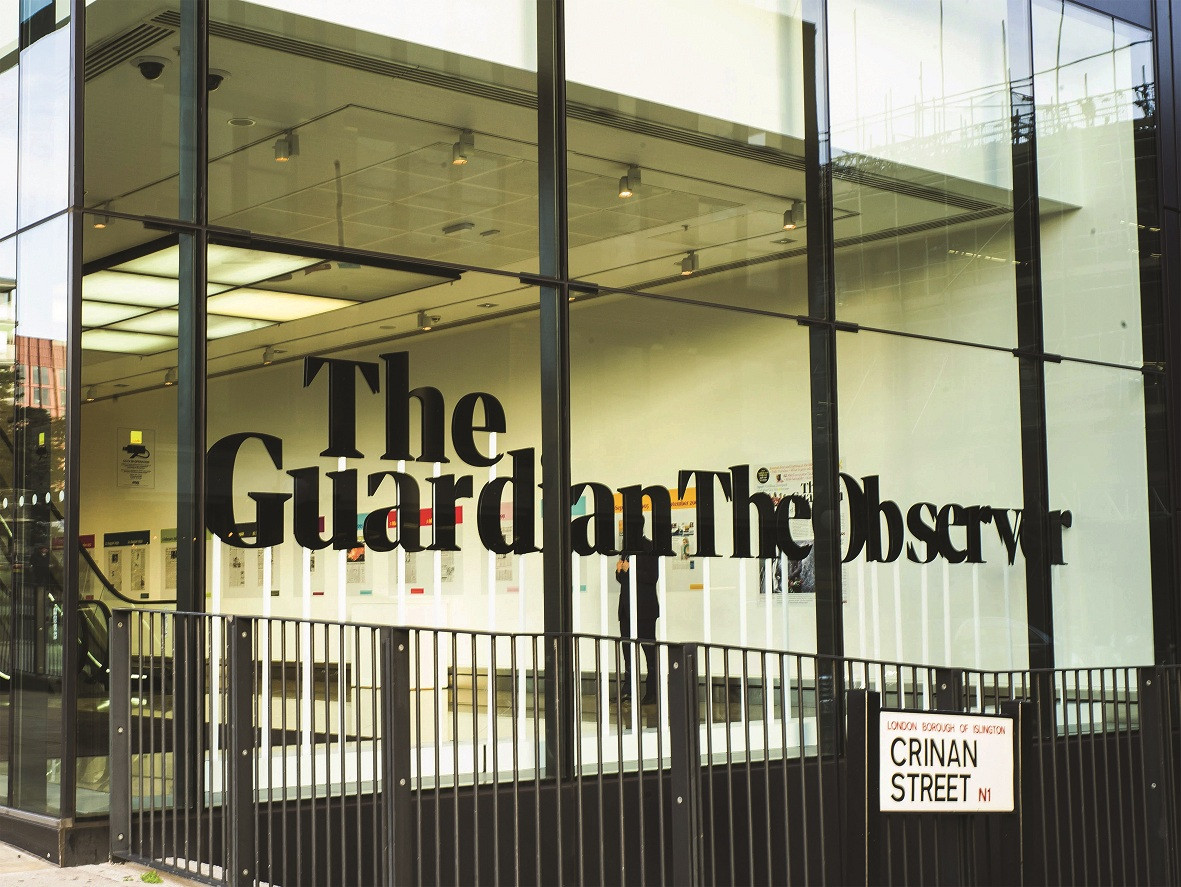
Furthermore, the fundraising appeal highlighted The Guardian's unique value as the world's most trusted source of independent news. This value is particularly effective when readers feel concerned about life's problems and turn to journalism as a solution.
The Guardian understands that not everyone can afford a standard subscription. Therefore, instead of driving away interested readers, they offer various donation options, including one-time or recurring donations, allowing readers to decide for themselves. Additionally, on the landing page, readers are informed of the benefits they receive with each option, such as exclusive newsletters or access to an ad-free news app. This is especially important for a completely open publication like The Guardian.
Finally, the editorial team also mentions impressive numbers such as, "Join over 250,000 readers in the US who regularly support us in maintaining our journalistic integrity," to convince people that they can trust The Guardian. Combining these points, it provides an incentive for readers to donate to their favorite newspaper.
Seamless integration of free and paid services.
In 2019, the fashion bible ELLE began establishing a predictable, recurring revenue stream through digital subscriptions without impacting its SEO, traffic, or advertising-based revenue. Five years later, ELLE's freemium model has become a resounding success, with increased advertising revenue thanks to its ability to collect valuable first-party data through subscriptions.
According to Matthieu Atlani, Director of User Interface at CMI France, the company that owns ELLE, when launching ELLE Premium, they faced three strategic challenges: diversifying revenue streams, expanding the readership, and rejuvenating the readership, while respecting core values. They needed to determine the amount of content to include in Premium and on the website and app based on data.
A common problem for news publishers is that their paid content often goes unnoticed on websites. About half of readers get lost in the news maze, and people often miss out on paid content. Therefore, it's crucial that the paid section is prominently featured on the page to guide readers and help them discover the value of paid content.
ELLE does this by attaching an icon with a call-to-action message to the article, adding a promotional banner at the bottom, and including a brightly colored tag clearly stating that this is paid content.
According to ELLE's technical partner, regularly changing the cost wall positively impacts conversion rates. The magazine continues to run tests and refine the cost wall design and colors to reduce monotony and restore click-through and conversion rates. Whether adjusted for summer, the holiday shopping season, or the end of the year, the changes consistently impress readers.
Another way to increase conversions is to adjust the pricing wall based on user engagement. ELLE adjusts pricing based on the reader's location, regardless of where they are, whether they are using mobile or computer, and whether they are reading political or entertainment news…
Finally, ELLE reduced the frustration of the registration wall by minimizing the spacing between information fields on the registration page and consolidating all operations within the user's line of sight. Adding tags for easy registration and login, as well as bolding the word "register," significantly improved conversion rates.

Register before fees are charged.
This is the approach taken by Bloomberg, the world's leading financial news outlet, which gained over 500,000 subscribers five years after introducing its paywall. In 2018, Bloomberg implemented a flexible subscription model, but in 2022, the publication introduced registration, primarily for new users. By sharing their email address, readers gain access to a Bloomberg profile and more content before encountering the paywall.
Bloomberg also adjusts its targeting based on traffic source. For example, readers from the Reddit forum will see a soft signup wall, offering five free articles for 30 days of subscription to increase engagement.
Bloomberg programmed the subscription wall to be visible to most new users, while also using it to test valuable stories with the potential to reach a large audience and attract repeat customers. Additionally, the news outlet implemented a strategy of removing the subscription wall during key events, such as articles in the Bloomberg Green section during the COP conference.
Bloomberg stated that they designed a series of emails for subscribers, each aimed at increasing engagement (e.g., Sign up for a new newsletter) or conversion rates (e.g., Receive a limited-time offer for $1.99/month).
Users are encouraged to sign up for newsletters, download the app, and watch Bloomberg TV – activities that can lead to higher sign-ups; complete their Bloomberg profiles such as updating job titles and areas of work; listen to podcasts; and use the Watchlist tool.
More importantly, subscribing means readers will experience the value of a paid subscription, understanding why it's worth it instead of just reading some information on the web.
According to Bloomberg's Chief Digital Officer, Julie Beizer, they spend a lot of time nurturing and engaging with users. If users use a product daily and see value, they will want to stay. Speaking about paid subscription growth strategies, Beizer believes that it's necessary to think about the audience first before making decisions.
Box: The success of paid content depends on many factors such as design, display frequency, format (full-screen, in-article, or footer), the number of free articles offered, the strength of the landing page, etc. Doing poorly in any of these areas will drive away potential paying customers and hinder sustainable revenue.
Du Lam
Source: https://vietnamnet.vn/nghe-thuat-thu-phi-cua-cac-to-bao-lon-2293407.html

![[Photo] General Secretary and President To Lam presides over a meeting with the Central Organizing Committee.](https://vphoto.vietnam.vn/thumb/1200x675/vietnam/resource/IMAGE/2026/06/03/1780482764658_a1-bnd-4741-3342-jpg.webp)

![[Photo] Secretary of the National Assembly Party Committee, Chairman of the National Assembly presides over the meeting of the Standing Committee and Executive Committee of the National Assembly Party Committee.](https://vphoto.vietnam.vn/thumb/1200x675/vietnam/resource/IMAGE/2026/06/03/1780480353201_ndo_br_bnd-2585-jpg.webp)



























































![[Video] Sunset at Lap An Lagoon – Where the sun sets over the fishing nets](https://vphoto.vietnam.vn/thumb/1200x675/vietnam/resource/IMAGE/2026/05/31/1780192137701_beach-landscape-sea-water-nature-grass-745871-pxhere-com.jpeg)




































Comment (0)