An ancient temple in the middle of the ocean.
Nestled amidst the mountains and sea of Cu Lao Cham, Hai Tang Pagoda is one of the most representative spiritual landmarks of this strategically important island in Central Vietnam.
According to historical records, the temple was built in 1758, during the reign of Emperor Canh Hung, by Zen Master Huong Hai. Later, in the fourth generation of disciples, the people on the island contributed their labor and resources to complete the construction and named it Hai Tang.
Having stood for nearly three centuries amidst the vast, windswept sea, the ancient temple still retains many distinctive architectural features of Mahayana Buddhism.
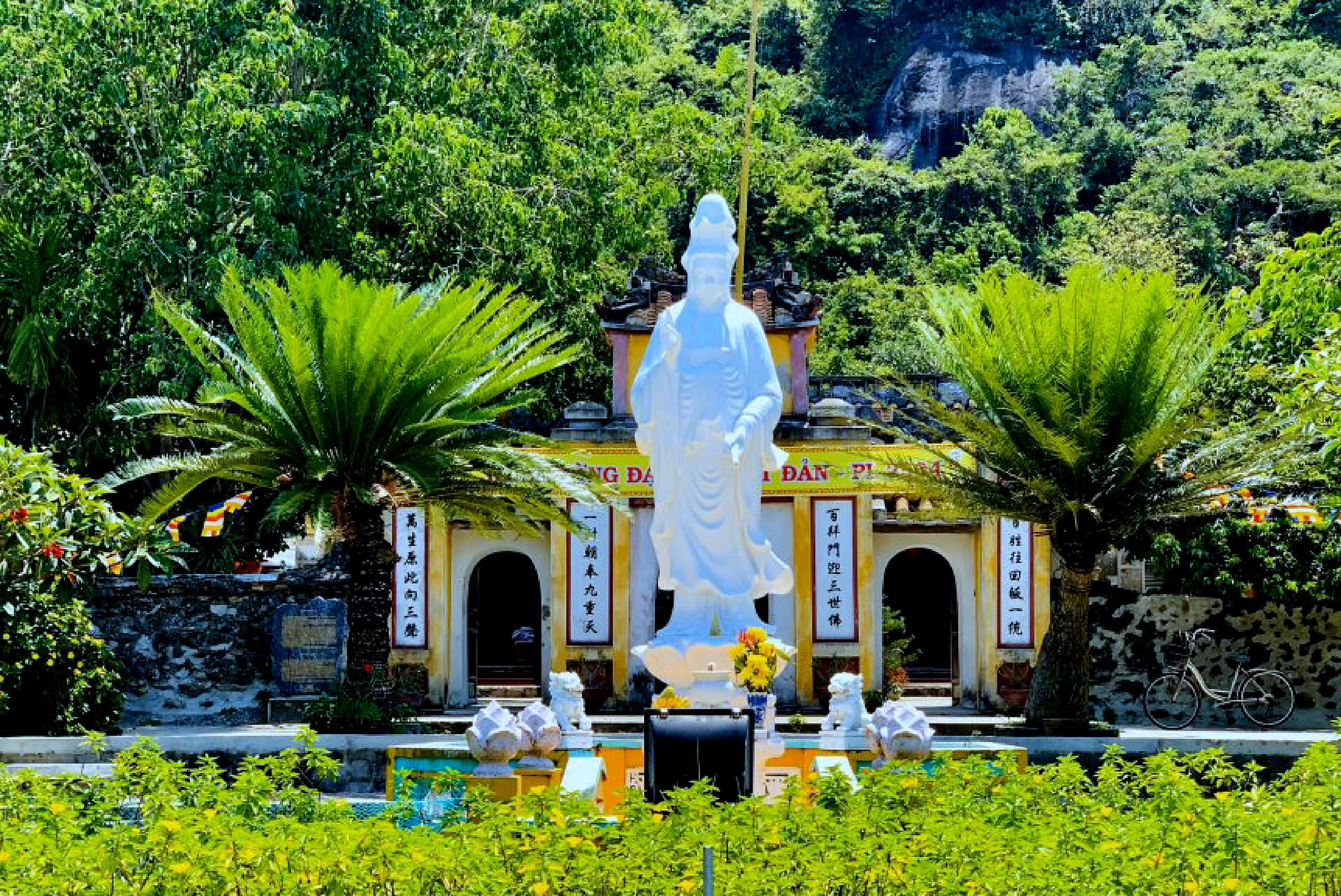
The temple is built in the "front hall, rear hall" style, with a roof covered in yin-yang tiles that have aged over time. The triple-arched gate consists of a main gate and two side gates, reflecting traditional architecture with ancient tiled roofs. Connecting the triple-arched gate is a laterite stone wall surrounding the grounds, creating a secluded and tranquil space.
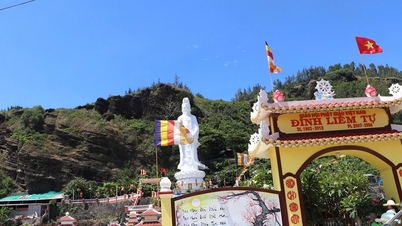
Upon entering the temple gate, visitors are greeted by a statue of Bodhisattva Avalokiteshvara, approximately 3 meters tall, seated in the middle of a small lotus pond, facing the East Sea. For the islanders, this is a symbol of compassion and protection, embodying their hopes for safe voyages at sea and a prosperous life.

Another unique feature of Hai Tang Pagoda is its rare geographical location. In front of the pagoda is a rice field, nestled in a small valley. During the rice harvest season, the entire area is bathed in a vibrant golden hue, the scent of rice mingling with the sea breeze, creating a peaceful scene rarely found on a remote island.
Inside the main hall, large ironwood pillars support the temple roof, creating a sense of solemnity and antiquity. The central section is dedicated to the Three Buddhas and Guan Yu; the right section to Zhou Chang and Guan Ping; and the left section to Ksitigarbha Bodhisattva. On either side are statues of guardian deities and dragon gods, and behind is the statue of Bodhidharma.
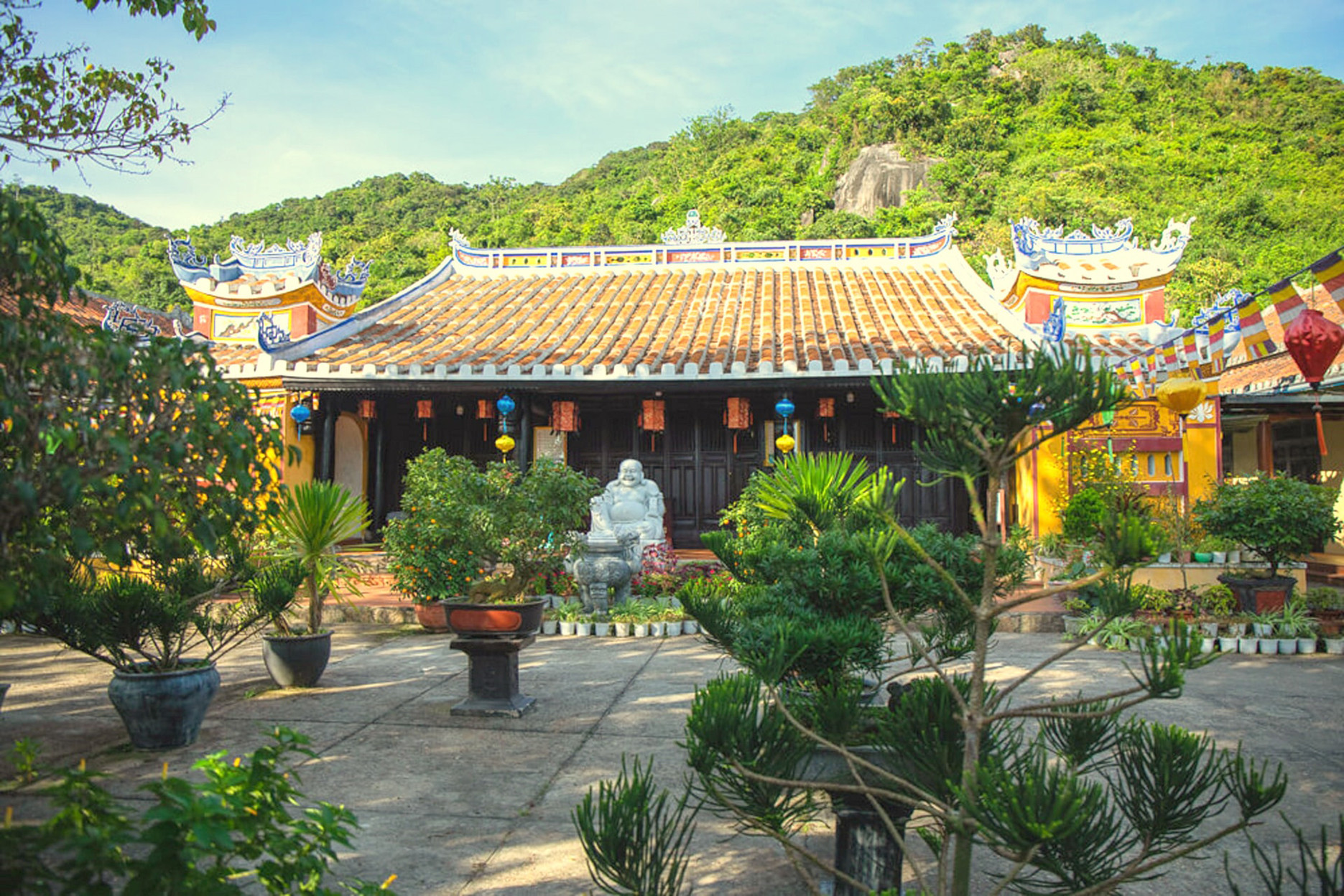



The unique feature of Hai Tang Pagoda lies in the intermingling of Buddhism and folk beliefs. Besides its collection of Buddha statues, the pagoda also houses altars dedicated to the Jade Emperor and many other deities according to folk beliefs.
The intermingling of the "Three Religions of the Same Origin" philosophy reflects the distinctive cultural life of coastal communities, where beliefs and daily life are closely intertwined.
To this day, many statues in the temple have retained almost their original appearance. The statues are all made of wood, painted and gilded, and are over 250 years old.
Along with that, the system of horizontal plaques, couplets, and elaborately carved wooden rafters contributes to the artistic and historical value of the ancient temple.
The pagoda also preserves a special bell (large bronze bell) with patterns in the style of the early Le Dynasty. The bell's body prominently features the image of "two dragons facing the sun," intricately carved with the dragons' bodies winding, their scales raised, and their long, soft beards. This is considered a rare and valuable artifact, possessing great artistic and historical significance.

The spiritual anchor of the islanders.
Not only famous for its ancient architecture, Hai Tang Pagoda is also known for its rare and unique features: "Four No's" - no abbot, no votive offerings, no electricity or lighting, and no resident monks.
Previously, the temple was presided over by Venerable Thich Hai Tang. After the Venerable's passing, the management and care of the temple were entrusted to the local administration. Although there are no monks or nuns residing there regularly, it remains an important center of religious activity for the island's residents.
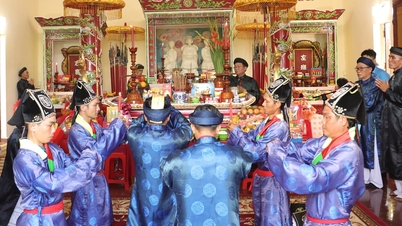
During Buddhist holidays or traditional festivals, Hai Tang Pagoda becomes bustling with activity. People come to light incense, pray for favorable weather, calm seas, and successful fishing trips.




Every morning, as the sun rises from the East Sea, the temple bells chime in the clear air. This sound blends with the waves, the wind, and the peaceful rhythm of the island's inhabitants, creating a sense of tranquility for anyone who sets foot here.
In 2006, Hai Tang Pagoda, along with the system of historical sites on Cham Island, was classified as a National Historical Monument. More than just an architectural structure, the pagoda also preserves many valuable documents about the history and development of the island's community.
Currently, the site has been digitized using VR360 technology and 3D tour models. The application of technology helps preserve the original architecture, artifacts, and space of the temple, while expanding the accessibility of the heritage site to a wider audience.
Xiao Yao
Source: https://vietnamnet.vn/ngoi-chua-4-khong-o-cu-lao-cham-2528229.html





































![[Image] Ho Chi Minh City: Ma Lang area, Chicken-Rice Market about to change its appearance](https://vphoto.vietnam.vn/thumb/1200x675/vietnam/resource/IMAGE/2026/06/25/1782377698627_ndo_br_m1-jpg.webp)