


The embroidered painting "Horses Galloping to Success" is displayed in many families' homes.
HORSES IN LEGENDS AND HISTORY
In the Vietnamese memory, the image of Saint Gióng's iron horse remains deeply ingrained. Legend tells that the young boy from Phù Đổng village stretched himself into a mighty warrior, riding a fire-breathing iron horse to charge into the An invaders. After defeating the foreign invaders, Gióng and his horse flew to heaven, leaving behind footprints that transformed into the round pond in Sóc Sơn, the golden bamboo groves gleaming from the flames of battle, and the undying belief in the strength of the nation. The story lives on not only because of its mystical elements but also because of its message: When the nation needs it, there will be people who rise up, steadfast as a fortress, to protect the country.
From a legendary source, the horses' hooves entered the real pages of history. In the spring of 1789, the Tay Son rebels launched a lightning-fast march to Thang Long, covering hundreds of kilometers in just a few days amidst the freezing weather. The historical account that "the horses ran like the wind" is not an exaggeration but reflects the fierce spirit of an army with a great ambition to change the destiny of the nation. The main army crossed Tam Diep - Bien Son, dividing into many columns to attack Ngoc Hoi and Dong Da forts, catching the Qing army off guard. In that historical moment, the Tay Son warhorses were not only a means of transportation but also a symbol of speed, fighting spirit, and indomitable will.
HORSES IN ART AND FOLKLORE
As a powerful symbol in history and folklore, the horse has long been a source of inspiration for poetry, music , and painting. The image of the horse is subtly and vividly present in many literary works, from Hoang Trung Thong's "Pack Horse," steeped in the sweat of the mountains and forests, to Che Lan Vien's "Red Horse," embodying the anxieties of a revolutionary era. Each work portrays the beauty, vitality, and symbolic meaning of this loyal and courageous animal.
In music, the sound of horse hooves resonates through familiar melodies, from the cheerful tune of "Ly Ngua O" to the poignant longing in "Ngua O Thuong Nho". Horses also feature in folk games and nursery rhymes: "Chi chi chanh chanh… the horse dies and swells up…" or the smooth song: "Nhong nhong, the old horse has returned, cut Bodhi grass for the old horse to eat".
Paintings and embroidery depicting horses have appeared in both folk and modern styles, on various materials such as paper, lacquer, and oil paint. These paintings, with their strong lines and vibrant colors, evoke a sense of movement, agility, and strength. Works such as "Success on Horseback" and "Horse Galloping" are often displayed at the beginning of the year, conveying wishes for good fortune, success, and prosperity.
While paintings of horses symbolize the aspiration for new beginnings, stone horses represent protection and the preservation of peace. Stone horse statues in temples and pagodas often have a sturdy stance, their necks held high, their manes neatly carved, and their eyes wide open as if watching the footsteps of passersby. This solemn appearance creates a sense of sacredness yet also familiarity, like a silent friend guarding the village.

Horse-drawn carriages are closely intertwined with the life and culture of the Khmer people in the Bay Nui region. Photo: THANH TIEN
HORSES IN EVERYDAY LIFE
In Southern Vietnamese life, horses are seen as gentle, hardworking, and resilient. From the early days of land reclamation, horse-drawn carts traversed dirt roads, carrying passengers, goods, and the bustling atmosphere of Tet (Lunar New Year) markets. The jingling of bells, the shouts of vendors, and the laughter and chatter created a rural symphony, heralding a new day. I still remember my childhood sitting behind Uncle Tu Ho's horse-drawn cart. He said, "This horse is old but very strong, it knows the way, it turns into the market on its own without being urged."
Nowadays, with the gradual replacement by mechanization, horses are no longer the primary means of livelihood. However, on some roads in Rach Gia, Long Xuyen, or Tan Chau, you can still find horses leisurely pulling carts, taking tourists for sightseeing. Amidst the bustling motorbike traffic, the horses maintain their gentle and elegant demeanor. Each time one passes by, children gaze curiously, vendors smile and greet it, the jingling of bells blending with the sounds of the city, creating a feeling that is both familiar and unique.
Watching my mother wipe clean the embroidered picture of "Horses Galloping to Success," the horse on the silk background seems to be continuing its new rhythm, heading towards the light. This image reminds us that each new year requires steady, persistent steps and continuous progress. Horses not only symbolize good fortune but also represent strong vitality and enduring strength.
BAO TRAN
Source: https://baoangiang.com.vn/ngua-trong-van-hoa-viet-a476703.html
![[Image] Expediting land clearance at Alley 310 Nghi Tam to facilitate the construction of Tu Lien Bridge](https://vphoto.vietnam.vn/thumb/1200x675/vietnam/resource/IMAGE/2026/04/14/1776160406551_ndo_br_z7724148990408-9e5d4777e3c4504998b4286178b2e66e-jpg.webp)
![[Photo] General Secretary and President To Lam and his wife begin their state visit to China.](https://vphoto.vietnam.vn/thumb/1200x675/vietnam/resource/IMAGE/2026/04/14/1776133794926_z7723148772587-ffefa3c4b1e54e100de1554593a862c6-jpg.webp)
![[Photo] General Secretary and President To Lam visits and delivers a policy speech at Tsinghua University.](https://vphoto.vietnam.vn/thumb/1200x675/vietnam/resource/IMAGE/2026/04/14/1776164592318_vna-potal-tong-bi-thu-chu-tich-nuoc-tham-va-phat-bieu-chinh-sach-tai-dai-hoc-thanh-hoa-trung-quoc-8700658-5437-jpg.webp)







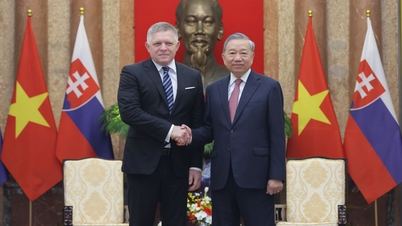
![[Photo] General Secretary and President To Lam receives Slovak Prime Minister Robert Fico](https://vphoto.vietnam.vn/thumb/1200x675/vietnam/resource/IMAGE/2026/04/13/1776080592076_a1-bnd-8227-6002-jpg.webp)






































Comment (0)